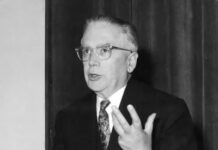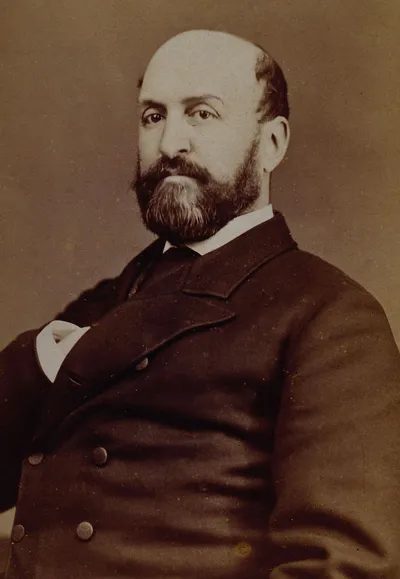
St. George Jackson Mivart was a man who lived in the crossfire of two great plates, science and faith. Born in London in 1827, he became one of the strongest critics of Charles Darwin’s theory of natural selection. He is more than just a spectator. He was a distinguished biologist who believed that prevailing theories were fundamentally incomplete.
His path was not easy. In 1844, Mivart converted to Roman Catholicism. At the time, Oxford University was strictly closed to non-Anglicans. He couldn’t walk through those doors. Instead, he attended St. Mary’s College, Oscott, completing his education from 1844 to 1846. This was the turning point. He left the system, but he left no wisdom behind.
While lecturing at St. Mary’s Hospital Medical School from 1862 to 1884, he studied in detail the anatomy of carnivores and insectivores. This is not a job that amateurs can easily do. This rigorous and detailed study expands the scientific community’s understanding of these animals. In 1881 he published The Cat: An Introduction to the Study of Backboned Animals. A masterpiece of clarity and precision. At the time, critics ranked it alongside Thomas Henry Huxley’s The Crayfish for accuracy. If you want to learn about vertebrate anatomy, read Mivart.
However, this is where things get complicated. Mivart supported the theory of evolution. He acknowledged that species change over time. The line he drew was “natural selection” as the main force.
He believed that natural selection was too clumsy to build complex structures. Let’s take the vertebrate eye as an example. How do you explain it step by step, in pointless steps? Mivart argues that the initial stages of the eye are useless until all the parts are in place. You can’t have “half eyes” for no benefit. So he suggested an alternative. He calls it individuation. This is the idea of an innate force of plasticity, a positive internal force that drives biological evolution. He believed in the path that led him, not in a random battle.
When it comes to people, he goes one step further. He denied that human intelligence had developed through natural processes. For Mivart, reason is a gift from God. This is not a small Theological footnote. This is a direct challenge to materialistic interpretations of human nature.
His booksOn the Genesis of Species (1871), Nature and Thought (1882), and The Origin of Human Reason (1889) were his enemies. As a great advocate of evolution, 『ダシンもオシリーももですますとはますするしまするします.
However, it is not only the scientific community that opposes him. The church did the same.
1890年、ミヴァルトはベルギーのルーヴェン・カトリック大学の自然史と哲学の教授の職を受け入れました。 彼は 1893 年まで留まりました。 そこで彼は、公式の宗教的教えと矛盾すると思われる記事を発表しました。 バチカンはこれらの作品を禁書目録に掲載しています。 彼は止まらなかった。 さらに物議を醸す記事が続きました。
In 1900, Cardinal Herbert Vaughan, the Archbishop of Westminster, excommunicated him. It was a harsh public rebuke.
同年晚些时候,米瓦尔特去世。 他患有糖尿病。 他被埋葬在伦敦肯萨尔格林公墓的未祝圣之地。 一个被逐出教会的人,在神圣的土地上。 这感觉就像是一个有争议的句子的最后一段。
朋友们介入了。 他们向教会提出交涉,认为他后来的前后矛盾是他生病的结果,而不是他的信仰。 1904 年,即他去世四年后,他被授予天主教葬礼。 教会支持