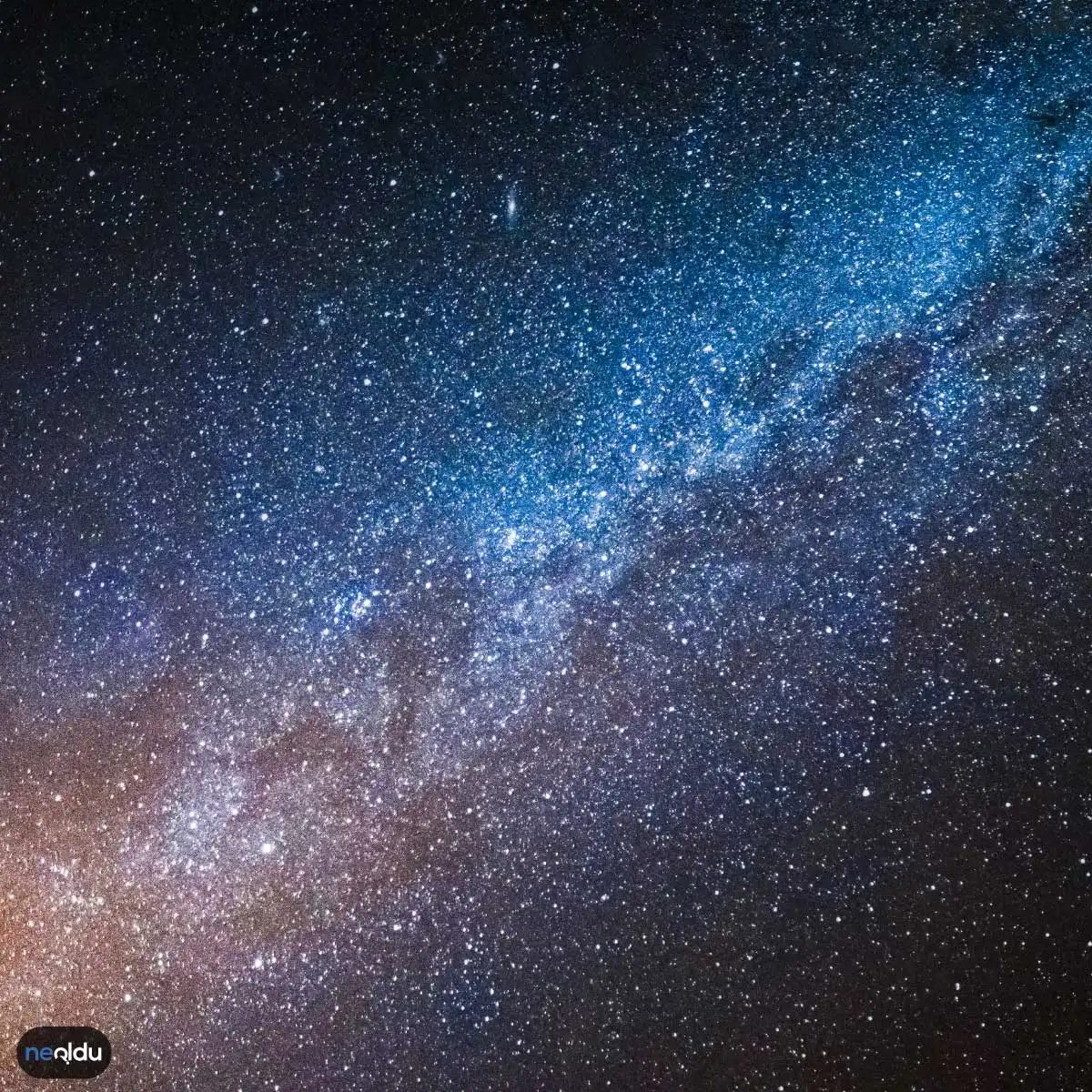
From the moment we could stand upright, we have looked up at the night sky and pondered our place in the universe. This curiosity led early philosophers and modern scientists to develop ways to unravel the mysteries of the universe. Today, people have been able to gather more information about the universe than anything we knew before the 20th century. But despite our advanced telescopes and mathematical models, much of the universe remains a mystery. We have only scratched the surface.
What is the universe?
At its simplest, the universe is all that exists. It includes all space and time, matter, energy and the physical laws that govern them. But this definition only scratches the surface of what scientists mean when they talk about the universe.
The universe is not just a static container. It expands. It has a history. It has a temperature. Most of it consists of invisible things.
Most of what we think of as “matter” (stars, planets, gas clouds, dust) makes up less than 5 percent of the total energy and matter in the universe. What remains is dark matter and dark energy. These are not placeholders. We still don’t fully understand what they are, but they have real and measurable effects on the structure of the universe.
Dark matter holds galaxies together. Without it, the visible matter of the universe would not have enough gravity to form the large-scale structures we see today. At the same time, dark energy pushes the universe outward and accelerates its expansion. It acts like a repulsive force woven into the fabric of space itself.
We know these things exist from the effects of gravity and the bending of light around large objects. We perceive them indirectly. However, we have never directly observed dark matter particles. We have never caught a photon of dark energy.
This is not a failure of science. It reminds us how much we still don’t know.
How did the universe begin?
The popular theory is the big bang. Not an explosion in space, but the expansion of space itself.
About 13.8 billion years ago, the universe was very hot and dense. It has continued to cool and expand ever since. The early universe was a soup of elementary particles. protons and neutrons formed. Then, in the first few minutes, the nuclei of hydrogen, helium and traces of lithium fused together. This process is called big bang nucleosynthesis.
For hundreds of thousands of years, the universe was too hot for electrons to bind to nuclei. Light was trapped. Then, about 380,000 years old, the universe cooled enough for atoms to form. Light could finally travel freely. This light is still with us. We detect it as the cosmic microwave background (CMB).
The CMB is a snapshot of the nascent universe. It is nearly uniform in every direction, with tiny temperature fluctuations. These variations are the seeds of all structure. Where the density was slightly higher, gravity pulls more matter into it. Over billions of years, these regions collapsed to form the first stars and galaxies.
The CMB is more than just a remnant. This is proof. It supports the big bang model. It tells us the age of the universe. It tells us the composition of the cosmos. It tells
The universe is not just a collection of stars and planets. It is the sum total of all existence. This includes all matter, energy, space and time. All galaxies, asteroids, rays and invisible dark matter particles are part of this one continuous entity. This is an infinitely vast realm that includes both the known and the completely unknown.
Tracing the origin of the universe
How did it all begin? The common scientific answer points to a single event known as the Big Bang. This is not an explosion in the traditional sense, but a rapid expansion of space itself. It happened about 13.8 billion years ago. At that moment, the universe was incredibly hot and dense. It has grown ever since. This expansion will not stop. This phenomenon continues to this day as the galaxies move further and further apart.
A true 4-dimensional structure
The structure of the universe is complex. It is defined by four dimensions. Three of them are spatial: length, width and height. The fourth thing is time. Space and time are not independent entities. They are woven into one fabric. Physicists call it spacetime.
Everything in the universe moves according to the laws of physics in this frame. Gravity, electromagnetism and nuclear forces determine how objects interact. But there is no hidden purpose. The universe does not exist for a specific purpose. It just exists. Scientists study its properties to understand its formation and structure. The more data they collect, the clearer the picture becomes.
Why this is important to us
Understanding the origin of the universe changes the way we think about our place in it. We are made of stardust. The elements within us were forged in the hearts of dying stars. This connection is not about poetic license. This is a physical reality. Understanding how the universe began helps answer fundamental questions about our own existence. This explains why the sky is dark at night. This reveals why certain elements are rare. It provides a timeline for the development of life on Earth.
The expansion of the universe continues to accelerate. This discovery has led to new theories about dark energy. It challenges our understanding of physics. Each new observation brings us closer to the picture. But much remains a mystery. What is beyond the visible horizon? How will the universe end? These questions drive scientific research forward.
For decades, cosmologists have debated the origin of everything. There are models, hypotheses and peripheral theories. But when we look at the consensus, we see that one name prevails: the Big Bang. It’s not just a theory anymore. This is the basic story of our existence.
This event happened about 13.8 billion years ago. It causes the space itself to expand. I don’t know the exact reason. Is it the peak density of substances present? A collision with another cosmic structure? Triggers are still speculative. The result is not.
The space is starting to expand. Quickly. And it’s still growing.
As the universe expanded, it cooled. Concentration of energy. Substances clump together. This cooling period is very important. Without it, atoms would never form. The stars must cool down. Galaxies require the attraction of cooling gas. We are created from fragments of early expansion and later stellar evolution.
The structure of reality is four-dimensional. Three dimensions of space. One of time. they are connected. You cannot move through space without affecting time. The expansion of the universe determines how all matter moves in this frame. Understanding this expansion is key to predicting the future. That explains why we are here. It hints at how we end up.
Specify age
How do we know this number is 13.8 billion? This is not a guess. It is calculated using several independent methods.
The most important methods are the cosmic microwave background (CMB). This is the afterglow of the Big Bang. It is the oldest light in the universe and is emitted when the universe cools enough to form atoms. Satellites like Planck have mapped these variations in great detail. The patterns in the CMB reveal the composition, geometry and rate of expansion of the universe.
And then there’s the Hubble constant. This measures the speed at which galaxies are moving away from us. The more distant a galaxy is, the faster it is moving away from us. By measuring this speed and distance, scientists can calculate the age of the universe. Different methods produce slightly different numbers, causing a cosmological crisis now known as the “Hubble tension”.
Although there are some differences in the details, the figure of 13.8 billion remains stable. It is derived from the Lambda-CDM model, which is the standard model for Big Bang cosmology.
Why exact numbers are important
This is more than just academic trivia. Calculating the age of the universe correctly affects everything.
It constrains the physics of the early universe. If the universe is younger or older than 13.8 billion years, our understanding of the fundamental forces is wrong. The rate of fusion in the first few minutes is inconsistent with the amounts of light elements observed today. hydrogen. helium. lithium. The proportions are correct. They only work if the universe has a special cooling curve spanning 13.8 billion years.
It also affects the fate of the universe. Age is related to the density of dark energy and dark matter. These invisible components facilitate expansion. When the magnification changes, so does the timeline. Current data suggests that the universe is expanding forever. The galaxies are gradually moving away. Stars will burn out. The end of the game is cold and dark.
But also age
Scientists estimate the age of the universe to be about 13.8 billion years. They didn’t come up with this number blindly. It arises from a combination of effective theory and hard-earned observational knowledge. The math is tight. The evidence is overwhelming. But how do you measure something that started at the singularity and has continued to expand ever since? Look at the afterglow.
Cosmic microwave background radiation
The main tool for cosmic dating is the cosmic microwave background radiation. Think of it as a cosmic baby picture. This is the oldest light we can detect. This radiation was created when the universe was still hot and dense, before atoms formed and the universe cooled enough for light to travel freely. As the space expands, that light stretched. It cooled down. Today, the faint microwave hum echoes in every corner of the sky.
By studying small variations in this radiation, astronomers can calculate how much the universe has stretched since the first explosion. It’s like looking at a fingerprint. Each pattern tells a story about the density, composition, and age of the early universe. This approach provides the basis for the 13.8 billion year estimate in concrete physics.
Redshift and expansion
There is another way to check the math. This includes observing distant galaxies. When we look at them, their light shifts towards the red end of the spectrum. This redshift occurs because the space between us and these galaxies is expanding. The farther away a galaxy is from us, the faster it appears to be moving away from us.
This relationship is not accidental. It’s consistent. By measuring how fast these galaxies are moving away from us, scientists can determine the rate of expansion, known as the Hubble constant. If we combine this speed with the known composition of the universe, we can work backwards. You can calculate when everything was packed into one point. The numbers line up. They refer to about 13.8 billion years.
Is the universe infinite?
This is the hard part. We know the age of the universe. But we don’t know if it has an edge.
The observable universe is finite. Light takes 13.8 billion years to reach us from this sphere of the universe. This radius is about 46.5 billion light years. Why is it greater than 13.8? Because the space itself expands as light travels. But what is behind the bubble?
Current data suggests that the universe is “flat”. It is not flat like a table, but geometrically flat over a large area. In a flat universe, parallel lines always stay parallel. This geometry means that the extent of the universe is potentially infinite. It could go on forever in any direction.
However, flatness does not guarantee infinity. The universe is three-dimensional, although it may be finite but unbounded, like the surface of a sphere. Imagine walking on earth. You never fall off. Just keep going until you’re back where you started. Perhaps the universe behaves similarly on a cosmic scale. We don’t know for sure.
The shape of the universe determines its fate. If it is open or flat, it expands forever. If it’s closed, it may eventually crash. Current measurements lean heavily towards eternal expansion.
So is it infinite? perhaps. The evidence shows it. But until we can
Is the universe really infinite?
The question of whether the universe is boundless or infinite has piqued human curiosity for centuries. Science is still piecing together the basic nature and structure of reality, so getting a straight answer can be confusing. Current evidence supports the idea that the universe may be infinite.
This is why the hypothesis of the constant expansion of the universe is true. As it stretches, we don’t just get bigger in a static sense. it creates new space. This means that new areas are constantly being created and can be filled with stars, galaxies and other celestial bodies. If space itself has no edges, the number of objects in space could theoretically be infinite.
But this theory also has important caveats. If the universe is truly infinite, does that mean we can see an infinite number of galaxies from any given point? There is no clear answer yet. The calculations become complicated and the limitations of the observations become apparent.
It is still very possible that the universe is finite. Our understanding of the geometry of the universe suggests that the universe may have limits. For example, some models suggest that if the universe were a flat planar structure, its volume could be finite, even though it appears infinite from our current perspective.
Key Insight : The conversation isn’t just about size. It’s all about geometry. Whether the universe is flat, open, or closed determines whether it lasts forever or cycles.
What exactly is the universe?
At its core, the universe is everything. It is the sum of all matter, energy, space and time. It didn’t always exist in its current form. It originates from a singular, violent event known as the “Big Bang”. Until then, the concepts of space and time as we know them may not have applied in the same way.
How do we estimate the age of the universe?
Determining the age of the universe is not a guess. Researchers use toolkit of precise measurements to make calculations. At the heart of this calculation is the Hubble constant, which measures the expansion rate of the universe. By working backwards from the current rate of expansion, scientists can estimate when it all started from a single point.
They cross-reference this with other data points, such as the Cosmic Microwave Background (CMB) radiation (the Big Bang’s afterglow) and distant supernova explosions. These independent methods converge on a consistent age of about 13.8 billion years.
Is the universe still expanding?
Yes. Expansion has not slowed down. In fact, it is accelerated by dark energy. The Hubble constant measures this expansion, indicating that galaxies are moving away from each other. The more distant a galaxy is, the faster it is moving away from us. This isn’t galaxies moving through space, but the universe itself, which stretches between the galaxies.
How many galaxies are there?
Over the years, this estimate has hovered around 100 to 200 billion. Recent studies have increased this number significantly. Current models suggest that there are about 2 trillion galaxies in the observable universe.
However, this number is tricky. Due to the speed of light and the limitations of telescopes, we can only see a fraction of the universe. Beyond our current observation horizon, there may be many other galaxies whose light has not reached us since the Big Bang. true count