


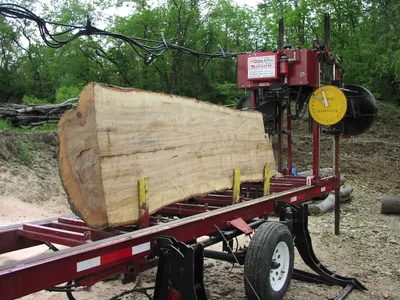
A sawmill is basically a factory, powered by machines that slice raw logs into rough blocks, boards, and planks. The bigger the company, the more high-performance equipment it usually has. You may be able to find planers, molders and tenoners on site for finishing work. Where the factory is located is no accident. It depends a lot on how the wood arrives.
If the wood comes by river, the loggers don’t haul it. They float it down the waterway. The logs drift right into the mill. Then a winch pulls them out one by one. It’s a simple system. Water does the heavy lifting.
Railway systems are different. They need more floor space just to store the delivered wood. Normally, the crane moves over the storage area. It lifts the logs and drops them directly onto the sawing machines. The design of the plant follows the transportation method. Always.
It’s not just about cutting wood. It’s all about efficiency. Transporting massive logs requires a special infrastructure. A mill by the river doesn’t look much like a rail-side facility. The layout changes. The machinery changes. The whole process adapts to the logistics needed to get the green wood from the forest floor to the saw blade.
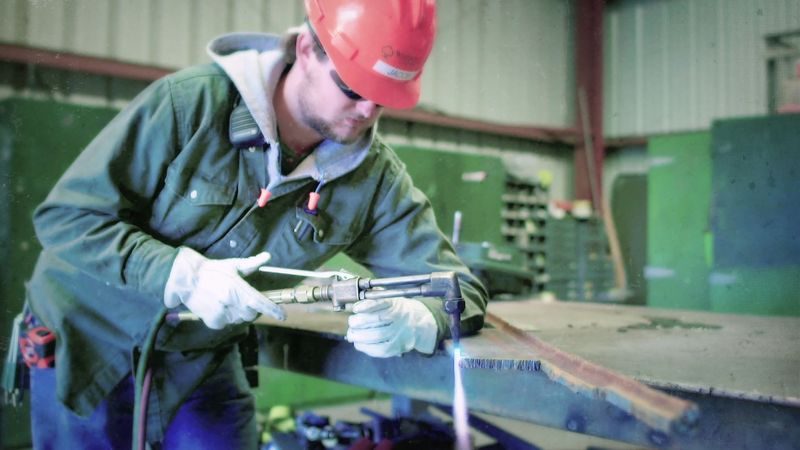

Slicing Logs with Precision
In the initial stages of timber production, raw logs are cut into manageable pieces. This usually starts with cross-cutting, pre-processing, where the solid wood is chopped into suitable lengths. From then on, the actual factory floor work begins.
Large industrial saws handle the heavy lifting. You may see reciprocating saws, band saws, or circular saws cutting the wood as it moves along the feed table. The goal is simple: to get the log to the desired thickness.
However, if you need to convert the whole log into several boards in one run, use a log frame. This machine has a series of vertically moving knives. The distance is adjustable. Sometimes thick, heavy pieces only require four blades. In other cases, the machine activates up to fifty knives to produce thin panels at once. It is effective. It’s fast.
From Waste to Worth
When the tree is cut, the byproducts remain. Re-sawing machines process the partially broken-down material, such as Flitches (longitudinal sections of the trunk) and deals (standard size boards).
Historically, this process generated a lot of dust and chips. The industry solved the problem with pneumatic lines that transported the waste to the boiler house. There it was burned as fuel. It was a closed energy cycle, but it was not entirely sustainable in the long term.
Today, this sawdust has a different purpose. Instead of burning, significant amounts of these materials are compressed and made into particleboard and chipboard. Waste becomes a resource.
The shift from Burning wood byproducts to manufacturing composite panels reflects a broader trend towards material efficiency in industrial processing.
This development means that less energy is used for disposal and more value is obtained from each tree. Sawdust is no longer just a residue. It is the basis for wood products that decorate homes and offices around the world. The logic applies. Why burn what you can build?
But the sheer scale of these actions raises questions. How much of the original log actually makes it into the final product? And what happens to the rest? Machines are efficient, but nature is chaotic. The gap between the raw wood and chipboard is large and full of sawdust, heat and pressure.
We get the wood we need. We use the rest. The cycle continues.


