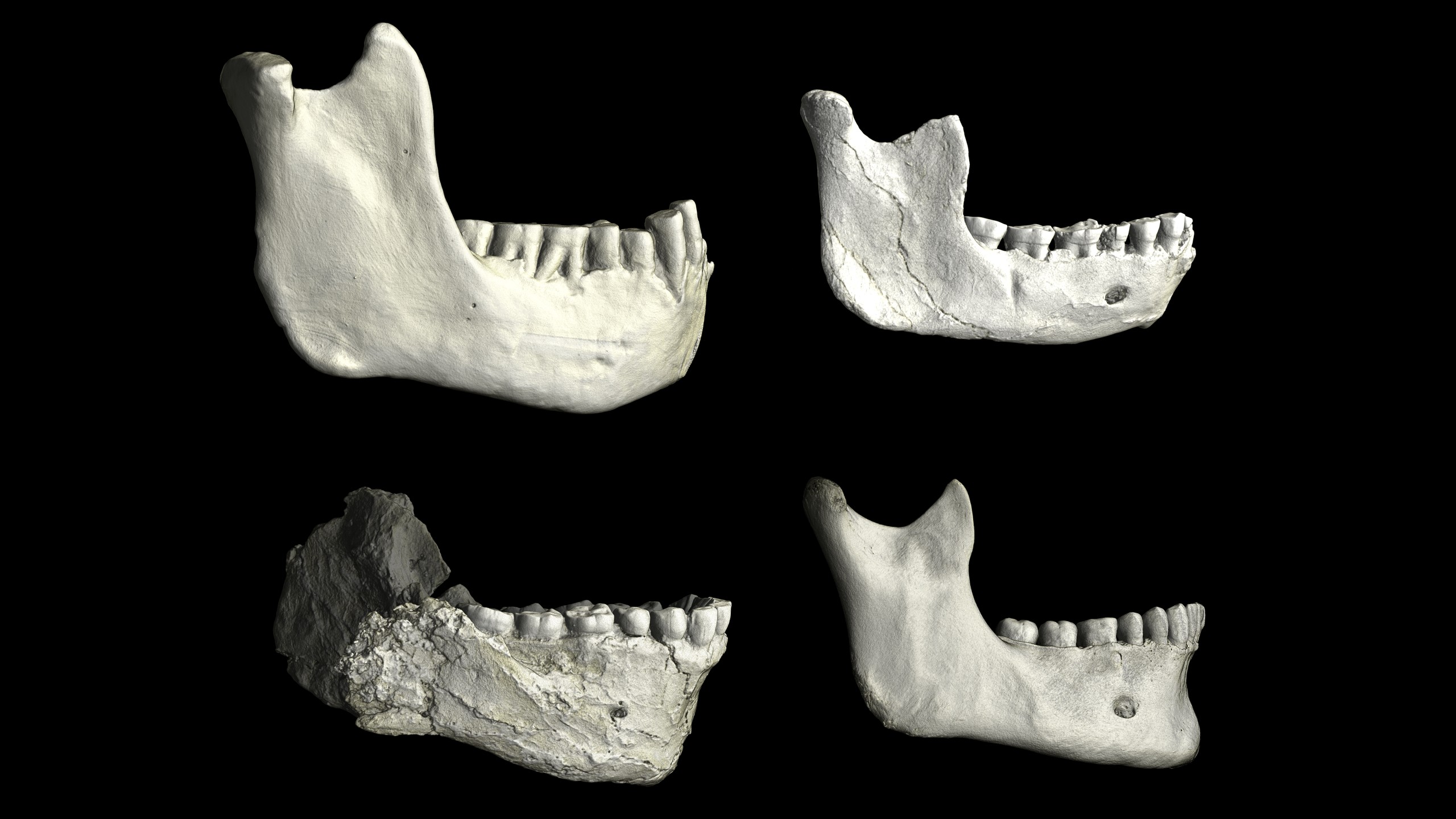
New fossil discoveries in Morocco are shifting the understanding of where modern humans, Neanderthals, and Denisovans first diverged. A study published in Nature details analysis of 773,000-year-old remains found at the Thomas Quarry I site near Casablanca, suggesting that the last common ancestor of these hominin groups may have originated in Northwestern Africa, not East or South Africa as previously thought.
Discovery Details and Significance
The fossils – consisting of partial jawbones, vertebrae, and teeth – exhibit characteristics of Homo erectus but also possess unique traits not found in that species. This places them at a crucial point in the hominin evolutionary tree, filling a significant gap in the fossil record between 1 million and 600,000 years ago. The site also contained stone tools and evidence of hyena scavenging, indicating hominins were both tool-users and prey.
Crucially, sediment analysis confirms the fossils’ age by aligning them with the Matuyama-Brunhes magnetic-field reversal, a well-dated geological event. This provides a strong chronological anchor for the discovery.
Rethinking the Human Family Tree
For decades, genetic evidence has hinted at an African origin for the last common ancestor of modern humans and their cousins. This new discovery offers concrete fossil support for that theory.
Homo erectus initially spread from Africa around 2 million years ago, with some populations reaching as far as Oceania. Others remained in Africa, evolving further and eventually migrating north into Europe around 800,000 years ago, giving rise to species like Homo antecessor in Spain, a likely ancestor of Neanderthals.
The Moroccan fossils predate H. antecessor and share some of its traits, suggesting potential intermittent connections across the Strait of Gibraltar. However, they remain distinct from both H. erectus and H. antecessor. This reinforces the idea of a deep African origin for Homo sapiens and challenges theories proposing Eurasian origins.
The Future of Research
The researchers are planning paleoproteomic analyses, which could clarify the relationships between the Moroccan fossils and European remains. Further exploration of North Africa’s rich fossil record is essential, as current understanding remains heavily biased toward East and South African findings.
The site of Jebel Irhoud in Morocco, which yielded 300,000-year-old Homo sapiens fossils, already suggests the region played a pivotal role in early human evolution. The Thomas Quarry discovery strengthens this hypothesis.
While it’s premature to definitively label the fossils as a new species, the evidence suggests these remains represent a population close to the divergence point between modern humans and Neanderthals/Denisovans.
The Moroccan fossils provide strong support for the idea that critical evolutionary events leading to modern humans occurred in North Africa, pushing the narrative of human origins beyond its traditional East and South African focus.