Archaeologists in the U.K. have unearthed a remarkable burial site dating back 1,400 years, revealing the remains of two high-status individuals and a horse interred in what are known as “sand burials.” The discovery was made ahead of construction for a new nuclear power plant near Sizewell, Suffolk, and provides a glimpse into the burial practices of Anglo-Saxon England.
The Unusual Preservation
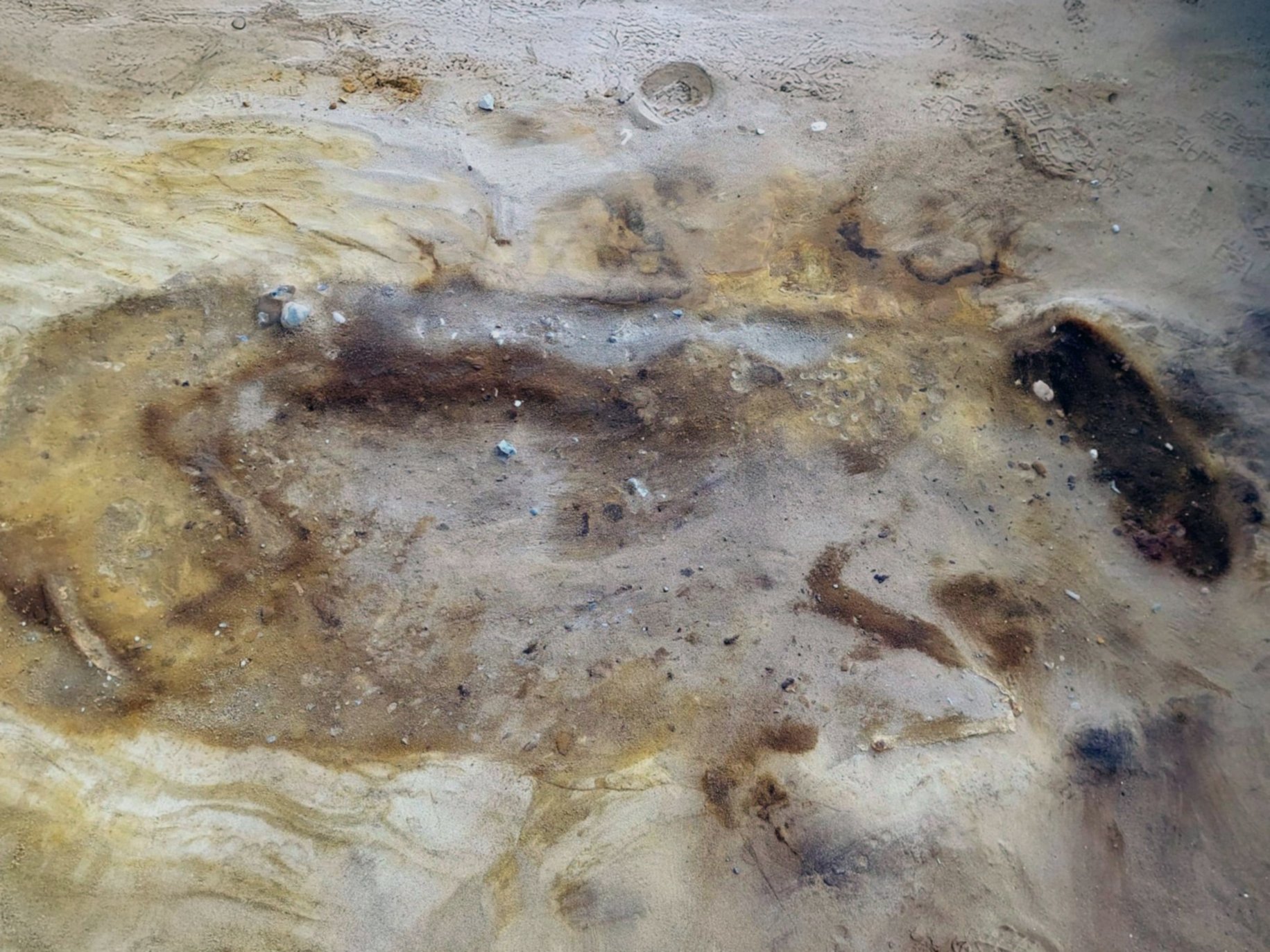
The site’s acidic soil has largely dissolved bone over the centuries, but two graves stood out. Instead of intact skeletons, archaeologists found faint outlines in the sand – the shapes of bodies and a horse. These “sand burials” suggest the remains decomposed almost completely, leaving behind only impressions in the earth. The horse was buried with its riding gear intact, including copper alloy decorations and an iron bit still in its mouth. The two humans were buried alongside a sword, spear, two shields, an iron bucket, and silver and copper vessels – clear signs of elite status.
Elite Status and Ritual Sacrifice
The grave goods strongly suggest these were wealthy and important figures in the sixth or seventh century A.D., a period when England was fragmented into multiple kingdoms. Though precise details are lost due to the lack of skeletal remains, the artifacts point to a high social rank. The presence of the horse suggests a ritual sacrifice: it was likely killed and buried alongside its owners.
“We can postulate that the horse was probably sacrificed to be interred with its owners,” explains Maria Bellissimo of Oxford Cotswold Archaeology. The fact that the two people were buried together indicates they may have died simultaneously.
A Coastal Crossroads
The site’s location, on a prominent ridge overlooking the sea, suggests strategic importance. Howard Williams, an archaeologist at the University of Chester, notes that this area was a key landing point for maritime communities connected by trade and kinship along the east coast of England. The burials likely belonged to individuals within the emerging East Anglian kingdom following the collapse of Roman Britain.
Additional Finds
The excavation also revealed a wealth of other artifacts:
– A hoard of over 300 silver coins from the 11th century, likely buried as a precaution during a period of unrest.
– A Roman-era pottery kiln, evidence of long-standing settlement in the area.
– An Iron Age oak ladder.
– Remains from the Bronze Age and medieval ovens.
This discovery provides invaluable insight into the practices and beliefs of early East Anglians and the broader cultural landscape of post-Roman Britain. The ongoing research will continue to refine our understanding of this fascinating site.
The findings underscore how burial rituals reflect social hierarchies and religious beliefs in Anglo-Saxon society. The sacrifice of a horse alongside its riders speaks to a world where status was marked by wealth, power, and even death.