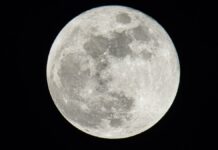
The Artemis II mission marks a pivotal step in humanity’s return to lunar exploration. This crewed flight, led by NASA, will send astronauts on a trajectory around the Moon, paving the way for future sustainable lunar presence. While robotic missions have recently resurfaced lunar interest, Artemis II re-establishes the human element in space travel.
Understanding the Mission’s Core Components
The success of Artemis II rests on a network of interconnected technologies and scientific principles. Here’s a breakdown of key terms:
- Astronauts : Highly trained individuals prepared for the physical and psychological stress of space travel. Their mission is not simply to travel, but to collect data in conditions impossible to replicate on Earth.
- Rocket : The primary propulsion system, converting fuel combustion into supersonic velocity. Rocket technology remains a fundamental element of space access, despite advancements in reusable systems.
- Orbit : The path the spacecraft will follow around the Moon, governed by gravity. Understanding orbital mechanics is critical for mission planning and ensuring a safe return.
- Radiation : A major concern in deep space. The Moon lacks Earth’s protective magnetic field, exposing astronauts to higher levels of harmful radiation. This requires shielding and careful mission duration planning.
- Sensor : Devices crucial for monitoring astronaut health, spacecraft performance, and environmental conditions. These instruments provide real-time data, enabling adaptive decision-making during the flight.
Why This Matters: Beyond Exploration
Artemis II isn’t just about going to the Moon again. The mission serves as a testbed for technologies that will define future space endeavors.
- Long-Duration Spaceflight : Artemis II will gather critical data on how humans adapt to extended periods in deep space. This is vital for eventual missions to Mars and beyond.
- Commercialization of Space : The Artemis program fosters collaboration between NASA and private companies, accelerating innovation in space travel.
- Scientific Advancement : Lunar missions yield insights into the Moon’s formation, the early solar system, and the potential for in-situ resource utilization (extracting water ice for fuel, for example).
“The Artemis program is not just about returning to the Moon; it’s about building a sustainable presence that will serve as a stepping stone to further exploration.” – NASA Administrator Bill Nelson
The Bigger Picture: A New Era of Space Exploration
The Artemis II mission reflects a renewed global interest in space. The International Space Station (ISS) has demonstrated the benefits of international cooperation in low-Earth orbit, while Artemis expands that collaboration to lunar exploration. This mission is not merely a technological achievement; it is a symbolic demonstration of human ambition and scientific curiosity. The data gathered and lessons learned will shape space exploration for decades to come.
The Artemis II mission is a critical step toward a future where humans not only visit the Moon, but live and work there, unlocking the secrets of our solar system and preparing for deeper journeys into the cosmos.