Astronomers and researchers worldwide are voicing strong opposition to proposals that would dramatically alter the night sky: a massive constellation of orbiting mirrors designed to beam sunlight to Earth and SpaceX’s planned deployment of one million data centers in low Earth orbit. These projects, submitted to the U.S. Federal Communications Commission (FCC) for approval, threaten to overwhelm astronomical observations and fundamentally change humanity’s view of the cosmos.
The Threat to Astronomical Observation
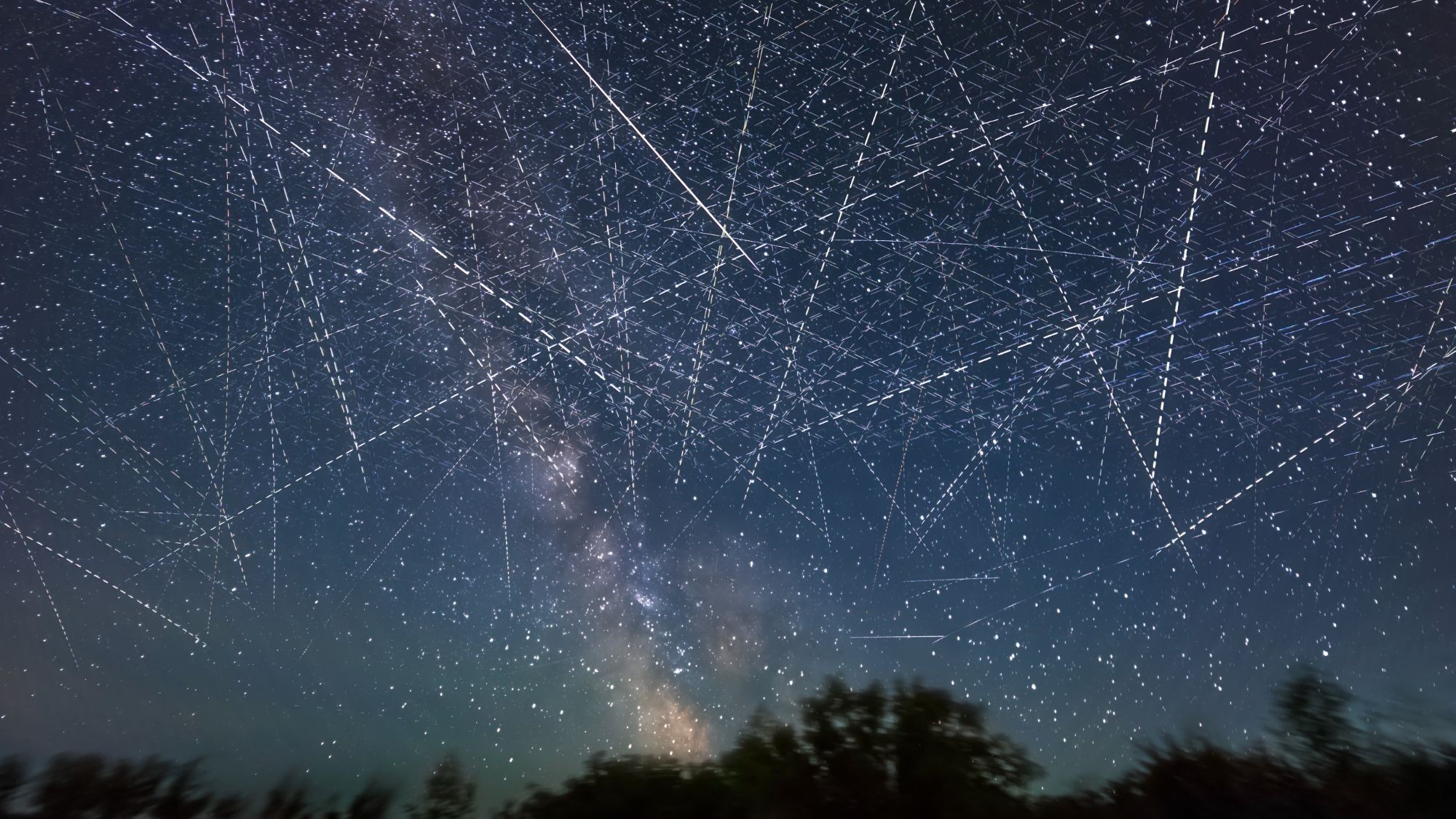
The proposed projects pose an existential risk to ground-based astronomy. Reflect Orbital seeks to launch 50,000 mirrors, each roughly 180 feet wide, to reflect sunlight onto ground-based solar power plants. These mirrors would be several times brighter than the full moon, obliterating faint astronomical signals. SpaceX aims for one million orbiting data centers, which, while dimmer individually, would collectively create a dense swarm of visible points in the night sky.
Robert Massey, deputy executive director at the British Royal Astronomical Society (RAS), described the situation as “absolutely the destruction of a central part of human heritage.” The sheer brightness of these objects would render many current observations impossible. The European Southern Observatory (ESO) estimates that SpaceX’s satellites could result in a 10-30% loss of usable pixels in images from telescopes like the Very Large Telescope in Chile. Exposure times would triple, effectively making observations of faint objects unattainable.
The Scale of the Problem: Why It Matters
The issue isn’t merely about aesthetics. The night sky is a shared resource, crucial for scientific progress and cultural heritage. The proposed changes would impact not only professional astronomers but also dark sky sanctuaries, remote locations dedicated to preserving natural darkness for research and public enjoyment. The planned scale of these projects exceeds any previous disruption to the night sky, making it a critical turning point in how humanity manages its presence in space.
The rapid approval process by the FCC raises concerns that environmental impact assessments are being bypassed, placing the burden of proof on opponents rather than the companies proposing the changes. This approach is alarming, given the potential for irreversible damage to the night sky and astronomical research.
A Growing Movement Against Space Pollution
The RAS, ESO, and numerous other research institutions have filed formal objections to the FCC. Researchers warn that a “red-line policy” is needed to limit the total number of satellites in orbit. Without such limitations, the sky could become up to three times brighter, erasing billions of years of natural darkness.
Noelia Noel, an astrophysicist at the University of Surrey, argues that these proposals “mark a critical moment in how we manage humanity’s presence in space.” While satellite technology offers benefits, unchecked expansion risks fundamentally altering the night sky, with consequences extending beyond astronomy to ecosystems, cultural heritage, and our relationship with the universe.
The current trajectory poses a clear danger to the integrity of our night sky. Unless immediate action is taken to limit satellite proliferation and enforce thorough environmental reviews, future generations may inherit a world where the stars are drowned out by artificial light.