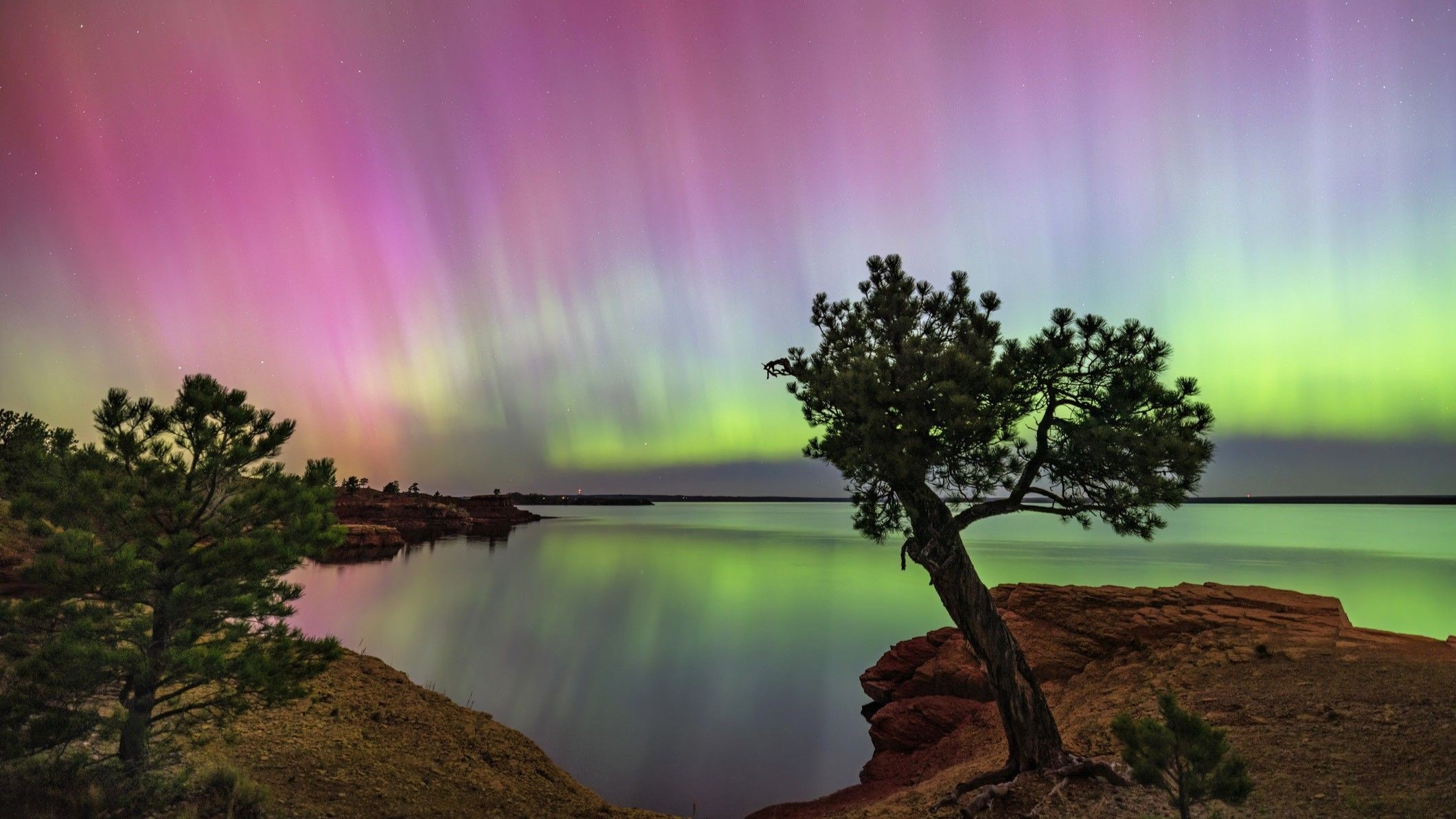
A moderate geomagnetic storm is expected to hit Earth on March 19, potentially making the aurora borealis visible as far south as Illinois, according to the National Oceanic and Atmospheric Administration’s (NOAA) Space Weather Prediction Center (SWPC). The storm, triggered by a coronal mass ejection (CME) from the sun, could reach G3 intensity, significantly expanding viewing opportunities.
What is a Geomagnetic Storm?
Geomagnetic storms are disturbances in Earth’s magnetosphere caused by solar activity. The intensity is measured on a G-scale:
* G1 (Minor) to G5 (Extreme).
The incoming storm is currently forecast as a G2 (Moderate), but could escalate to G3 (Strong).
Why this matters: Stronger storms mean brighter, more widespread auroras. They also have the potential to disrupt radio communications and, in extreme cases, even impact power grids.
The Science Behind the Lights
The storm originates from a CME launched on March 16 following an M2.7 solar flare. CMEs are huge expulsions of plasma and magnetic fields from the sun. When these hit Earth, they interact with our planet’s magnetic field, creating the mesmerizing light displays known as auroras.
Why Now? The Equinox Effect
March is a particularly good time for aurora viewing due to a phenomenon called the Russell-McPherron effect.
This occurs around the spring and autumn equinoxes when Earth’s tilt causes its magnetic field to align more favorably with incoming solar wind.
In simpler terms, the sun’s position makes it easier for charged particles from the sun to enter Earth’s atmosphere, triggering stronger auroras.
“During equinoxes, Earth’s natural shield against solar wind becomes more open, allowing for stronger impacts from events like coronal mass ejections,” explains space weather expert Dr. Emily Carter.
Where to Look?
If the storm reaches G3 levels, aurora sightings could be possible in regions like Illinois, Oregon, and even further south.
The best viewing spots will be in dark areas away from city lights.
Tools to help you:
- My Aurora Forecast & Alerts (iOS/Android)
- Space Weather Live (iOS/Android)
- The U.K. Met Office provides Northern Hemisphere aurora forecasts.
The incoming storm is a reminder of the sun’s influence on our planet, and presents a rare opportunity to witness one of nature’s most spectacular displays.
Tracking space weather conditions is key to maximizing your chances of seeing the lights, and understanding the underlying science helps appreciate the forces at play.