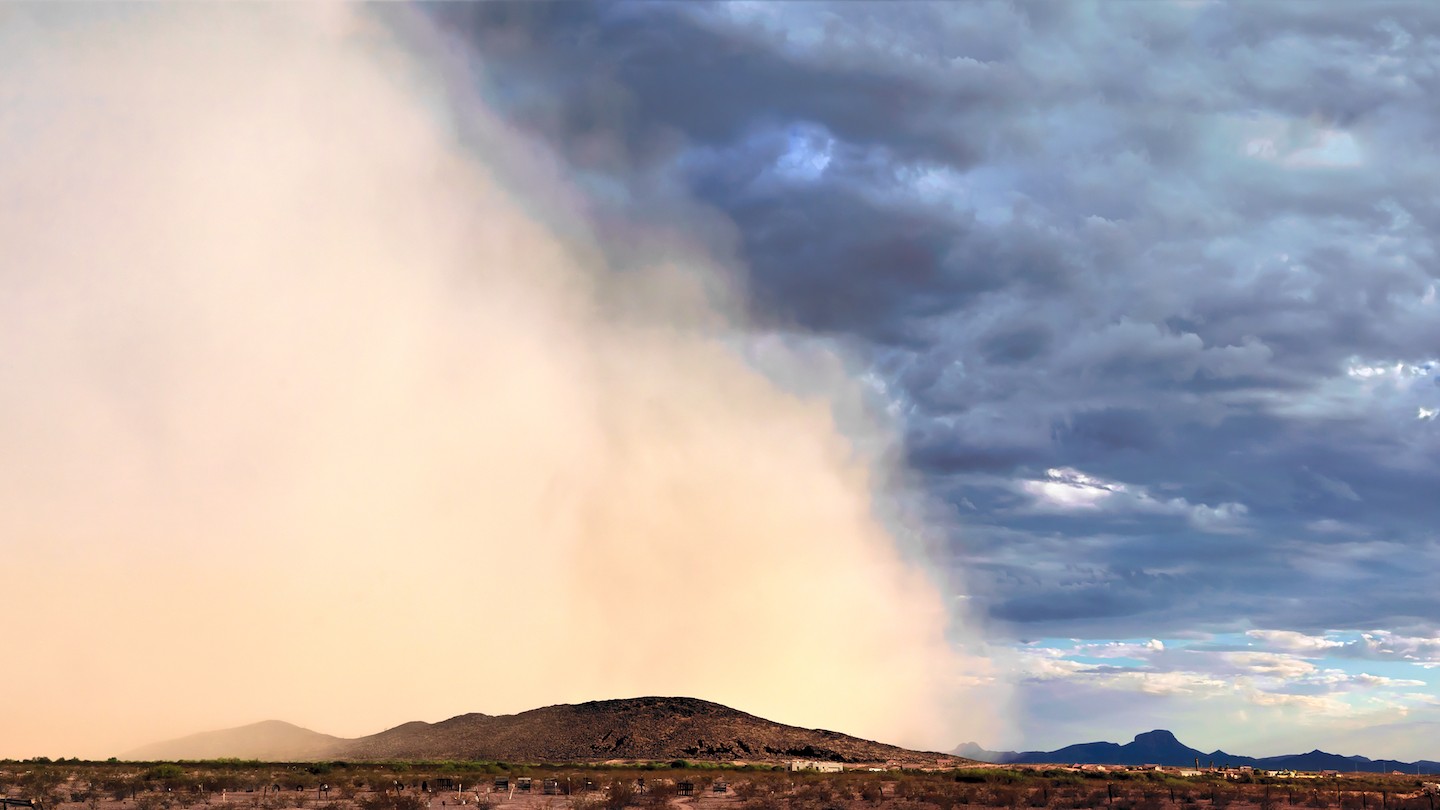
Haboobs are intense, localized dust storms common in arid regions like the U.S. Southwest and the Sahara Desert. Unlike typical sandstorms, haboobs form rapidly from thunderstorm activity, appearing as massive, fast-moving walls of sand and dust.
What Creates a Haboob?
These storms arise when a thunderstorm’s downdraft—a forceful rush of air downward—hits the ground and spreads outward. In dry environments, this creates powerful winds that lift vast quantities of sand and dust into the air, sometimes reaching heights of thousands of meters. The speed can exceed 60 miles per hour, though the duration varies from minutes to hours.
Why are Haboobs Dangerous?
Haboobs dramatically reduce visibility, making driving extremely hazardous. Authorities recommend pulling over and turning off lights during a haboob to avoid confusing other drivers. The storms also pose a health risk: sand and dust can irritate the lungs and eyes. The safest course of action is to seek shelter indoors and seal off openings.
Haboobs on Earth and Mars
While haboobs are a significant weather phenomenon on Earth, similar dust storms are even more prevalent on Mars. The red planet’s thin atmosphere and abundant dust create conditions for planet-wide storms that can last for months.
Haboobs are a reminder of the raw power of nature in arid environments, posing real dangers to those caught in their path. They are a localized yet dramatic expression of atmospheric forces at work.