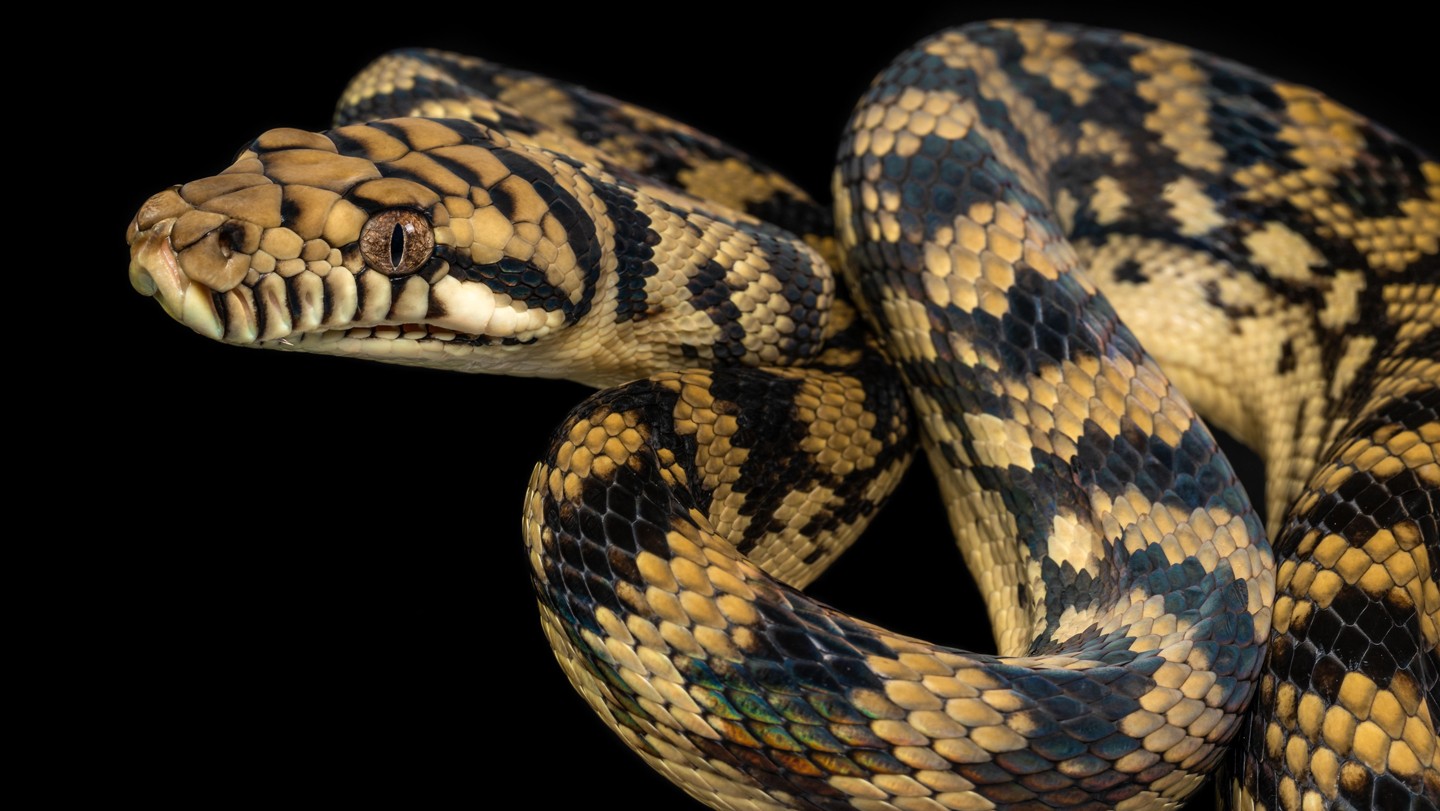
Snakes are masters of movement, and one of their most remarkable feats is climbing while lacking limbs. Researchers have now detailed the physics behind how these creatures stand tall, revealing that they don’t rely on brute force, but instead utilize a highly efficient coordination of muscle activity. The key? Concentrating bending energy at the base while maintaining minimal tilt in the rest of the body.
The Mystery of Vertical Ascent
For years, the question of how snakes avoid collapsing under their own weight has puzzled biologists. Unlike animals with legs or arms, snakes lack obvious support structures. Studies have previously shown that snakes activate muscles along their spine to initiate upward movement, but the mechanics of maintaining an upright posture remained unclear.
The Study: Motion Captured
Researchers at the University of Cincinnati analyzed footage of brown tree snakes and scrub pythons scaling vertical gaps in a lab setting. The recordings revealed a consistent pattern: snakes contorted into a distinct “S” shape, maximizing curvature near their point of contact and minimizing tilt as they rose higher. This shape allows them to defy gravity while using minimal energy.
The Physics: Active Elastic Filaments
To understand the forces at play, physicists modeled the snake as an “active elastic filament” – a flexible structure that responds to its shape and activates muscles accordingly. Two strategies were tested: localized bending versus coordinated muscle activity across the body. The results showed that snakes most likely use the latter, concentrating bending at the base while coordinating muscle activity to minimize energy expenditure.
“Snakes are kind of like muscular ropes…and they can basically perform magic tricks, flexing their bodies and preventing [themselves] from falling.” – David Hu, bioengineer at Georgia Tech.
The mathematics revealed that this coordinated approach requires less force than rigid, full-body stiffening. The bending force decreases as more of the snake rises, making upright standing surprisingly energy efficient.
The Balancing Act: Energy Expenditure
While the initial pose requires relatively little force, the study suggests that staying upright demands considerable energy. The videos showed snakes swaying slightly from side to side, indicating active muscle exertion to maintain balance. This continuous adjustment highlights that standing tall is not a passive act; it’s an ongoing effort to resist gravity’s pull.
This research not only explains how snakes climb but also offers insights into biomechanical efficiency. By minimizing force and coordinating muscle activation, snakes demonstrate an elegant solution to the challenge of limbless locomotion.