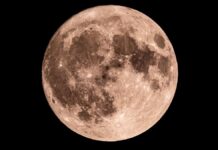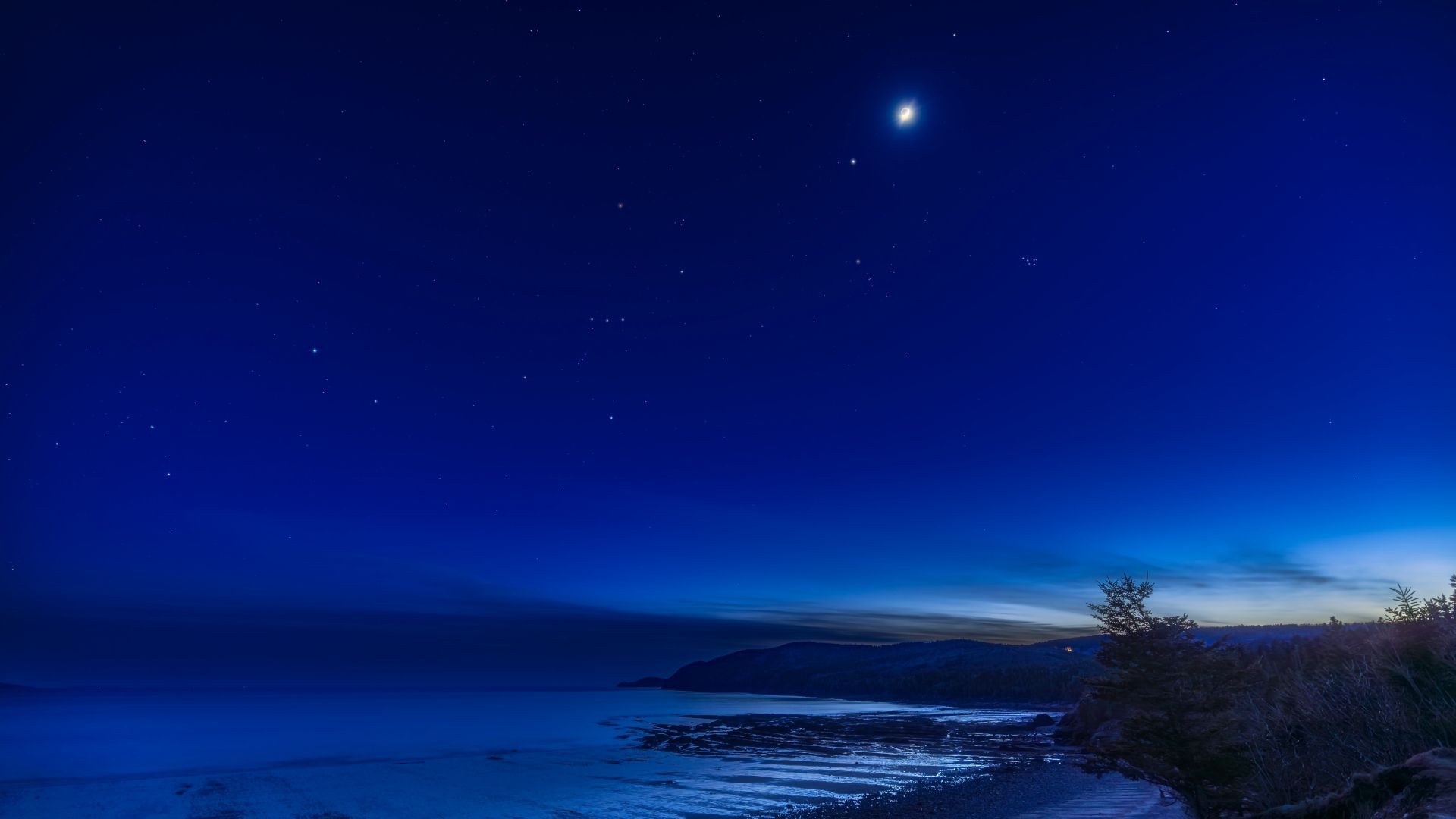
On March 26, Jupiter and the waxing gibbous moon will appear exceptionally close in the evening sky, creating a beautiful celestial pairing visible to the naked eye. This event offers a straightforward opportunity for stargazers to witness two of our solar system’s brightest objects together.
What to Expect
The moon and Jupiter will make their closest approach at 9:19 EDT (1319 GMT). Observers in the northern hemisphere will see the moon with its right side illuminated, positioned high above the southern horizon. Jupiter will appear as a bright, steady point of light about 5 degrees below and to the right of the moon – roughly the width of three fingers held at arm’s length. The bright stars Castor and Pollux, from the Gemini constellation, will also be visible nearby.
Viewing Details
The alignment is best viewed at sunset, when Jupiter will still be visible before fading into the daytime sky. As the night progresses, the moon will appear to move away from Jupiter, eventually setting below the northwestern horizon around 3 a.m. EDT (0700 GMT) for viewers in New York. Precise rise and set times for your location can be found on websites like Time and Date.
Enhanced Viewing
A 6-inch telescope will reveal striking details of both celestial bodies: lunar craters and seas on the moon, and Jupiter’s cloud bands and its largest moons.
Long-Term Visibility
Jupiter will remain visible in the spring sky until mid-July, when it will gradually become obscured by the sun’s glare. After July 29, Jupiter will enter solar conjunction, meaning it will be too close to the sun from Earth’s perspective to observe.
This alignment provides an accessible and striking view of our solar system, requiring no specialized equipment for a basic observation. For those with telescopes, it offers a chance to explore surface details on both the moon and Jupiter.