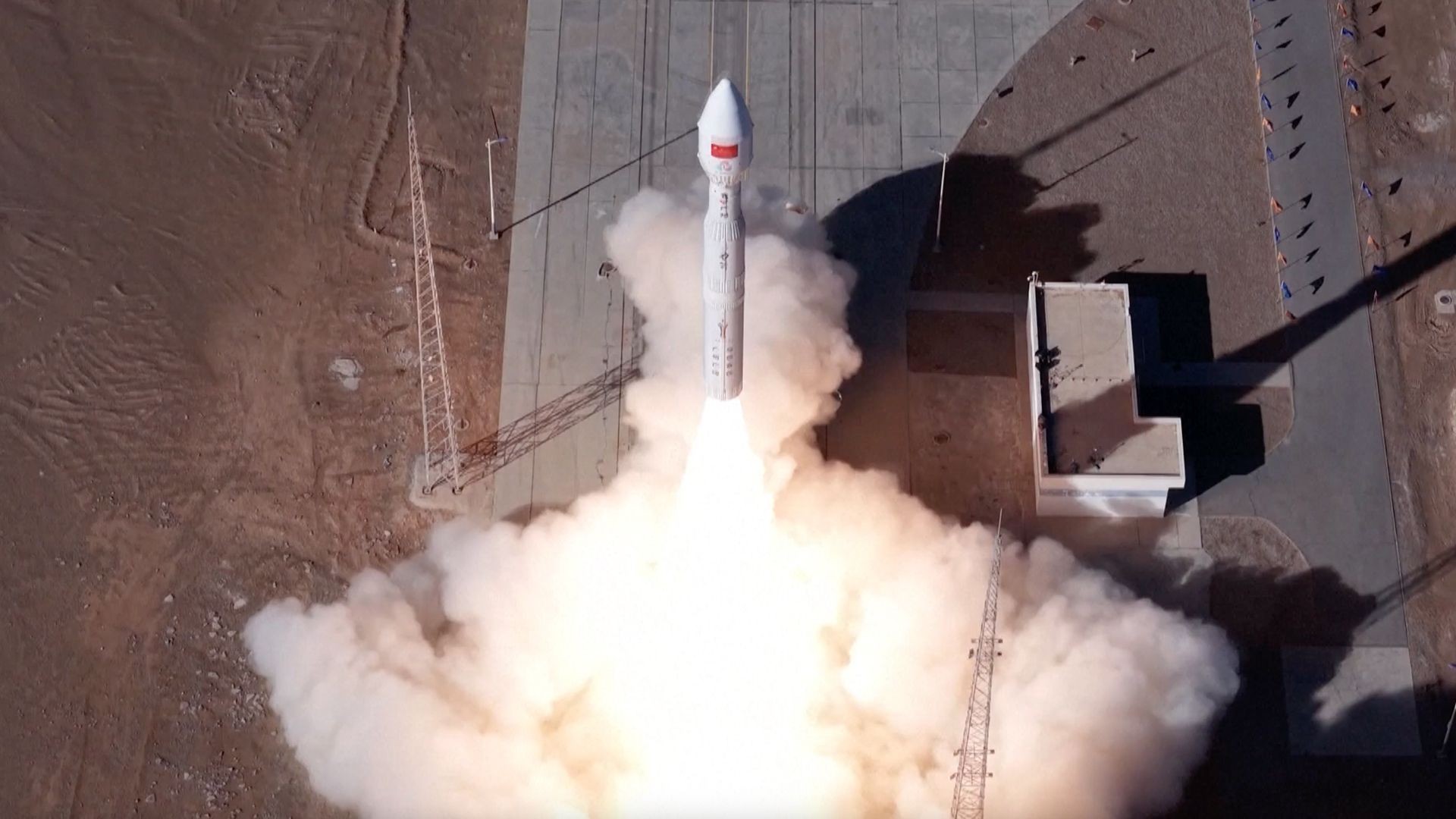
A Chinese rocket launch nearly caused a collision with a SpaceX Starlink satellite, raising concerns about coordination failures in increasingly crowded Earth orbit. The incident, which occurred on December 9th, involved nine spacecraft deployed by a Kinetica 1 rocket from the Jiuquan Satellite Launch Center in China. According to SpaceX, one of the deployed satellites came within 200 meters of Starlink satellite STARLINK-6079 at an altitude of 560 kilometers.
The Close Call and Lack of Coordination
SpaceX’s Vice President of Starlink Engineering, Michael Nicolls, reported the near-miss via X (formerly Twitter), criticizing the apparent lack of coordination between the Chinese launch provider and existing satellite operators. “As far as we know, no coordination or deconfliction with existing satellites… was performed,” Nicolls stated.
This matters because the risk of collisions is rising rapidly as more satellites fill orbit. In 2020, fewer than 3,400 satellites were active; today, over 13,000 orbit Earth, with SpaceX alone operating nearly 9,300 Starlink satellites. This exponential growth demands better communication to avoid catastrophic consequences.
Responses and Investigations
CAS Space, the Chinese company operating the Kinetica 1 rocket, responded that it follows standard collision-avoidance procedures using ground-based tracking systems. They claim to select launch windows to prevent collisions with known satellites and debris. However, the incident reportedly occurred 48 hours after payload separation, suggesting the issue wasn’t detected during the initial launch phase. CAS Space has committed to investigating and coordinating with satellite operators.
The Growing Problem of Space Debris
The incident highlights a critical flaw in the current system: a lack of standardized data sharing between satellite operators. Starlink satellites perform roughly four avoidance maneuvers per month, having executed over 145,000 in the first half of 2024 alone.
However, not all spacecraft have this capability, and even Starlink can be caught off guard by uncoordinated launches. A single collision could trigger a cascading debris field known as the Kessler Syndrome, rendering certain orbits unusable for future operations.
The incident underscores that space is becoming too congested for current standards of coordination. Without better protocols, the risk of debris-generating collisions will only increase, threatening the long-term sustainability of space activities.
This close call is a stark warning that the era of casual space launches is over. The future demands proactive communication and standardized safety measures to ensure the continued use of Earth orbit.