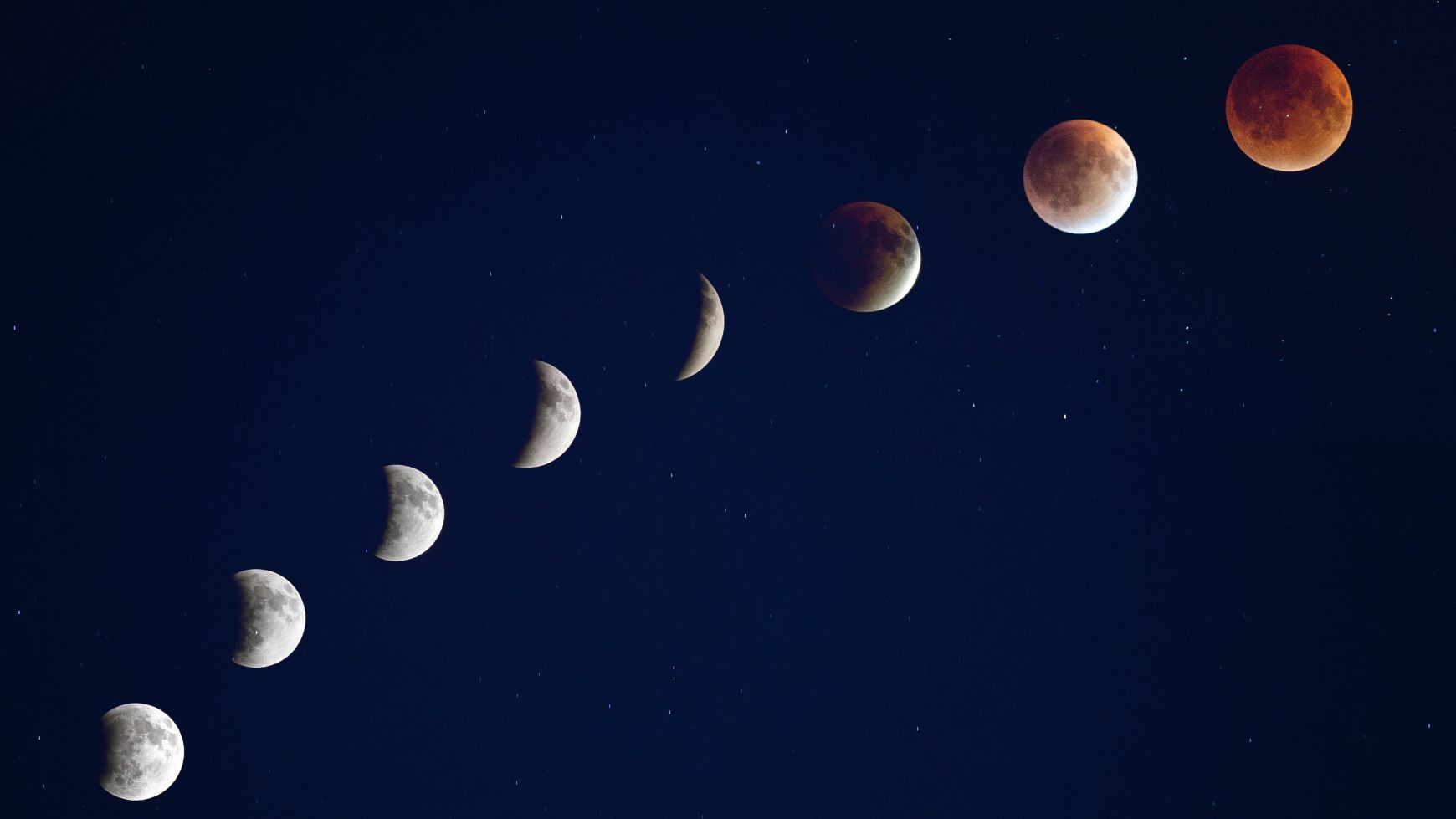
On March 3rd, a spectacular celestial event – a total lunar eclipse, often called a “blood moon” – will be visible to billions across the Americas, Asia, and Oceania. This eclipse is not just a beautiful sight; it’s a clear demonstration of the orbital mechanics of our solar system. The Earth will pass directly between the sun and the moon, casting a shadow that turns the lunar surface a striking shade of red.
This phenomenon occurs because sunlight is filtered through Earth’s atmosphere during totality, with shorter blue wavelengths scattered away, leaving the longer red wavelengths to illuminate the moon. The exact timing of each phase will vary depending on your location, so use resources like Time and Date’s eclipse tracker for precise timings.
The Stages of the Eclipse
The eclipse unfolds in distinct phases, each offering a unique visual experience. Here’s a breakdown of what to expect:
Penumbral Phase (Starting 3:44 a.m. EST / 0833 GMT)
The eclipse begins as the moon enters Earth’s outer shadow, the penumbra. This initial phase is subtle – a slight dimming of the lunar surface that’s easily missed. The darkening becomes more noticeable as the moon moves deeper into the penumbra.
Partial Phase (Starting 4:50 a.m. EST / 0950 GMT)
The curvature of Earth’s inner shadow, the umbra, becomes visible, gradually covering the moon. Initially black, the shadow transitions through brown and deep red hues as totality approaches. Observers in the eastern U.S., such as in New York City, will witness the entire partial phase and the beginning of totality before sunrise.
Full Eclipse (Starting 6:04 a.m. EST / 1104 GMT)
This is the peak of the eclipse, lasting 58 minutes. The moon will be completely immersed in Earth’s umbral shadow, taking on a dramatic red color. This phenomenon is due to Rayleigh scattering, which filters out blue light while letting red light pass through. States as far east as Alabama and Michigan will witness the entirety of totality before the moon sets.
Eclipse Maximum (6:33 a.m. EST / 1133 GMT)
The eclipse reaches its most intense point as the moon passes closest to the center of Earth’s shadow. Viewers in the western U.S., including Montana and Colorado, will also see the waning partial phase.
Waning Eclipse (Ending 7:02 a.m. EST / 1202 GMT)
The full eclipse concludes as a thin crescent of the moon re-emerges from Earth’s shadow. The crescent will grow thicker over the next hour, with Earth’s inner shadow fully clearing the moon at 8:17 a.m. EST (1317 GMT), followed by the outer shadow at 9:23 a.m. EST (1423 GMT).
The blood moon is not just a visual spectacle; it’s a reminder of the precise cosmic ballet that governs our solar system.
Whether you’re an amateur astronomer or simply curious, this eclipse offers a rare opportunity to witness a breathtaking display of natural phenomena. For those hoping to capture the moment, resources like expert astrophotography guides and recommendations for the best cameras and telescopes are readily available.