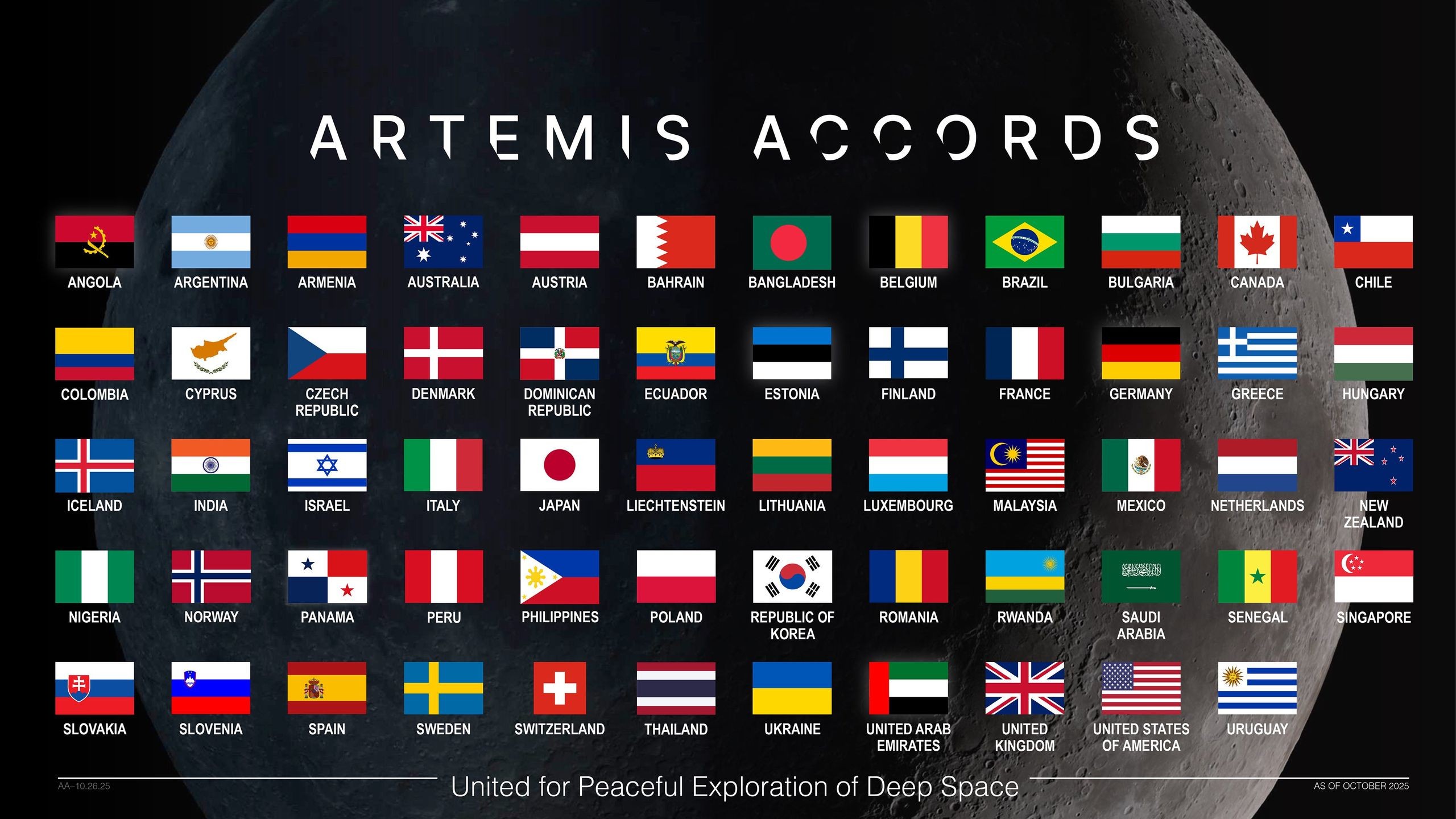
A growing number of nations are aligning with NASA’s vision for responsible lunar and deep space exploration, with Latvia becoming the 60th country to sign the Artemis Accords. These accords, established in 2020, represent a set of international principles guiding how nations approach space exploration.
What are the Artemis Accords?
The Artemis Accords, initiated by the U.S. State Department and NASA, outline a shared vision for peaceful, sustainable, and responsible space exploration. They build upon the foundation of the 1967 Outer Space Treaty, which aimed to foster international cooperation in space. Key principles include transparency, interoperability, emergency assistance, and minimizing orbital debris.
Recent Signatories Bolster Global Cooperation
October proved to be a particularly active month for the Artemis Accords, with several nations joining the coalition. In addition to Latvia, the Philippines, Malaysia, and Hungary formally committed to the principles of the accords. Earlier in the year, Senegal, Norway, Bangladesh, and Finland also added their names to the list. This rapid expansion highlights the growing international consensus around the need for clear guidelines in space exploration.
Why This Matters
The growing number of signatories isn’t just about numbers. It indicates a wider acceptance of the standards for responsible space activities. As more nations participate, a more consistent approach to lunar and deep space exploration—and the rules governing it—becomes increasingly likely. This is particularly important as nations plan missions to the moon and beyond, with multiple players intending to establish long-term lunar presences.
Artemis Program & The Accords: A Separated but Complementary Effort
It’s important to note that the Artemis Accords are distinct from NASA’s Artemis program. While the program focuses on returning astronauts to the moon, with a target date of 2027 for landing astronauts on the lunar surface—and ultimately establishing a permanent human presence—the Accords provide a framework for how all participating nations will operate. > The Accords are essentially a roadmap for collaboration and responsible behavior, regardless of a country’s specific space exploration activities.
Potential Delays & The Future
Latvia’s official inclusion, though announced at the end of October, may be slightly delayed due to the ongoing U.S. government shutdown. A formal signing ceremony is anticipated once the government resumes operations. Regardless, the addition of Latvia further solidifies the growing international commitment to peaceful and sustainable space exploration, setting the stage for a new era of collaboration in the cosmos.