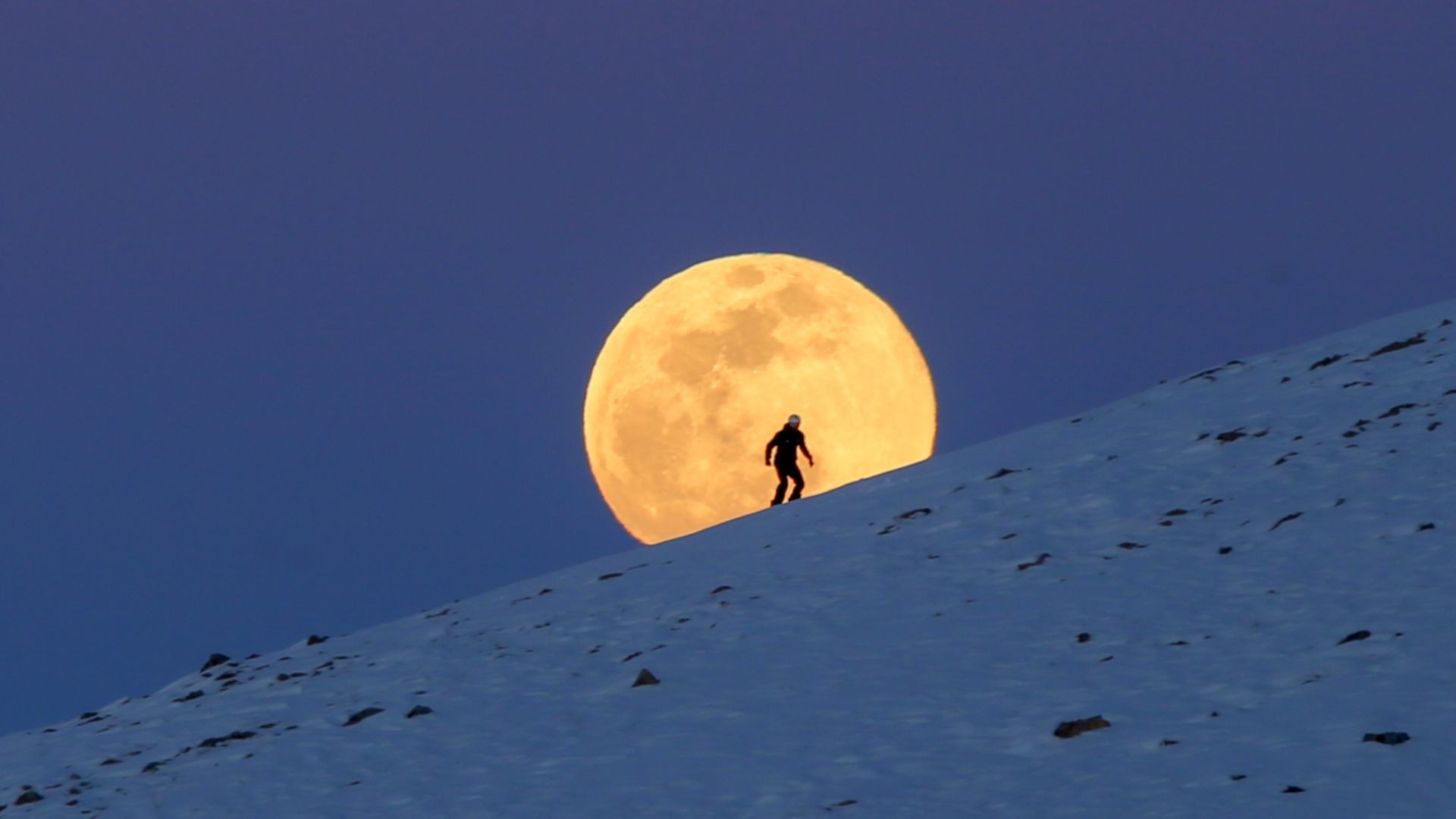
February’s full moon, known as the “Snow Moon,” will reach peak illumination on February 1st, offering a stunning celestial display visible at sunset. This month’s full moon peaks at exactly 5:09 PM EST (10:09 GMT) and will appear opposite the sun in Earth’s sky, fully lit from our perspective.
Why the Name “Snow Moon?”
The name “Snow Moon” reflects the heavy snowfall common during this time of year. Historically, it’s also been called the “Bear Moon” – marking the season when bear cubs are born – and the “Hunger Moon,” referencing the scarcity of food in lean winter months. These names highlight how cultures have long tied lunar cycles to seasonal events.
Viewing Details: Timing & Location
For observers in the U.S., the full lunar disk will rise over the eastern horizon at sunset. Exact moonrise and moonset times vary by location; TimeandDate’s calculator provides precise timings for your area. The moon may initially appear yellow-orange near the horizon, a result of Rayleigh Scattering, where Earth’s atmosphere scatters blue light, allowing red wavelengths to dominate. As it rises higher, the moon will shift to its usual silvery glow.
Beyond the Glow: Lunar Features & Jupiter’s Proximity
The full moon isn’t just a beautiful sight; it’s an opportunity to observe the aftermath of ancient asteroid impacts. Look for “ejecta rays” – streaks of reflective material cast across the lunar surface during crater-forming events. The most prominent example originates from the 53-mile-wide Tycho crater near the lunar south pole. While these rays fade over time, the full moon’s illumination makes them visible.
The best time to examine craters is around the full moon phase, when the “terminator” – the line between lunar day and night – casts shadows on crater rims and interiors.
Adding to the spectacle, the gas giant Jupiter will shine brightly near the Snow Moon, with the stars Castor and Pollux (from Gemini) to its left. Orion and Sirius will also be visible in the southeastern sky.
In summary: February’s Snow Moon is more than a seasonal marker; it’s a reminder of the moon’s violent history and a chance to witness a dynamic celestial event alongside bright planets and familiar constellations. Observing the full moon allows for deeper engagement with the night sky and its long-term evolution.