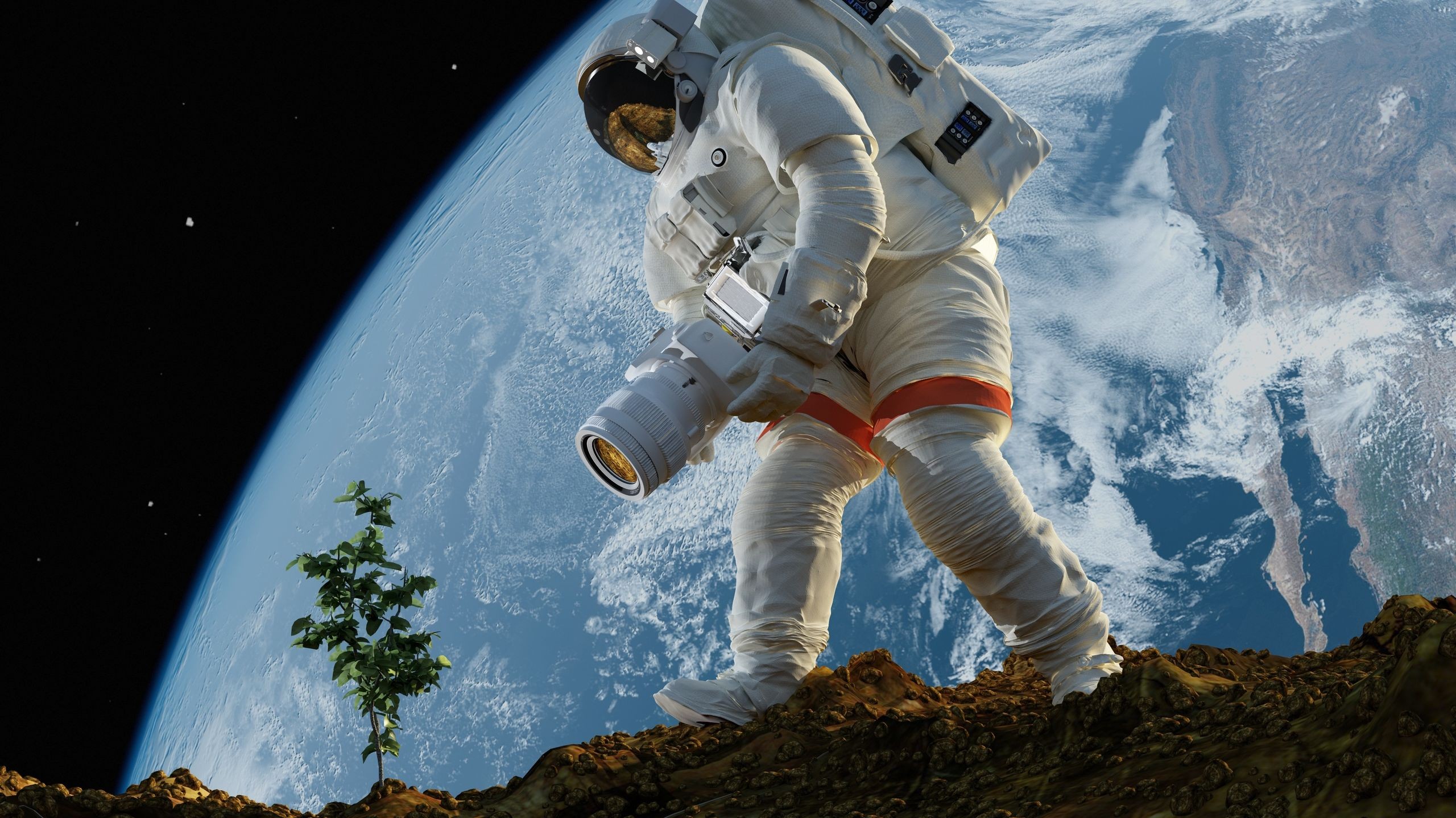
Recent research demonstrates that growing crops on the moon may be more feasible than previously thought. Scientists have successfully cultivated chickpea plants in a mixture of simulated lunar soil, or regolith, combined with organic compost and beneficial fungi. This breakthrough could be a critical step toward establishing self-sufficient outposts on the moon, reducing reliance on costly resupply missions from Earth.
The Challenge of Lunar Soil
The moon’s regolith is fundamentally different from Earth’s soil. It lacks the organic matter and microorganisms essential for plant growth, and contains toxic metals like aluminum, copper, and zinc. Additionally, it doesn’t retain water well, making irrigation difficult. These factors make direct cultivation impossible without significant treatment.
The Solution: Compost and Fungi
Researchers at the University of Texas have discovered that combining vermicompost (worm-processed compost from organic waste) with arbuscular mycorrhizal fungi (AMF) can dramatically improve regolith’s fertility. AMF helps plants absorb nutrients, reduces toxicity from metals, and binds soil particles to prevent erosion. The combination appears to be synergistic: plants only flourished when both were present, in mixtures containing no more than 75% regolith.
Experiment Details
The study used simulated lunar regolith, a near-identical artificial mixture based on samples brought back by the Apollo missions. Chickpea plants were grown in various concentrations of vermicompost and AMF, alongside control plants in terrestrial soil. Results showed that the regolith-grown chickpeas produced seeds, though fewer than those grown in Earth soil. However, individual seeds from the regolith-grown plants had comparable weight to the control group, suggesting nutritional viability. The AMF also significantly increased root and shoot mass, indicating its positive impact on growth.
Future Implications
While the long-term safety and nutritional value of these lunar-grown crops remain uncertain, the experiment proves that terrestrial organisms can survive and even thrive in lunar conditions. Researchers are now investigating whether these plants are safe for human consumption and how many generations would be needed to optimize their nutritional profile.
The success of this study suggests that, with further refinement, lunar regolith can be transformed into a self-sustaining soil rich in organic matter and microbial life, making long-term space colonization more sustainable.