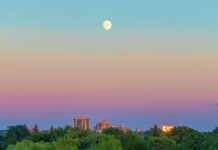
The night sky is currently brightening as the Moon approaches a significant lunar event. For stargazers and casual observers alike, the next few days offer a prime opportunity to witness the Moon in its most brilliant state.
Tonight’s Lunar Phase: The Waxing Gibbous
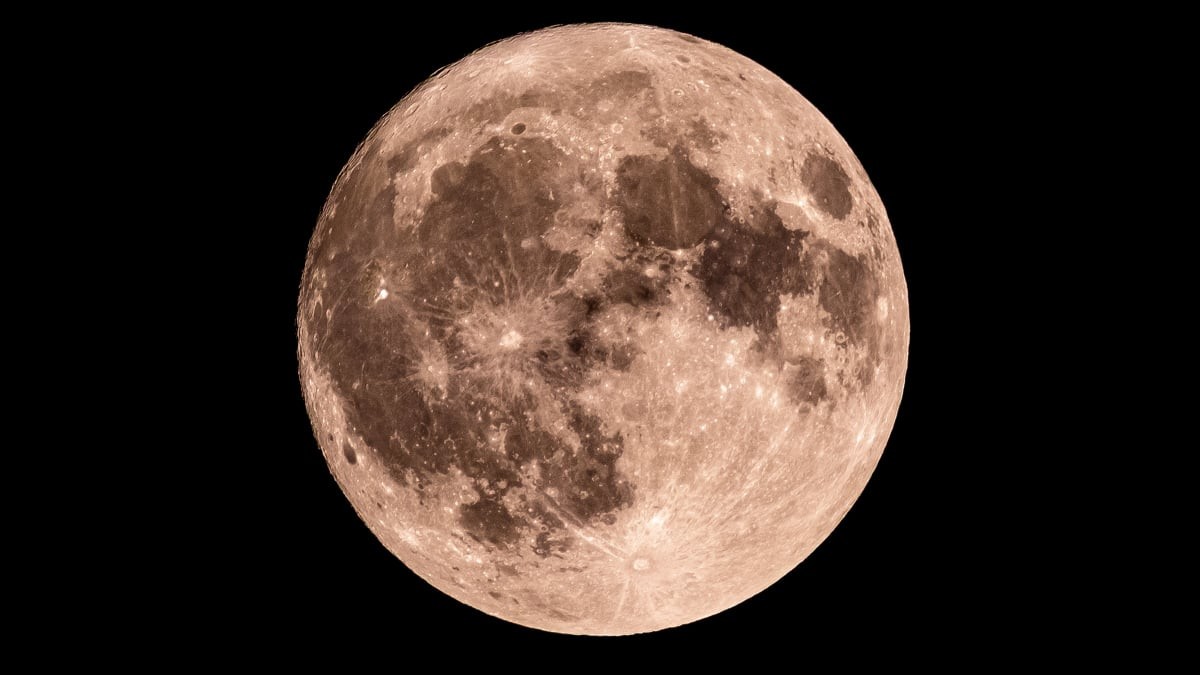
As of Tuesday, April 28, 2026, the Moon is in its Waxing Gibbous phase. According to NASA, approximately 89% of the lunar surface is illuminated tonight.
The term “waxing” indicates that the visible portion of the Moon is growing larger each night, while “gibbous” describes its swollen, almost-full shape. This phase serves as the final buildup before the Moon reaches its peak illumination.
Observation Guide: From Naked Eye to Telescope
Depending on the equipment you have available, the level of detail visible tonight varies significantly. Here is a breakdown of what you can expect to see:
🔭 With the Naked Eye
Even without any specialized tools, the Moon is bright enough to reveal large, dark basaltic plains known as maria. Look for:
– Mare Vaporum
– Mare Tranquillitatis (Sea of Tranquility)
– Mare Fecunditatis (Sea of Fertility)
🔍 With Binoculars
If you use binoculars, the view expands to include more complex geological features:
– Mare Frigoris (Sea of Cold)
– Mare Nectaris (Sea of Nectar)
– The Apennine Mountains
🔬 With a Telescope
For those with a telescope, the Moon reveals its most intricate details, including historical landmarks and deep craters:
– The Apollo 15 landing site
– Rima Hyginus (a lunar rille or trench)
– The Fra Mauro Highlands
Looking Ahead: A “Blue Moon” Month?
The Moon is rapidly approaching its next Full Moon, which is predicted for May 1.
Interestingly, this is the first of two Full Moons expected in May. When a single calendar month contains two Full Moons, the second one is often colloquially referred to as a “Blue Moon.” This phenomenon occurs because the lunar cycle lasts approximately 29.5 days, which is slightly shorter than most calendar months, allowing for an occasional overlap.
Understanding the Lunar Cycle
The shifting appearance of the Moon is not caused by the Moon itself changing shape, but by its position relative to the Earth and the Sun. As the Moon orbits our planet, different amounts of its illuminated half become visible from our perspective.
The cycle consists of eight distinct phases:
- New Moon: The Moon is between Earth and the Sun; the side facing us is dark.
- Waxing Crescent: A small sliver of light appears on the right side (in the Northern Hemisphere).
- First Quarter: Half of the Moon is illuminated on the right side.
- Waxing Gibbous: Most of the Moon is lit, but it is not yet a full circle.
- Full Moon: The entire face of the Moon is illuminated.
- Waning Gibbous: The illuminated portion begins to shrink from the right side.
- Third Quarter: Half of the Moon is illuminated on the left side.
- Waning Crescent: A thin sliver of light remains on the left before the cycle restarts.
Summary: Tonight offers a near-full view of the Moon, providing excellent visibility of lunar plains and mountains, serving as a spectacular prelude to the upcoming Full Moon on May 1.