The new film adaptation of Andy Weir’s “Project Hail Mary” delivers an action-packed space adventure, but how does its science stack up? Two science journalists, Tina Hesman Saey and Carolyn Gramling, dissected the movie’s concepts, from sun-eating microbes to alien materials science, and found a blend of plausible extrapolation and outright sci-fi invention. This analysis breaks down the key elements, separating fact from fiction.
The Astrophage Threat: A Plausible, Accelerated Crisis?
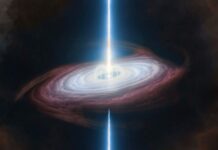
The central premise of “Project Hail Mary” revolves around astrophages – fictional microorganisms consuming the energy of stars, causing them to dim. The film suggests a 10% luminosity drop in 30 years could trigger an ice age on Earth. While the sun has varied in brightness over geological time, past ice ages were driven more by orbital shifts and Earth’s axial tilt than solely by solar output.
A 10% dimming would cool the planet, but the severity depends on mitigating factors like atmospheric greenhouse gases. The astrophages’ rapid action – a 10% drop in decades – is dramatically accelerated compared to natural solar fluctuations, which typically occur over billions of years. As one journalist points out, “sci-fi likes to speed things up for dramatic effect.”
Life in Extreme Conditions: Microbes to the Rescue?
The film posits that astrophages thrive in both the heat of stars and the harsh vacuum of space. While Earth organisms can survive in extreme environments (moss spores in space, archaea in boiling water), active life in such conditions is unprecedented. Microbes are remarkably resilient, but surviving and propagating between stars requires biology beyond current understanding.
As Weir himself notes, the true marvels of life reside in single-celled organisms, capable of adapting to almost any environment. The astrophages’ ability to function in extreme heat, cold, vacuum, and pressure is highly speculative but not entirely impossible.
Xenonite: Sci-Fi Material or Theoretical Physics?
The film introduces xenonite, a material made from xenon (a noble gas) that can be manipulated with ease. Noble gases are chemically inert and don’t easily bond into solid structures. Creating solid xenon requires extreme cold (-111.79°C) or pressures (140 gigapascals – equivalent to Earth’s mantle pressure).
The film’s depiction of xenonite as a malleable, readily-shaped material is a clear example of sci-fi invention. While scientists have crystallized xenon under extreme conditions, its practical application as a building material remains firmly in the realm of speculation.
The Verdict: A Fun, But Far-Fetched, Premise
“Project Hail Mary” blends scientific plausibility with imaginative license. The astrophage threat, while exaggerated, draws from real concerns about stellar variability and the potential for extreme life forms. The xenonite, however, is pure technobabble.
The film’s core message – that microbial life may hold the key to surviving cosmic threats – is intriguing. Yet, the speed and conditions required for the astrophage crisis remain firmly rooted in the realm of science fiction. Ultimately, “Project Hail Mary” prioritizes spectacle over strict scientific accuracy, making it an entertaining, but not entirely realistic, space adventure.