In 2007, Turkish mathematician Ali Nesin launched an unconventional solution to a persistent problem in education: students memorising formulas instead of thinking critically. His answer? The Nesin Mathematics Village, a secluded learning environment in western Turkey designed to foster deep understanding through immersion and communal living.
The Problem with Traditional Maths Education
Nesin observed that even high-achieving students from Turkey’s most prestigious schools struggled with fundamental mathematical reasoning. Rather than actively engaging with the subject, they relied on rote memorisation, a systemic issue that stifled genuine comprehension. The core issue, as Nesin saw it, was a lack of critical thinking in a system prioritising test scores over true understanding.
The Village as a Learning Environment
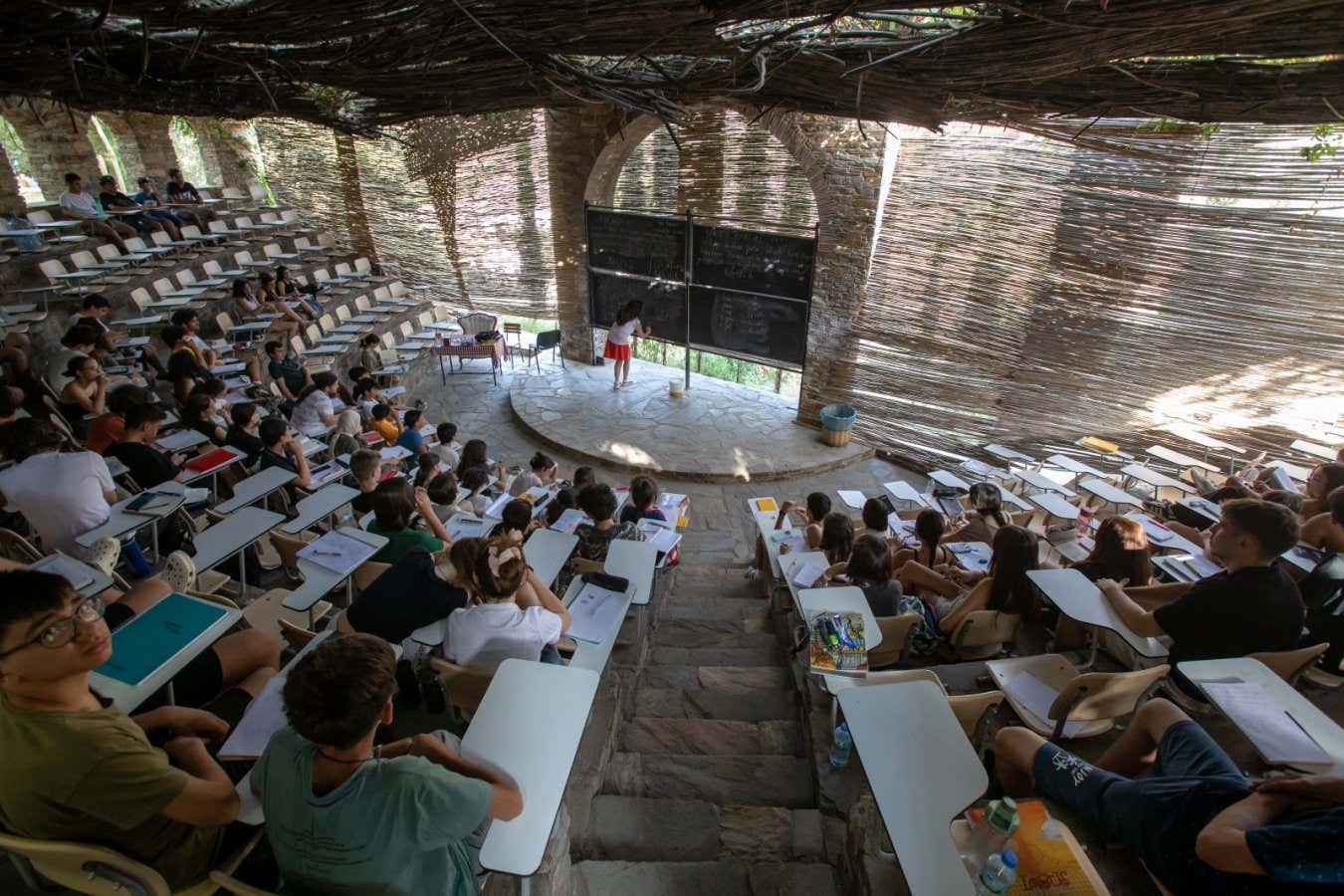
The Nesin Mathematics Village is purposefully isolated, set amongst natural elements like trees, vines, and stone structures. Photographer Piero Castellano, who recently documented the village, explains that this setting is deliberate. Nesin believed that minimising external distractions and encouraging communal life would help students immerse themselves fully in maths.
The village operates without exams. Instead, learning is integrated with daily chores, fostering a sense of responsibility and collaborative engagement. This approach contrasts sharply with the pressure-cooker environments of traditional schools.
A Prize-Winning Philosophy
In 2018, Nesin received the Leelavati Prize from the International Mathematical Union, a recognition of his innovative teaching methods. His acceptance speech focused on his most rewarding moments at the village: observing students finally think for themselves.
“The place is kind of utopic; it looks like a separate world,” says Castellano.
Nesin’s village isn’t just about teaching maths, it’s about cultivating a mindset. By stripping away conventional pressures and embracing a more immersive, communal approach, he demonstrates that deep learning isn’t always found within classrooms but can thrive in unconventional spaces. The success of this approach highlights the need to re-evaluate how maths—and education in general—is delivered to ensure students grasp concepts, not just memorise them.