A veteran NASA astronaut, Michael Fincke, has revealed that he experienced a sudden and unexplained inability to speak during a recent mission aboard the International Space Station (ISS). The medical incident prompted an unprecedented early evacuation of the entire Crew-11 team back to Earth in January. Despite extensive testing, doctors remain puzzled by the event, which Fincke believes is likely linked to the unique conditions of space travel.
The Incident and Emergency Evacuation
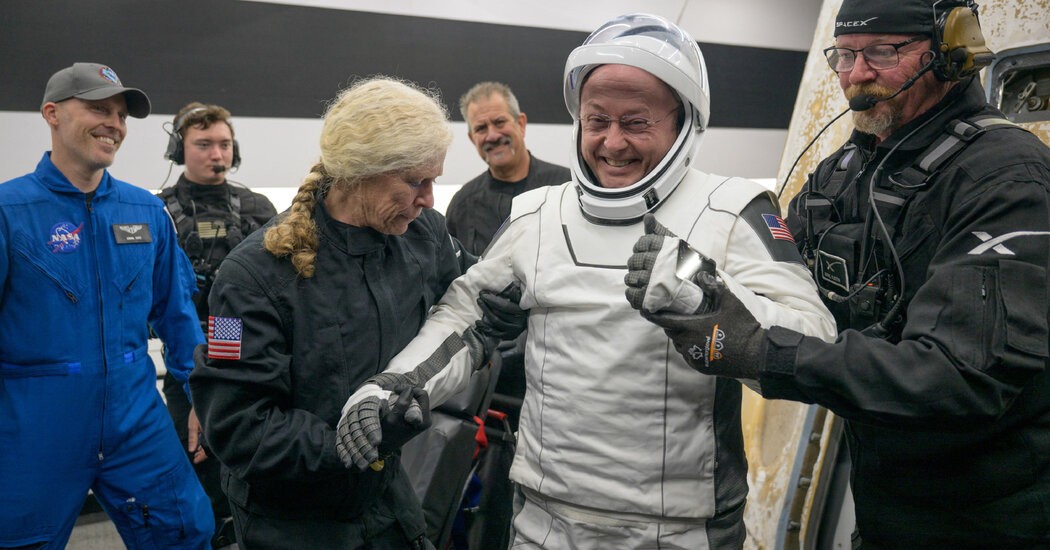
On January 7th, while at dinner, Fincke abruptly lost his ability to speak. The sudden onset of the condition alarmed his crewmates – Zena Cardman (NASA), Kimiya Yui (JAXA), and Oleg Platonov (Roscosmos) – who initiated the emergency return procedure. While the astronaut was stable, the limited medical resources available on the ISS necessitated the early termination of the 167-day mission. This marked the first time in the ISS’s 25-year history that astronauts were brought home prematurely due to a medical issue.
The team splashed down in the Pacific Ocean on January 15th, and all four crew members underwent thorough medical evaluations to protect the affected astronaut’s privacy.
Medical Mystery Deepens
Fincke confirmed in multiple interviews that medical tests have ruled out common causes such as a heart attack or stroke. The astronaut, who has accumulated a total of 549 days in space across multiple missions, expressed frustration that the incident remains a mystery.
“The doctors are still scratching their heads,” Fincke told NBC News. “We’re almost 100 percent sure that this is a space-related thing.”
This raises serious questions about the long-term effects of prolonged space exposure on human physiology. The ISS environment presents unique physiological challenges, including radiation exposure, microgravity, and altered circadian rhythms. While these factors are known to affect astronaut health, the nature of Fincke’s condition appears to be a novel and currently unexplained phenomenon.
Implications for Future Missions
NASA has downplayed the incident publicly, with officials jokingly advising Fincke to stop apologizing for the mission’s premature end. However, the event underscores the inherent risks of human spaceflight and the limitations of medical care in orbital environments.
The incident highlights the need for improved diagnostic capabilities aboard space stations and a deeper understanding of how the space environment can impact astronaut health in unpredictable ways. It also serves as a reminder that even experienced astronauts can be vulnerable to sudden and unexplained medical emergencies while in orbit.
The incident with Fincke’s speech loss is a critical development in space health. The medical community will need to continue researching the long-term effects of space travel to ensure the safety of future missions, especially as humanity prepares for more extended stays on the Moon and eventual journeys to Mars.