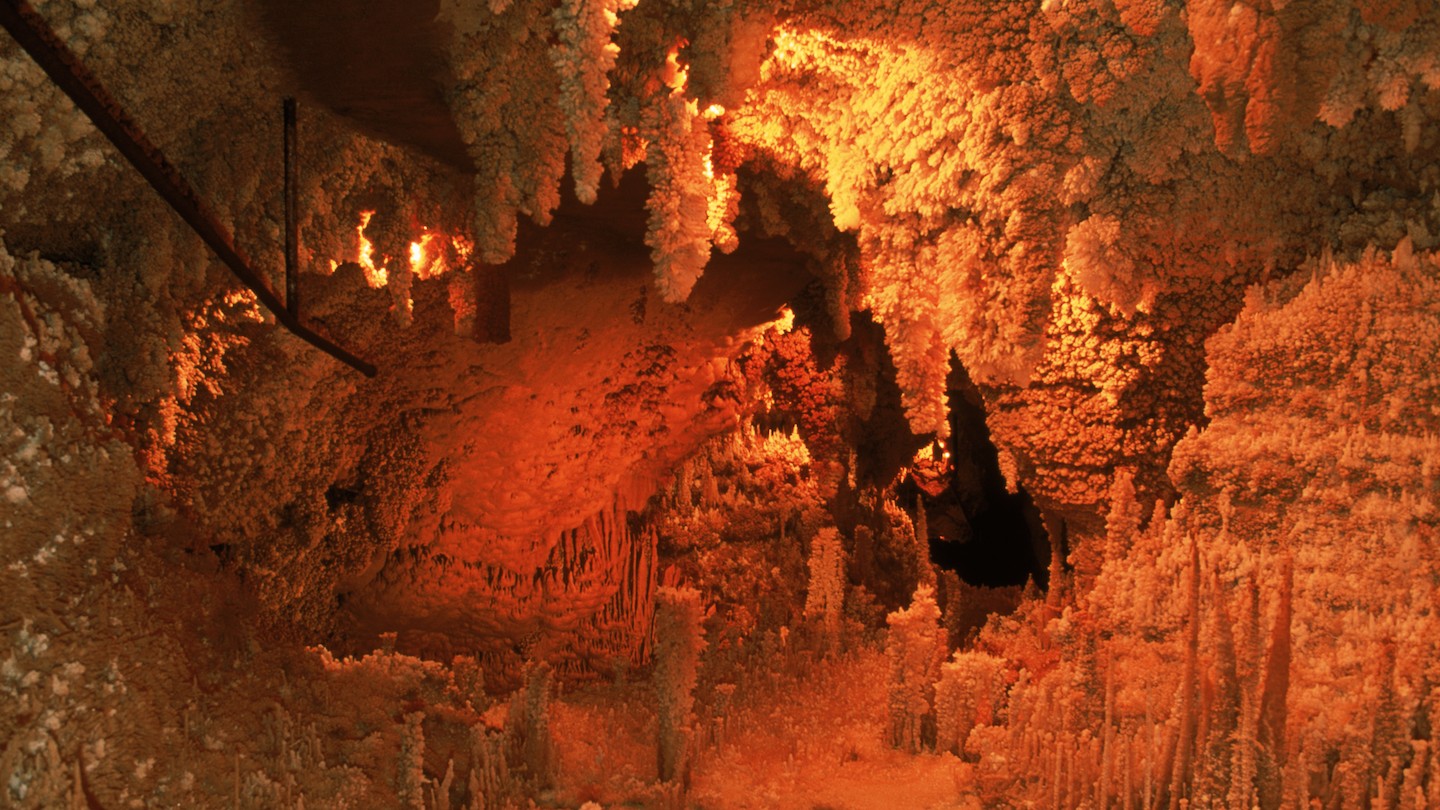
Cave formations, often called “cave popcorn,” are not just random geological oddities. They’re a fascinating result of simple chemistry and the relentless drip of mineral-rich water over thousands of years. This article breaks down the science behind how these structures form, from the basic elements involved to the final, bulbous shapes we see in caverns around the world.
The Building Blocks: Minerals and Water
At their core, cave formations depend on minerals—solid, crystalline substances that make up rock. Calcite, a common mineral with the chemical formula CaCO₃ (calcium carbonate), is a key ingredient. Calcium, an element also found in bones and sea salt, combines with carbonate to create this versatile substance.
The process begins with water dissolving these minerals. Rainwater, slightly acidic from atmospheric carbon dioxide, seeps through the ground and dissolves calcium from limestone or other carbonate rocks. This creates a solution, a liquid containing dissolved minerals.
How “Popcorn” Forms: Evaporation and Deposition
As this mineral-rich water drips into caves, the magic happens. The cave environment is different from the surface: it’s often drier and has more airflow. This causes the water to evaporate, meaning it turns from liquid to vapor.
But the minerals don’t evaporate. Instead, they’re left behind, slowly solidifying into tiny deposits. Over time, these deposits build up in irregular, rounded shapes, resembling popcorn. This is why the formations are called “cave popcorn.” The hue (color) of the popcorn depends on trace elements present in the water; iron, for example, can give it reddish tones.
Stalactites and Beyond
This process is closely related to how stalactites form. Stalactites are icicle-like formations that hang from cave ceilings. They form when mineral-rich water drips, evaporates, and leaves behind deposits just like cave popcorn. But unlike the random popcorn shapes, stalactites grow downwards in a more organized fashion.
Other minerals can also contribute. Gypsum, for instance, forms similar deposits, though it’s softer and more soluble than calcite. The exact composition of the formations depends on the local geology and water chemistry.
Why It Matters
Cave formations aren’t just pretty sights; they’re records of past climate and environmental conditions. The rate at which they grow depends on rainfall, temperature, and mineral availability. By studying these formations, scientists can reconstruct past climate patterns and understand how cave ecosystems have evolved.
Understanding cave formations requires understanding basic chemistry, geology, and hydrology. These formations are a beautiful demonstration of simple physical processes working over vast time scales.