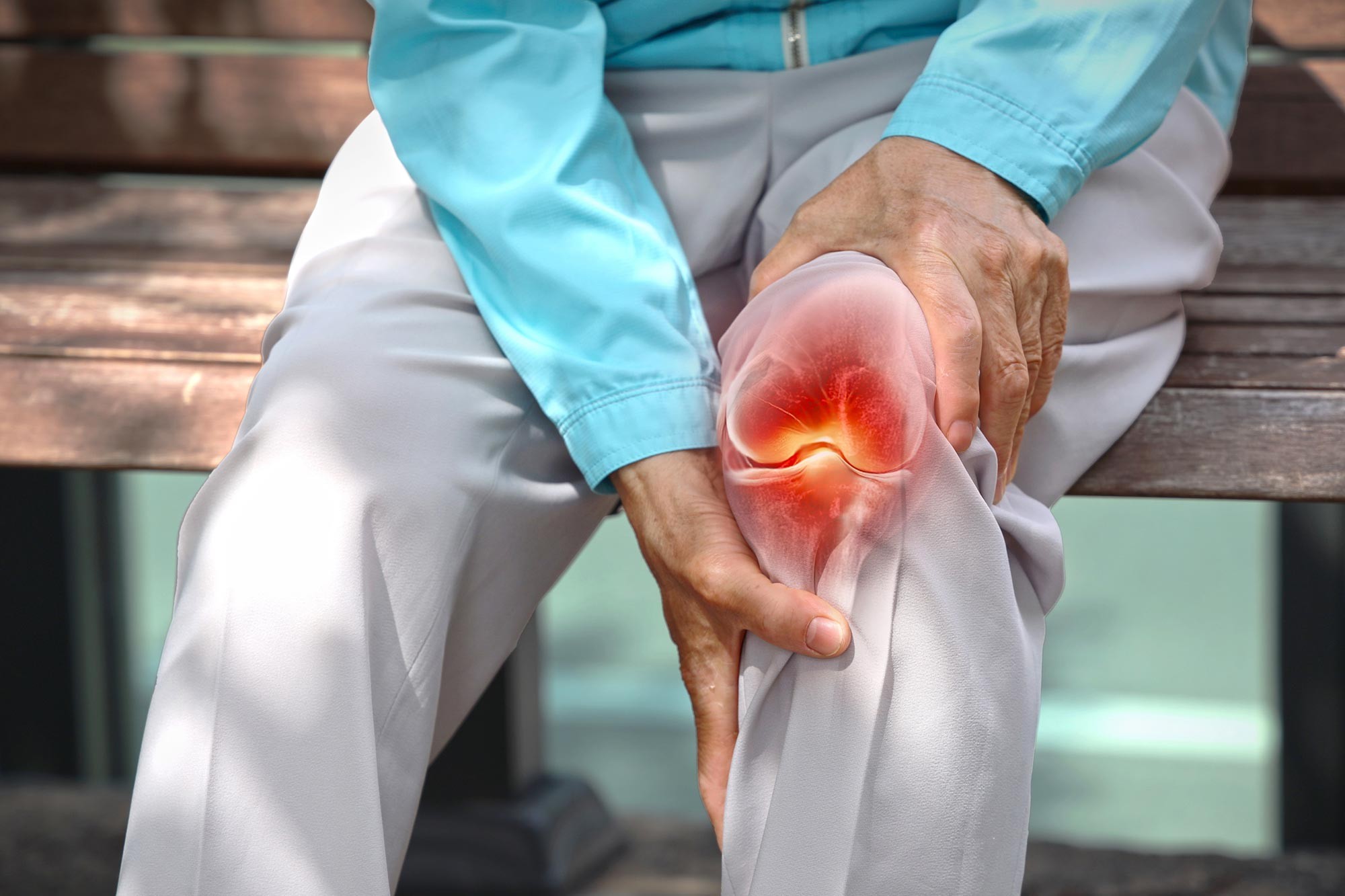
Older age has its perks. Groan-free joints is not one of them
Let’s be honest. You ignore that ache in the knee or hip because you’re terrified it will get worse. You assume stillness equals safety.
It’s the exact opposite.
We are all born with cartilage—a thick, rubbery cushion on the ends of our bones. Plus we’ve got synovial fluid, that gooey liquid that lubricates everything like motor oil in a brand-new car. It cuts friction. It feeds the tissue. It keeps things gliding.
The problem? That supply line gets thinner. The cartilage loses its blood supply and stops repairing itself. What you’re left with is a slow-motion crash called osteoarthritis. Five hundred million people globally are riding that wreck. Most of them feel it in their weight-bearing joints: knees, hips, spine.
So you freeze. You think staying in the kitchen saves your knees.
Science says otherwise.
Move the Fluid
Your body needs motion to distribute synovial fluid.
Without it, the nutrients don’t reach the cartilage. The joint starves. Simple as that.
Exercise forces that fluid into the gaps. But it’s not just about lubrication. Muscles work as shock absorbers. If your muscles are strong, your bones don’t have to take the full blast of impact. Strength training, especially for the quads, acts as armor. A massive Cochrane review confirmed what physical therapists have screamed for decades. Exercise reduces pain from knee osteoarthritis almost as well as anti-inflammatory drugs. No side effects though. No chemical fallout.
Think about that for a second. You can pill your way through the pain, or you can build a body that tolerates it.
Balance Isn’t Optional
Aging does more than weaken joints. It scrambles the map.
Proprioception—your brain’s sense of where your limbs are in space—dulls with age. You misstep because your brain sent a wrong coordinate. The result? Uneven weight distribution. That single knee takes twice the load. The cartilage grinds down faster.
We can fix this.
Training on uneven or unstable surfaces forces your brain and joints to renegotiate their agreement. Ankles, knees, and hips snap into place, correcting errors in milliseconds. It keeps them flexible.
Low-Impact Doesn’t Mean Lazy
You don’t need to drop from heights. In fact, you shouldn’t.
Low-impact exercise keeps at least one foot on the floor. Or you float.
Swimming is brilliant because the water holds up nearly 90% of your weight. Same goes for water aerobics. Cycling saves the knees from impact while still demanding muscle engagement.
Tai Chi looks slow, deceptive even, but studies show it rivals formal physical therapy for knee osteoarthritis patients. Yoga tightens the muscle cage around the joint, adding structural stability.
“Unstable surface training significantly improves postural stability in older adults.” (2026 Study)
Even walking works if you quit the concrete treadmill.
Hit the dirt. Grass. Gravel. Bush trails. These irregular textures force your stabilizers to fire up. One study noted a 23% drop in fall rates when seniors trained their balance on unstable ground. That stat matters because falling is the top killer of adults over 65 related to injury. Not heart attacks. Falls.
Just Start
Maybe you’ve never touched a foam roller. Maybe your idea of exercise is reaching for the TV remote.
Here’s how not to ruin it immediately.
-
Keep it stupid simple
No equipment required. Stand on one leg while brushing your teeth. Start on tile. Do thirty seconds. If that doesn’t wobble you, move to a folded towel. Do not jump ahead. Master the solid ground first. Otherwise you just tweak something useless.
Walk outside. Leave the pavement for a block of grass or sand. Ten minutes is enough.
-
Build in failsafes
Safety isn’t glamorous, it’s necessary. Have something sturdy within arm’s reach. A chair, a wall, a bench. If you’re walking outside, get poles. Never train when you’re exhausted. Tired brains miss balance cues. You’ll eat pavement.
-
Check your form
Deep squats with bad form kill knees. Over-extended yoga poses crush backs. Just because you can bend there doesn’t mean you should. Pain is data. Listen to it.
Consult a professional before going wild. A physio or exercise physiologist will spot your blind spots. They design plans that actually fit your broken little machine.
Joints degrade. That’s the law. But erosion slows if you move.
So go do something weird today. Stand on the grass. Hold onto a tree.
Your knees might not thank you tomorrow, but they will survive. That has to count for something.