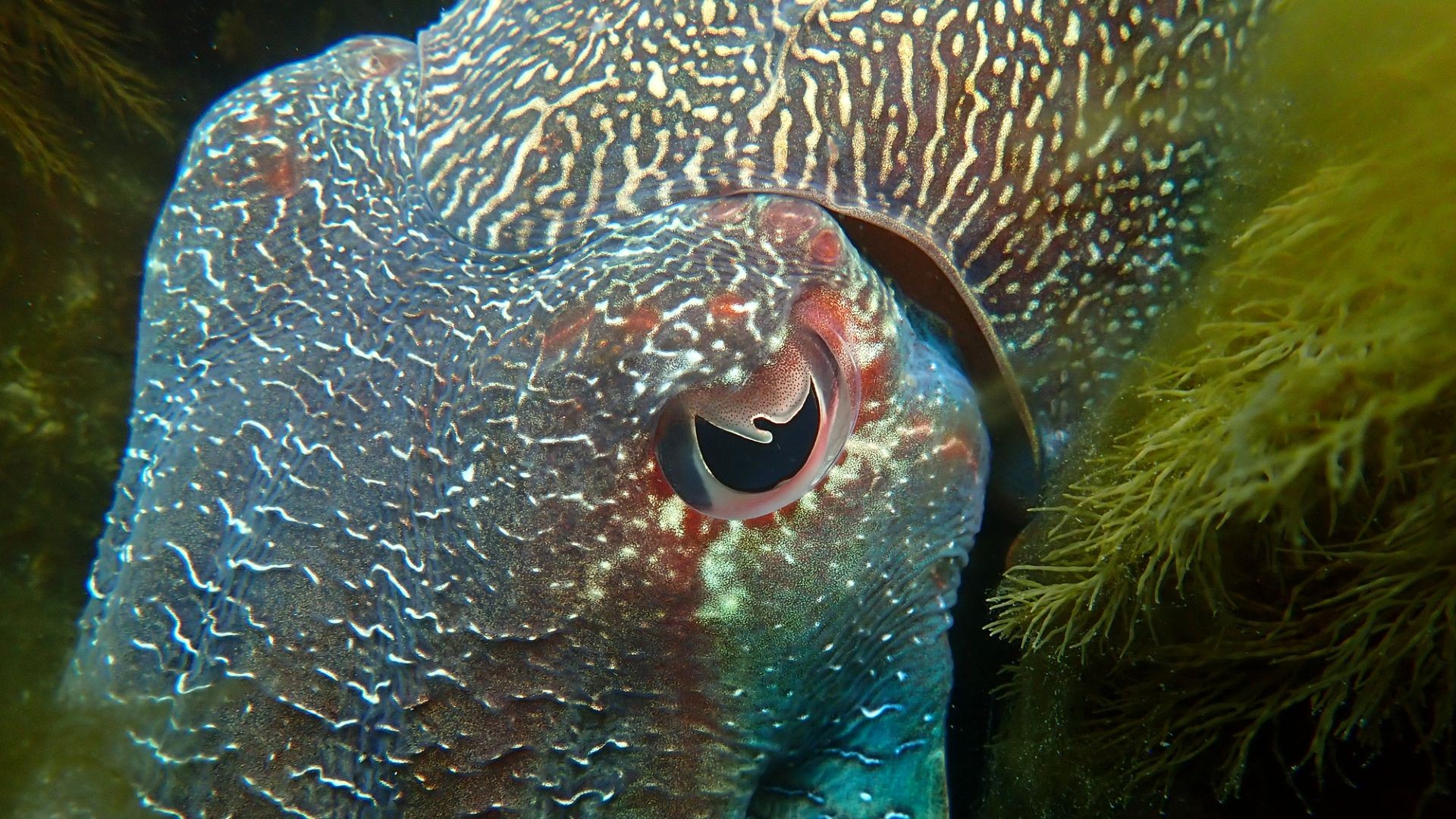
Animal pupils aren’t just simple black circles that adjust to light. Across the natural world, they come in a remarkable variety of shapes — vertical slits in cats, horizontal bars in goats, even W-shaped crescents in cuttlefish. This diversity isn’t random; the shape of an animal’s pupil is a direct adaptation to its lifestyle, influencing how it sees and survives.
The Imperfect Eye: Why Shape Matters
While ideal optics suggest pupil shape shouldn’t matter, real eyes are flawed. Light passing through the pupil bends and blurs, and different shapes resolve these imperfections differently. As visual neuroscientist Jenny Read explains, “It actually turns out to be really complicated.” This complexity is evolutionarily important.
Depth of Field: A Predator’s Advantage
A key factor is depth of field — the range of distances that appear in focus. Animals exploit this through pupil shape. Ambush predators, like cats and snakes, have slit-like pupils that narrow horizontally but remain wide vertically. This maximizes sharpness for vertical edges, crucial for stereopsis (distance judgment using two eyes). Simultaneously, the wider vertical opening allows depth estimation through blur for horizontal contours, a clever workaround for situations where stereopsis isn’t useful.
This works best for ground-level hunters. Larger predators, such as lions, with round pupils see from a steeper angle, diminishing the benefit of blur-based depth perception.
Prey Animals: Scanning for Survival
Prey animals prioritize a wide field of view over sharpness. Goats, sheep, and horses have horizontal pupils that maximize light intake from side-to-side, allowing them to scan for predators. The narrow vertical opening sharpens horizontal contours, the opposite of how predators’ eyes function.
However, this creates a problem: when grazing, a lowering head would distort the pupil’s orientation. Evolution solved this with compensatory eye rotation ; prey animals move their eyes within their sockets to maintain a parallel alignment with the ground, preserving their panoramic vision.
Aquatic Mysteries and Uncharted Territory
The strangest pupil shapes appear in the sea. Cuttlefish, for example, have W-shaped pupils, the purpose of which remains debated. Some theories suggest camouflage or reduced light scattering, but definitive answers are lacking.
Marty Banks, a professor emeritus of optometry, notes that many aquatic pupils remain unexplained, and Jenny Read suspects even more undiscovered abilities lie hidden within animal eyes.
The diversity in pupil shapes highlights how deeply evolution tailors vision to specific survival needs. From the ambush predator’s slit-like precision to the grazing animal’s panoramic scan, each adaptation demonstrates the power of natural selection in shaping how creatures perceive and interact with their world.