Scientists have uncovered a massive freshwater reservoir concealed beneath Utah’s Great Salt Lake, a finding that could dramatically alter the future of the shrinking lake and the surrounding region. The discovery, detailed in a recent study, suggests the reservoir may extend across the entire lakebed and beyond, potentially offering a crucial resource as the lake faces unprecedented decline.
The Unexpected Discovery
For years, researchers have observed unusual freshwater springs feeding patches of reeds (phragmites) sprouting from the exposed lakebed in Farmington Bay. These reeds require a constant supply of fresh water, raising questions about the source of this anomaly. The new study confirms those suspicions: a vast freshwater deposit lies hidden beneath the lake’s saline surface, accumulating over millennia from mountain snowmelt.
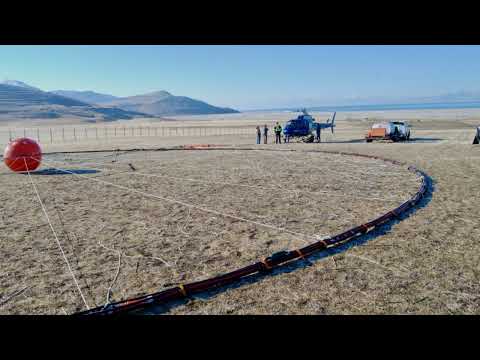
The discovery was made using airborne electromagnetic surveys, a technique that sends pulses into the ground to map subsurface water deposits. The researchers initially weren’t sure if the salty lake water would interfere with the readings, but the results were clear: a substantial freshwater layer exists across the surveyed area, ranging from 330 feet to 2.5 miles deep.
Why This Matters
The Great Salt Lake is shrinking at an alarming rate. Since 1986, water levels have dropped over 22 feet due to human water consumption, prolonged drought, and climate change-driven evaporation. As the lake recedes, vast stretches of exposed lakebed become sources of toxic dust storms, threatening air quality in nearby populated areas like Salt Lake City.
The existence of this freshwater reservoir could be a game changer. If confirmed at a larger scale, the water could be used to dampen the exposed lakebed, mitigating the dust pollution. It may also offer a supplemental source for agricultural irrigation, though further studies are necessary to assess sustainability.
The Geological Underpinnings
The freshwater is believed to be trapped beneath a layer of impermeable “cap” rock, preventing it from mixing with the lake’s saltwater. Faults in the underlying bedrock appear to influence the reservoir’s depth, creating uneven distribution. Geologists believe the freshwater has been accumulating for thousands, potentially millions, of years.
The study’s lead author, Michael Zhdanov, emphasized the significance of the discovery: “The result was amazing… We need to expand the survey in order to make any definitive conclusions that this water reservoir is located under the entire area.”
Implications Beyond Utah
This finding demonstrates that airborne geophysical surveys can effectively locate hidden groundwater reserves in arid regions. The success of this project suggests similar freshwater deposits may exist elsewhere in Utah and beyond, offering a new approach to water resource management in drought-prone areas.
The discovery underscores the critical need for further exploration and sustainable management of these hidden resources, as climate change continues to exacerbate water scarcity worldwide.