Two commercial spacecraft have successfully completed an unprecedented autonomous rendezvous in Earth orbit, marking a significant step forward for in-space servicing and refueling technologies. The mission, dubbed ‘Remora,’ was a joint effort between Starfish Space and Impulse Space, demonstrating the capability to bring spacecraft together without human intervention.
Mission Details and Timeline
The rendezvous involved two of Impulse Space’s Mira orbital transfer vehicles, each roughly the size of a dishwasher. One Mira, equipped with Starfish’s guidance, navigation, and control (GNC) software suite – Cetacean and Cephalopod – autonomously approached another Mira to within just 4,100 feet (1,250 meters). This achievement proves the viability of advanced rendezvous and proximity operations (RPO) technology.
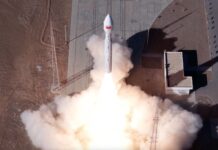
The mission itself was executed with remarkable speed, moving from concept to completion in under a year. The first Mira launched in November 2023 on SpaceX’s Transporter 9 flight (LEO Express 1), while the second launched in January 2025 via Transporter 12 (LEO Express 2). The latter conducted initial operations, including the deployment of two cubesats and precision engine burns, before embarking on the Remora rendezvous in late October.
Implications for Satellite Servicing
The successful rendezvous is more than just a technical demonstration. It validates a pathway for future satellite servicing missions, including inspection, refueling, repair, and even the de-orbiting of defunct spacecraft. These capabilities are becoming increasingly crucial as space becomes more crowded and the demand for sustainable space operations grows.
Starfish Space is actively developing Otter, a versatile vehicle designed to provide these services. This mission builds on a previous attempt with Otter Pup 1, which had originally aimed to rendezvous with its launch vehicle but instead successfully approached another space tug in April 2024, proving key components of the RPO system.
Why This Matters: The Future of Space Logistics
The ability to autonomously rendezvous and operate in orbit is a foundational technology for the future of space logistics. Current space infrastructure relies heavily on single-use hardware, leading to orbital debris and high costs. In-space servicing, enabled by missions like Remora, allows for the extension of satellite lifespans, the repair of critical assets, and the removal of space junk, all of which are vital for long-term sustainability.
“Proving this capability is a major milestone for Starfish, and gives us tremendous confidence as we move toward our first Otter launches next year.” – Trevor Bennett, Starfish Space Co-Founder
This demonstration signals a shift towards a more sustainable and efficient model for space operations. The rapid development and execution of Remora, combined with the continued refinement of autonomous RPO technology, suggest that in-space servicing will become increasingly commonplace within the next decade.