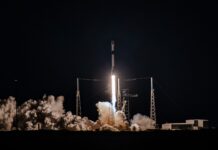


A powerful Atlas V rocket is set to launch the ViaSat-3 F2 satellite into orbit today (Nov. 5), marking a significant step in expanding global broadband internet access. You can witness this event live, offering a glimpse into the world of space launches and advanced satellite technology.
The Mission and the Satellite
The ViaSat-3 F2 satellite, weighing approximately 13,000 pounds (5,900 kilograms), is designed to deliver enhanced broadband services. The launch is scheduled to take place from Florida’s Cape Canaveral Space Force Station, with a 44-minute window opening at 10:24 p.m. EST (0324 GMT on Nov. 6). ULA will broadcast the launch live on Space.com, with coverage beginning roughly 20 minutes before liftoff.
Reaching Geostationary Orbit: A Crucial Destination
Following liftoff, the Atlas V is expected to deploy ViaSat-3 F2 into geostationary transfer orbit about 3.5 hours later. This is an intermediate orbit, after which the satellite will undertake a multi-month journey to its final destination: geostationary orbit (GEO).
GEO is a particularly valuable orbit, located approximately 22,236 miles (35,786 kilometers) above Earth. At this altitude, a satellite’s orbital speed precisely matches Earth’s rotational speed. This synchronicity allows GEO satellites to appear stationary from our planet, providing continuous coverage over a fixed geographic area. Because of this unique property, GEO is a popular orbit for communications and spy satellites.
Expanding Global Broadband Connectivity
The ViaSat-3 satellite constellation, comprising three satellites, represents a major investment in expanding broadband internet access worldwide. ViaSat-3 F1, the first in the series, was launched in April 2023 using a SpaceX Falcon Heavy rocket. ViaSat-3 F2 will focus on providing enhanced capacity over the Americas, while ViaSat-3 F3, slated for launch next year, will serve the Asia-Pacific region.
“Each ViaSat-3 satellite is designed to be capable of rapidly shifting capacity throughout its coverage area to deliver bandwidth where and when it’s needed most.” – Viasat
This flexibility is crucial to meet the growing demands of commercial, consumer, and defense customers. The ability to dynamically allocate bandwidth addresses the changing patterns of internet usage, ensuring reliable connectivity even in areas experiencing peak demand. Currently, ViaSat-3 F1 is primarily used to provide in-flight internet to airline passengers.
The Atlas V: A Veteran of Spaceflight
The Atlas V rocket, which has successfully completed over 100 missions since its debut in 2002, is a reliable workhorse in the space launch industry. However, the Atlas V program is nearing its conclusion, as the United Launch Alliance transitions to its next-generation Vulcan Centaur rocket. The launch of ViaSat-3 F2 represents one of the last missions for the venerable Atlas V.
The successful deployment of ViaSat-3 F2 marks a pivotal moment in the ongoing effort to improve global connectivity and underscores the importance of advanced satellite technology. The expansion of broadband services will provide essential access to information and opportunities for individuals and businesses alike.