


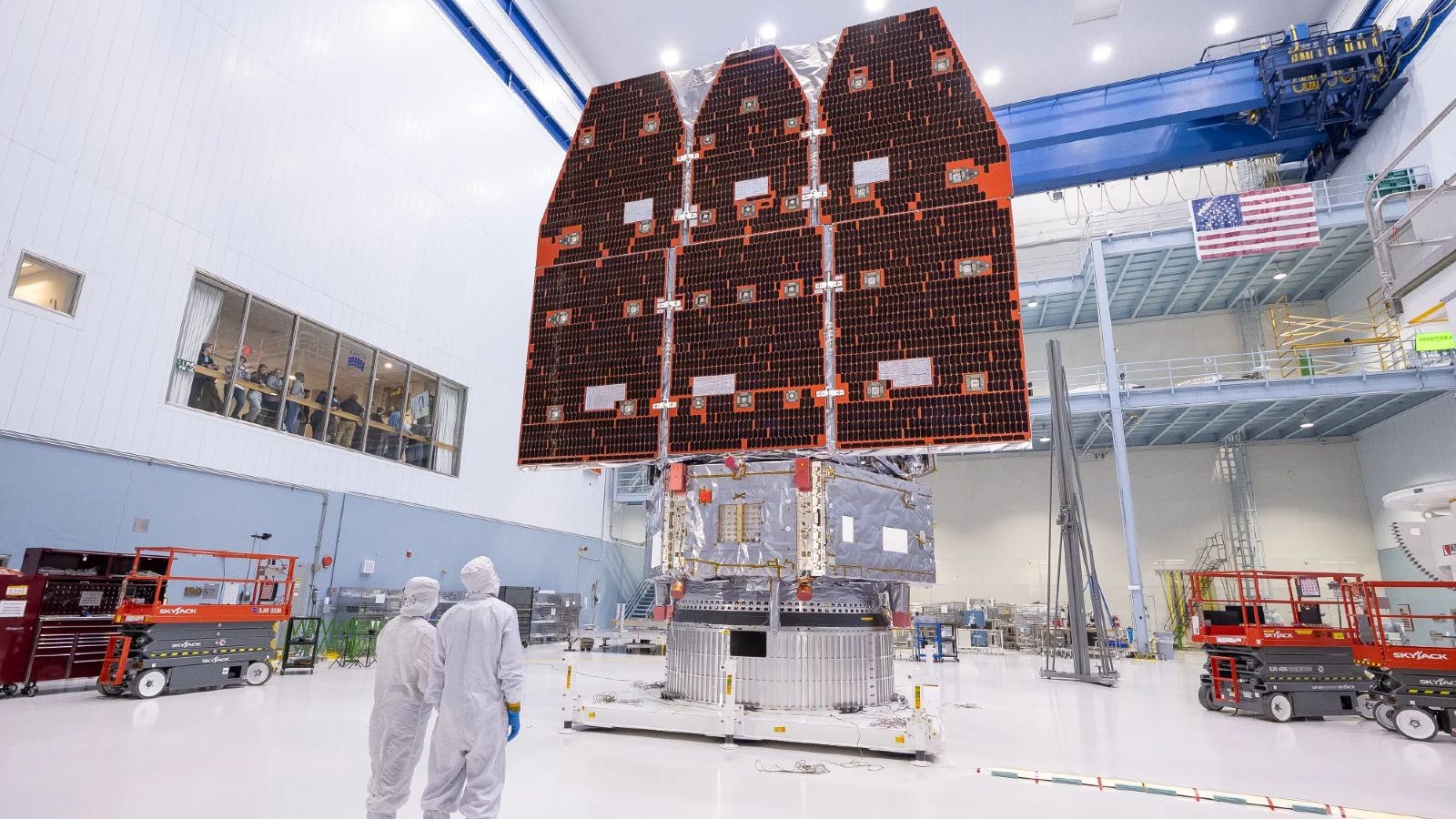
NASA has completed construction of the Nancy Grace Roman Space Telescope, a powerful observatory poised to revolutionize our understanding of the universe. The telescope, named after NASA’s first chief astronomer, is on track for a launch as early as September 2026 — ahead of previous estimates — and will begin collecting data before the end of that year.
A Successor to Hubble and Webb
The Roman telescope represents the next step in NASA’s flagship space observatory program, following the groundbreaking Hubble (launched 1990) and James Webb Space Telescope (launched 2021). Unlike a replacement, Roman is designed to complement existing telescopes. It will work in tandem with Hubble and Webb, broadening the scope of astronomical research.
The telescope itself stands 42 feet tall and weighs over 9,000 pounds, built within a $4.3 billion budget. It will operate approximately 1 million miles from Earth at the Sun-Earth L2 Lagrange point, alongside other major observatories like JWST and ESA’s Gaia and Euclid.
Key Objectives: Mapping the Milky Way and Hunting Exoplanets
Roman is equipped with two primary instruments designed for ambitious objectives:
- The Wide Field Instrument (WFI) : A 288-megapixel camera with a 7.9-foot mirror will capture high-resolution images of the outer solar system, distant galaxies, and other cosmic phenomena in infrared light. A significant portion of Roman’s observing time (25%) will be dedicated to creating the most detailed map ever of the Milky Way’s center. This map is critical because understanding galactic structure provides insight into dark matter and dark energy.
- The Coronagraph Instrument : This device will block out the glare from distant stars, revealing exoplanets otherwise obscured by stellar brightness.
A Surge in Exoplanet Discovery
To date, scientists have confirmed over 6,000 exoplanets in three decades of searching. Roman is projected to discover more than 100,000 distant worlds in just five years — a fifteenfold increase in discovery rate. This rapid expansion of exoplanet data will be vital for assessing the potential for extraterrestrial life and understanding planetary formation.
“The question of ‘Are we alone?’ is a big one, and it’s an equally big task to build tools that can help us answer it,” says Feng Zhao, Roman Coronagraph Instrument manager.
Data Capacity and Future Prospects
Roman will generate over 20,000 terabytes of data during its initial five-year mission — equivalent to the storage capacity of 3,000 iPhones. This massive dataset will challenge current analysis techniques, but also provide unprecedented opportunities for scientific breakthroughs.
The telescope will launch aboard a SpaceX Falcon Heavy rocket from Kennedy Space Center in Florida, requiring transportation from Goddard Space Flight Center in Maryland. If all goes as planned, data collection could begin before the end of 2026.
The Roman Space Telescope is poised to transform our understanding of the universe. Its high-resolution imaging, exoplanet detection capabilities, and mapping of the Milky Way will provide a wealth of data for decades to come.


