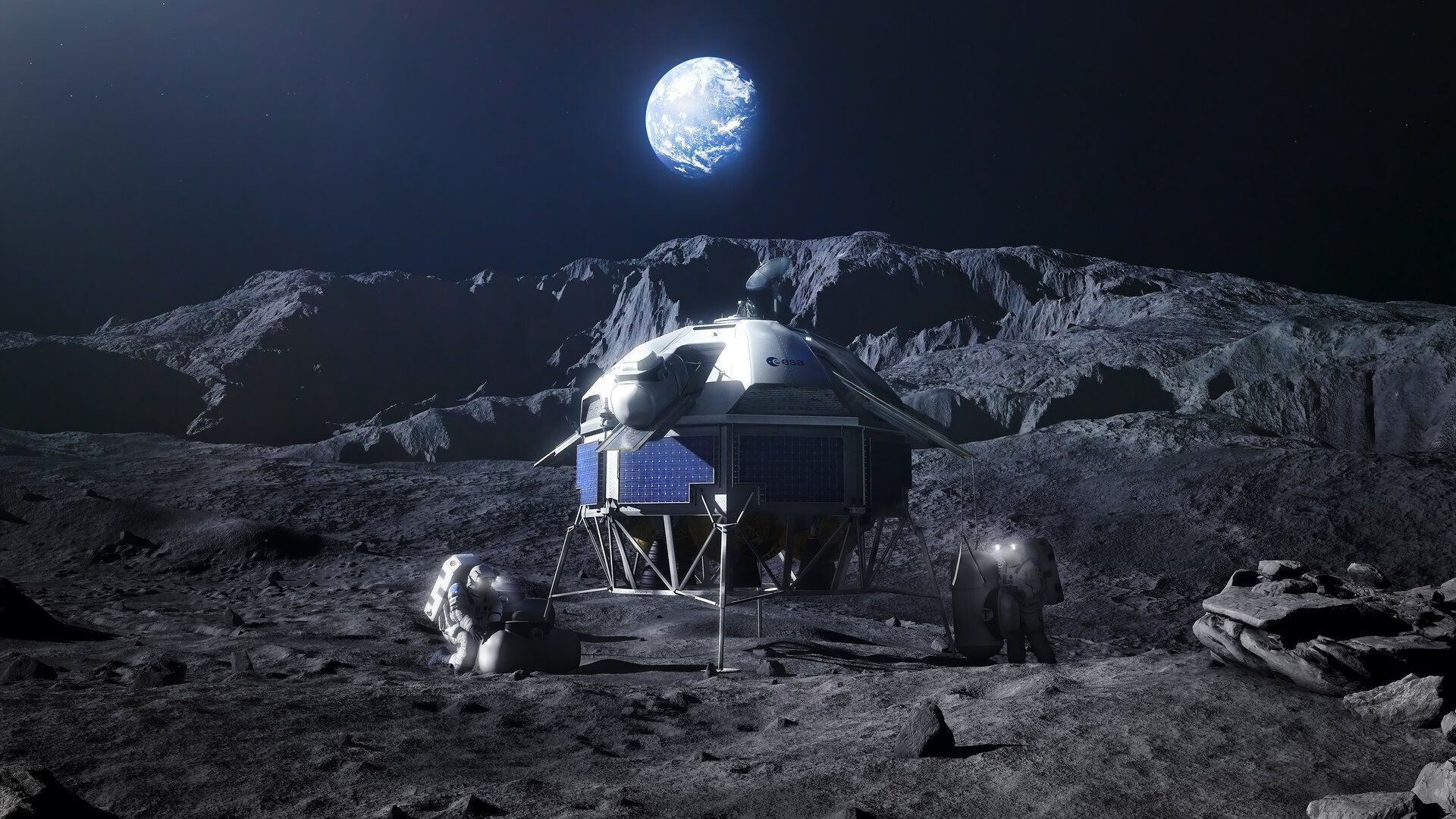
Spacecraft emissions are poised to contaminate pristine lunar regions vital for understanding the emergence of life on Earth, according to new research published in the Journal of Geophysical Research: Planets. The study highlights a critical issue as space agencies and private companies prepare for increased lunar activity.
The Problem: Methane Contamination
Current and upcoming lunar landers often use propellants that release methane during descent. Unlike Earth, where an atmosphere disperses pollutants, the Moon’s lack of air allows this exhaust to spread rapidly and remain trapped in permanently shadowed craters at the poles. These craters hold ancient water ice and organic molecules, potentially preserving clues about how life began.
Why This Matters: A Unique Scientific Archive
The Moon’s polar regions represent a uniquely valuable scientific archive. Unlike Earth, which has undergone significant geological change, the Moon has remained largely untouched for billions of years. This makes its polar ice deposits a pristine record of the solar system’s early history. However, this fragility also means modern contaminants can easily compromise them.
The study, led by Francisca Paiva of the Instituto Superior Técnico in Portugal, used computer modeling to simulate methane dispersion from the ESA’s Argonaut lander mission. The results were stark: within two months (Earth time), nearly 54% of the exhaust methane became trapped in polar cold regions, including the opposite pole from the landing site. The molecules behave “ballistically,” hopping across the surface without dispersing.
Implications for Future Missions
The findings raise serious questions about planetary protection. As Paiva points out, “The moon is an environment as valuable as Antarctica or national parks.” The study suggests a need for stricter guidelines to safeguard sensitive lunar areas and minimize the chemical footprint of future missions.
Silvio Sinibaldi, a planetary protection officer at ESA, emphasizes the urgency: “We will miss an opportunity if we don’t have instruments on board to validate those models.” More research is needed to determine how deeply contaminants penetrate the lunar ice, but the current data underscore the potential for widespread contamination.
The long-term implications are clear: unchecked lunar exploration risks obscuring one of the most important scientific records in the solar system, hindering our ability to understand life’s origins.
To ensure responsible lunar exploration, future missions must prioritize contamination mitigation and thorough monitoring of propellant exhaust.