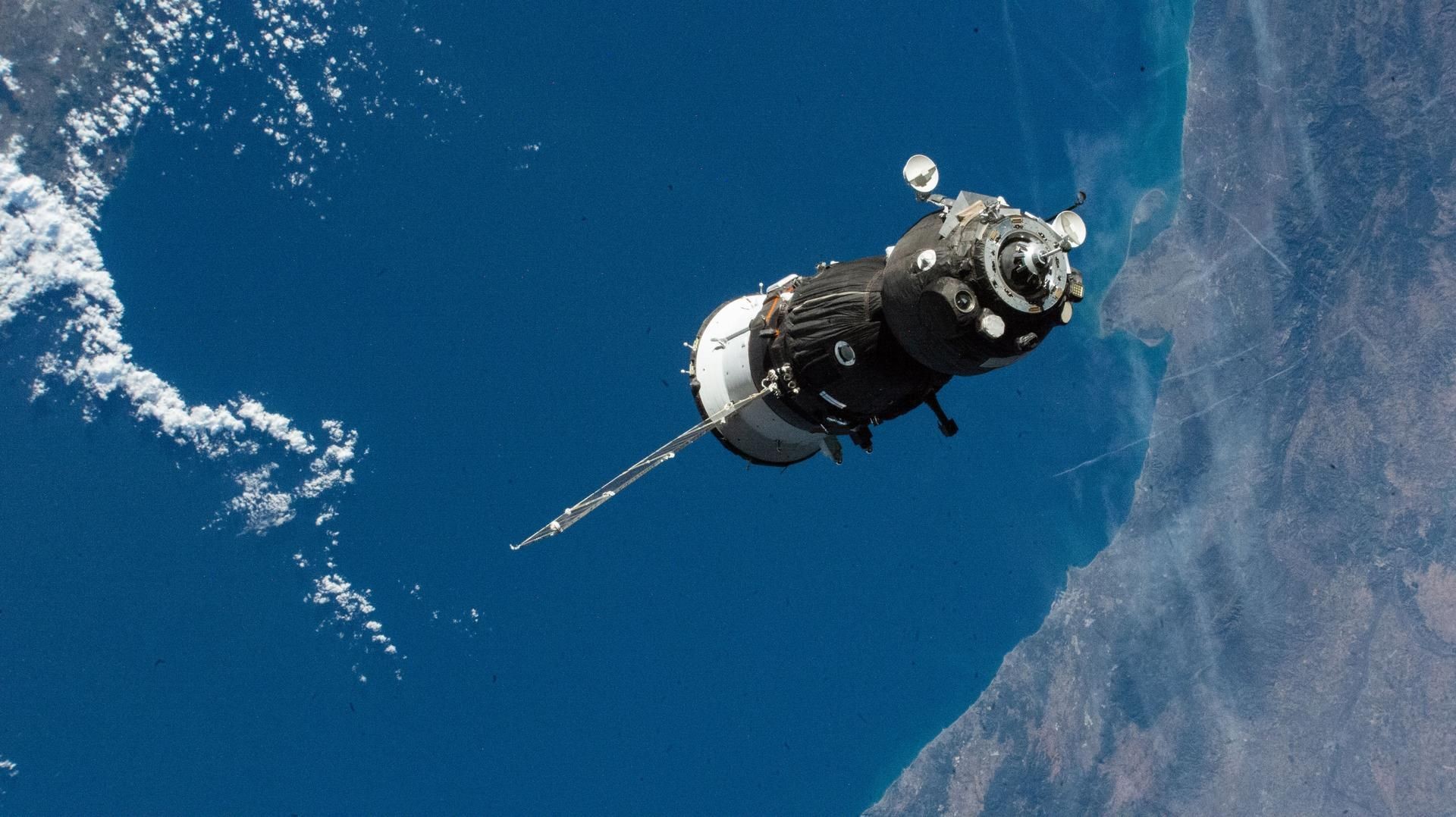
On November 27, 2025, Russia’s Soyuz MS-28 spacecraft successfully docked with the International Space Station (ISS), marking a significant moment in space travel. The mission also comes with a complication: the launch damaged the Baikonur Cosmodrome’s Pad 31/6, the sole launch site for Russian crew and cargo missions to the ISS. Repairs are pending, raising questions about future Russian access to the station.
Historical Context of the Soyuz Program
The Soyuz program, meaning “unison” in Russian, began during the peak of the space race in the 1960s. Initially designed as part of the Soviet Union’s lunar landing project, it evolved into a reliable crew transport system. Though it never reached the moon, Soyuz remains in operation today, proving its durability and adaptability over decades.
Expedition 73 Crew and Mission
The Soyuz MS-28 carried NASA astronaut Chris Williams and Russian cosmonauts Sergei Mikaev and Sergey Kud-Sverchkov. The three will participate in Expedition 73, an eight-month mission dedicated to scientific research and station maintenance.
Unique ISS Docking Situation
The docking of Soyuz MS-28 resulted in an unprecedented event: all eight of the ISS’ visiting vehicle docking ports were simultaneously occupied. This milestone in the station’s 25-year history underscores the increasing complexity of international space cooperation and logistical coordination. The image of the spacecraft was captured in low Earth orbit, approximately 432 kilometers above the Mediterranean Sea, near Barcelona.
The combination of a successful docking with a damaged launchpad highlights both the achievements and ongoing challenges in space exploration. This event emphasizes the importance of backup infrastructure and the potential disruption that single-point failures can cause in critical space operations. The future of Russian ISS access remains uncertain until Pad 31/6 is repaired.