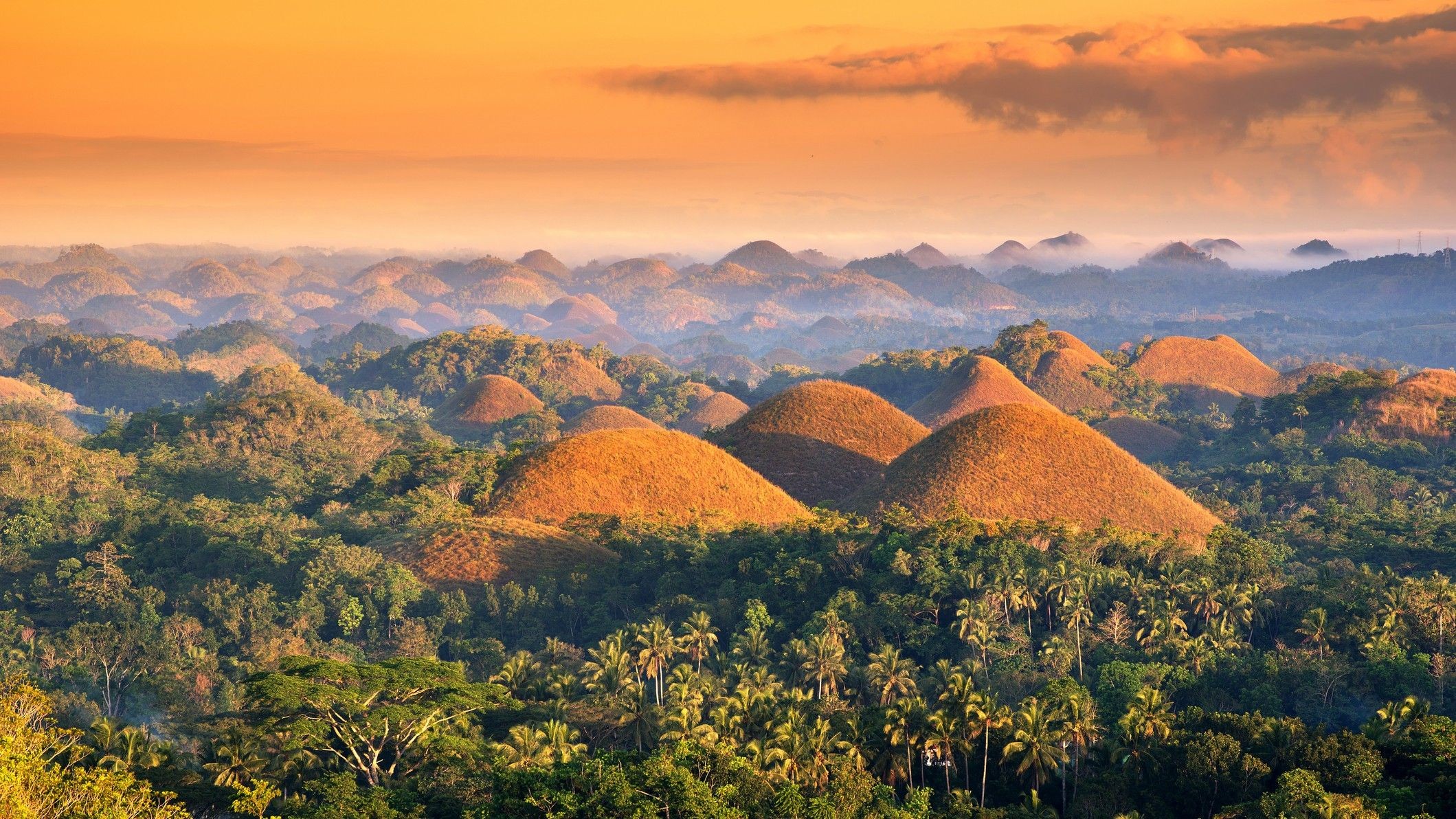
The Chocolate Hills of Bohol Island in the Philippines are one of the most striking geological formations on Earth. These 1,776 conical mounds, covered in grass, dramatically change color with the seasons: lush green during the rainy months (February to May), and a distinctive cocoa brown during the dry season, giving the hills their name.
Geological Origins
The hills aren’t random formations; they are mogotes – steep-sided mounds common in tropical karst landscapes, where soluble bedrock creates sinkholes and cave systems. Geologists believe the Chocolate Hills formed between 2.6 million and 11,700 years ago, likely at the start of or just before the last ice age. Tectonic uplift exposed ancient coral and marine deposits, which erosion then sculpted into the regular, cone-shaped mounds we see today. Evidence suggests a network of underground caverns exists beneath the hills, adding to their geological complexity.
Cultural Significance and Local Myths
The Chocolate Hills hold deep cultural meaning for the local population. While science explains their formation through geological processes, local legends offer more colorful explanations. One story tells of a mud-slinging battle between two giants that created the mounds. Another describes giants baking mud cakes under coconut shells, which eventually hardened into the hills.
A History of Conflict and Conservation
The Philippine government recognized the Chocolate Hills as a national geological monument in 1988, strengthening protections in 1997. However, conservation efforts have not been without conflict. When the hills were declared a natural monument in the late 1990s, local farmers, miners, and landowners protested, fearing restrictions on their property rights and livelihoods.
These tensions escalated into violent clashes between the military and a guerilla group calling themselves the “Chocolate Hills Command.” Two armed conflicts broke out in 1999, resulting in at least ten deaths. Even today, balancing environmental preservation with local economic needs remains a challenge: a proposed resort development inside the hills triggered public outcry in 2024, highlighting the ongoing struggle to reconcile tourism, conservation, and community interests.
The Chocolate Hills are a powerful reminder that even the most extraordinary natural landscapes can be shaped as much by human conflict as by geological forces.
The hills stand as a testament to both the power of nature and the complex relationship between humans and their environment.