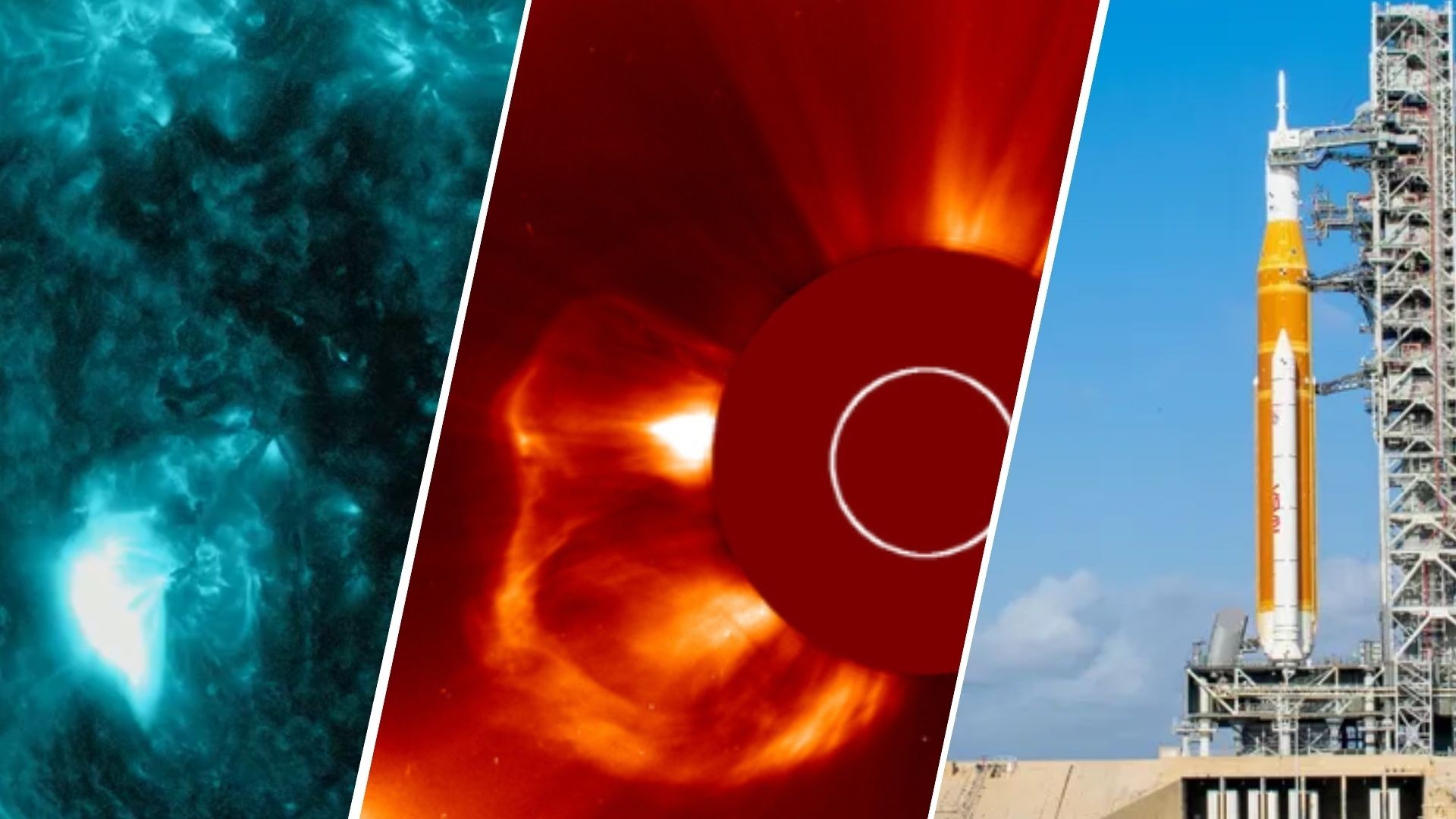
A powerful X1.4 solar flare erupted from the sun early today, March 30th, causing temporary radio blackouts on Earth and raising questions about potential disruptions to NASA’s upcoming Artemis 2 mission. The flare, peaking at 11:19 p.m. EDT (0319 GMT), degraded high-frequency radio signals across regions including southeast Asia and Australia.
Flare Origin and Potential Impacts
The eruption originated from sunspot region 4405, a magnetically active area that is now rotating towards Earth. This means further flares and coronal mass ejections (CMEs) could directly affect our planet and, potentially, preparations for the Artemis 2 launch. The flare also triggered a CME, with analysis indicating it might include an Earth-directed component.
Artemis 2 Mission Context
NASA is gearing up to launch Artemis 2 – the first crewed mission to the Moon in over 50 years – with a planned liftoff no earlier than April 1st at 6:24 p.m. EDT (2224 GMT). The mission will send four astronauts on a 10-day lunar orbit. However, increased solar activity poses a risk : powerful flares can disrupt critical communication systems during launch and initial orbital maneuvers.
Expert Commentary and Geomagnetic Storm Watch
Solar physicist Tamitha Skov emphasized the importance of monitoring for radio bursts, which can affect high-frequency (HF) and very high-frequency (VHF) communications, as well as satellite systems. NASA is actively tracking the situation.
NOAA’s Space Weather Prediction Center has issued a moderate geomagnetic storm watch (G2) for March 31st, with minor storm conditions (G1) possible today and on launch day. This suggests that, alongside potential communication disruptions, aurora displays may become visible at lower latitudes.
The timing is significant because high solar activity is becoming more frequent as the sun approaches the peak of its 11-year cycle. This means more flares and CMEs are likely in the coming months, requiring NASA to continuously assess and mitigate risks to ensure the Artemis 2 mission’s success.