


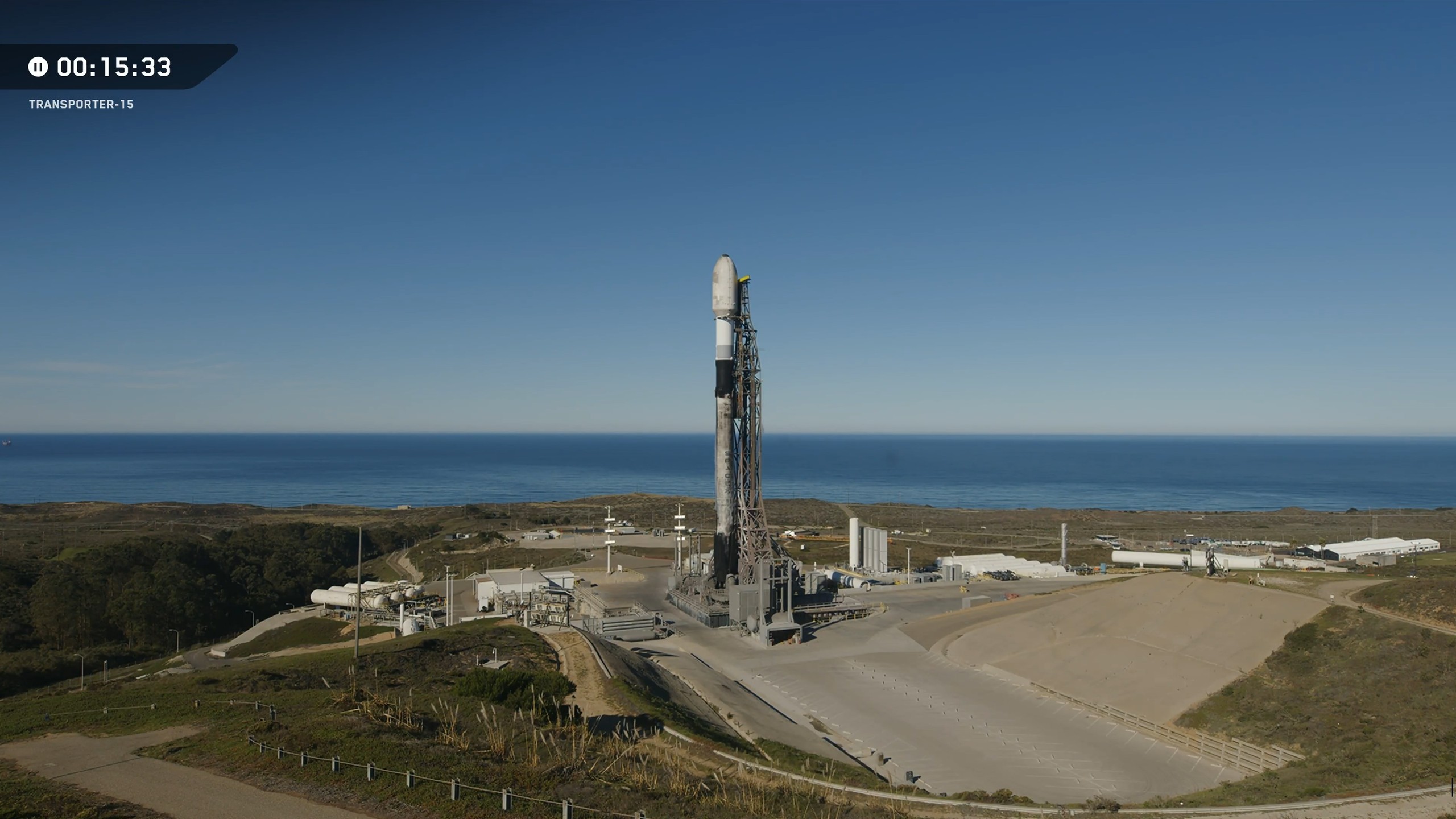
SpaceX has postponed the launch of 140 satellites aboard a used Falcon 9 rocket from Vandenberg Space Force Base in California. The attempt, originally scheduled for Wednesday, November 26, was scrubbed just 15 minutes before liftoff, with no official reason given. The next launch window is set for Friday, November 28, at 1:19 PM EST (1819 GMT).
Repeated Delays and Rigorous Safety Checks
This marks another delay for the Transporter-15 mission, which was initially planned for November 19. SpaceX emphasizes extreme caution in launch preparations. As one spokesperson noted, “There are a thousand ways that a launch can go wrong and only one way that it can go right,” highlighting the company’s preference for pausing rather than risking failure.
Diverse Payload: From Earth Imaging to Water Monitoring
The mission carries a wide array of satellites for various customers. Planet Labs is sending 36 small “SuperDove” satellites, along with two larger Pelican Earth-observation platforms. The European Space Agency (ESA) is deploying HydryoGNSS satellites to study Earth’s water cycle. Additional spacecraft come from ExoLaunch, SEOPS, and Varda, the latter flying its fifth experimental reentry capsule (W-5).
A Reusable Rocket
The Falcon 9 booster used for this mission is a veteran, having flown 29 times already. If successful, the first stage will land on SpaceX’s drone ship Of Course I Still Love You in the Pacific for refurbishment and future reuse. This underscores SpaceX’s commitment to cost reduction through rapid reusability.
The delays, while frustrating for stakeholders, reflect the high stakes of space launches and SpaceX’s willingness to prioritize safety over strict timelines. This launch will be watched closely not only for its commercial impact but also as a demonstration of reliable, reusable rocket technology.