The UK government is investing heavily in heat pump technology as part of its £15 billion Warm Homes Plan, aiming to reduce emissions and lower energy bills for households. This guide breaks down how heat pumps work, their costs, available grants, and what to expect during installation.
What is a Heat Pump and Why Does it Matter?
Heat pumps represent a key strategy in the UK’s transition to net-zero emissions. Heating homes accounts for roughly 20% of the nation’s planet-warming emissions, making a shift away from fossil fuel-based heating systems critical. Unlike traditional gas boilers, heat pumps run on electricity and extract heat from the environment—air, ground, or water—making them significantly more efficient. This efficiency is crucial as the UK moves toward cleaner energy sources like wind and solar power.
How Do Heat Pumps Work?
There are two main types of heat pumps: air source and ground source.
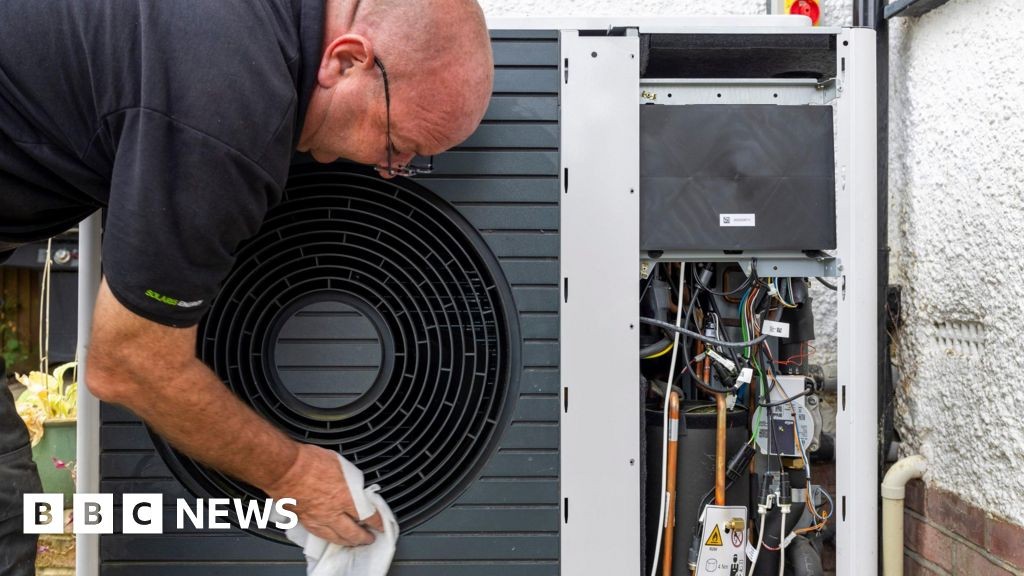
- Air source heat pumps draw heat from the outside air, even in cold temperatures. Refrigerant fluids are heated, compressed, and then circulate warmth throughout the home. The outdoor unit is roughly 1m x 1m x 0.4m in size.
- Ground source heat pumps tap into the earth’s consistent temperature, making them more efficient, though they require more extensive installation—either a deep borehole or horizontal ground loops.
Both systems include an indoor unit (similar in size to a gas boiler) and a hot water cylinder, sized according to the property.
Costs and Financial Support
The upfront cost of heat pumps remains a barrier for many. However, the Boiler Upgrade Scheme offers a grant of £7,500 towards installation for homeowners in England and Wales. This brings the average out-of-pocket cost to around £5,000, which officials acknowledge is still too high for some.
Additional support is available:
- Warm Homes Local Grant: Provides funding for insulation, solar panels, and heat pumps through Local Authorities. Eligibility requires an EPC rating between D and G.
- Social Housing Fund: £5 billion in funding is allocated for low-income households and social housing.
- Devolved Programs: Scotland and Northern Ireland have separate schemes with increased funding.
The government has also removed requirements for existing loft or cavity wall insulation, potentially saving homeowners up to £2,500 in upfront costs.
Potential Savings and Noise Concerns
While initial costs are high, heat pumps can become cheaper to run than gas boilers, particularly when paired with solar panels. The Climate Change Committee (CCC) estimates that homes with solar panels and heat pumps could save nearly £1,000 annually on energy bills.
Noise concerns have been addressed by relaxing planning permission rules and setting volume limits at 42db, comparable to a refrigerator. Previously, homeowners needed permission for units within one meter of neighboring properties.
Installation Rates and Future Targets
Heat pump sales in the UK are rising, with nearly 100,000 units sold in 2024, up from 60,000 in 2023. However, the CCC estimates that installations need to reach 450,000 per year by 2030 and 1.5 million by 2035 to meet climate targets. The CCC projects that roughly half of UK homes will need heat pumps by 2040.
This rapid growth will require a substantial increase in trained installers, a current bottleneck in the industry.
In conclusion, heat pumps are a crucial component of the UK’s decarbonization strategy. While upfront costs remain significant, government support and potential long-term savings make them an increasingly viable option for homeowners looking to reduce their carbon footprint and energy bills. Overcoming installation challenges and scaling up the workforce will be essential to meet ambitious climate targets.