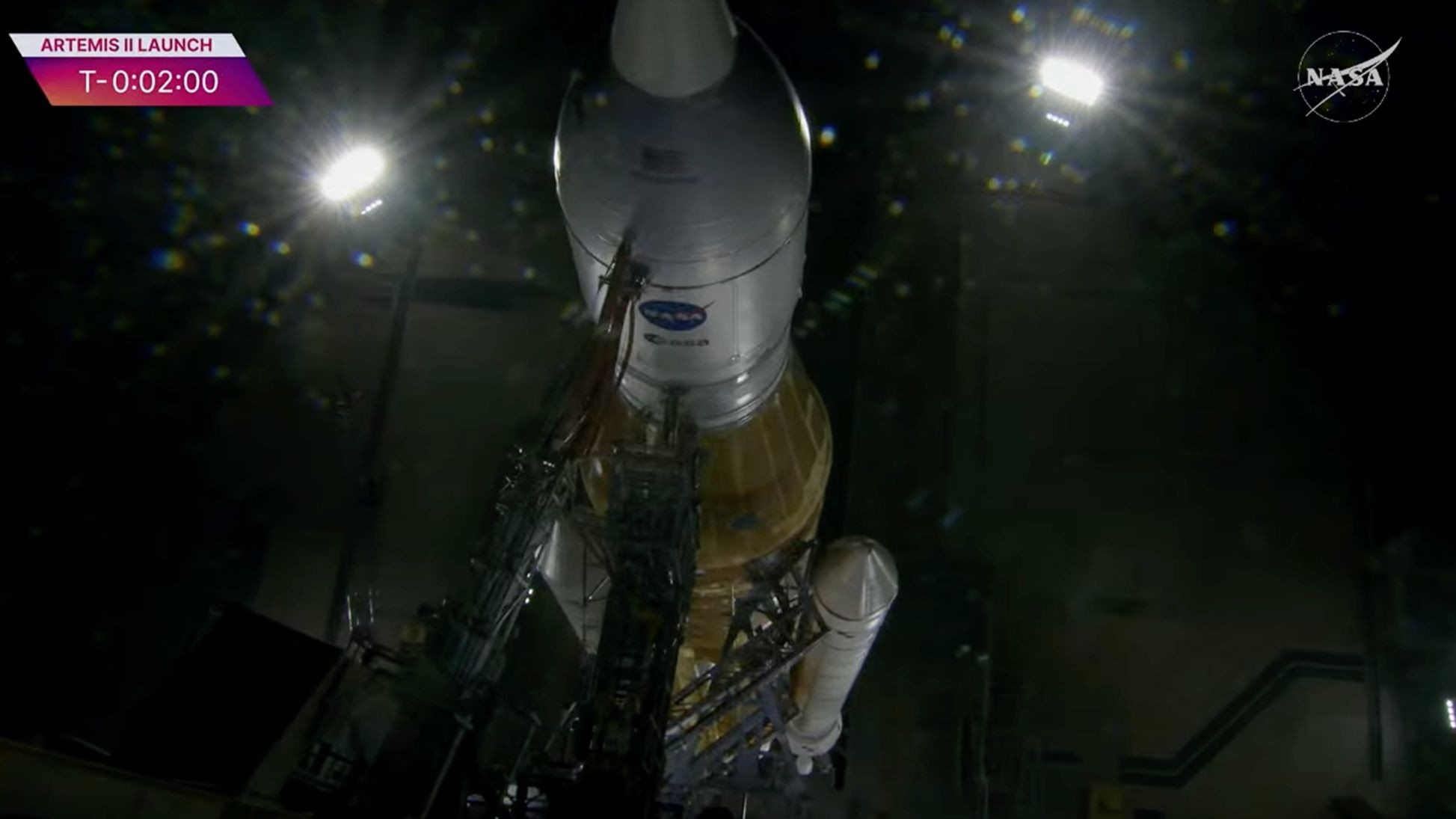
NASA has successfully completed a critical fueling test for its Artemis 2 moon rocket, marking a significant step toward launching the first crewed mission to lunar orbit in over half a century. The two-day “wet dress rehearsal” (WDR) concluded Thursday night at Kennedy Space Center, demonstrating that the Space Launch System (SLS) rocket and Orion capsule are prepared for the upcoming launch.
Fueling Milestone Achieved
The core of the test revolved around loading the SLS with 730,000 gallons of supercooled liquid hydrogen (LH2) and liquid oxygen. This achievement is particularly important given that the previous attempt in February was cut short by a hydrogen leak—a recurring issue that plagued the Artemis 1 mission as well. This time, replaced seals held, preventing the leak from exceeding safety thresholds. The success suggests that NASA has addressed a critical engineering challenge.
The Artemis 2 Mission: A Historic Return to Lunar Orbit
Artemis 2 will carry four astronauts – Reid Wiseman, Victor Glover, Christina Koch (all NASA), and Jeremy Hansen (Canadian Space Agency) – on a ten-day lunar flyby. This mission is poised to be the first human spaceflight beyond low Earth orbit since the Apollo program concluded in 1972. The Artemis program represents a renewed push for lunar exploration, and Artemis 2 is the first crewed step in this ambitious undertaking.
Overcoming Past Challenges
The previous Artemis 1 mission, while successful in sending an uncrewed Orion capsule around the Moon, faced repeated delays due to LH2 leaks during ground testing. The recurrence of these issues raised concerns about the reliability of the SLS and ground infrastructure. The latest test suggests that NASA has learned from past setbacks and implemented effective fixes.
Remaining Steps & Launch Window
While the WDR went smoothly overall, a minor anomaly was detected in the booster avionics system voltage, causing a brief pause during the countdown simulation. Despite this, the team completed two full “terminal counts” – simulated countdowns reaching T-33 and T-29 seconds. NASA will hold a press conference Friday to discuss the full results and outline the path forward.
The next launch window opens March 6–9, with a secondary window beginning in early April. If all goes well, Artemis 2 could lift off within weeks, bringing humanity closer to a sustained presence on the Moon.
The successful completion of this test underscores NASA’s commitment to overcoming technical hurdles and reaffirms the agency’s goal of returning humans to the Moon. This mission is not just about reaching a destination but about building the infrastructure for long-term lunar exploration.