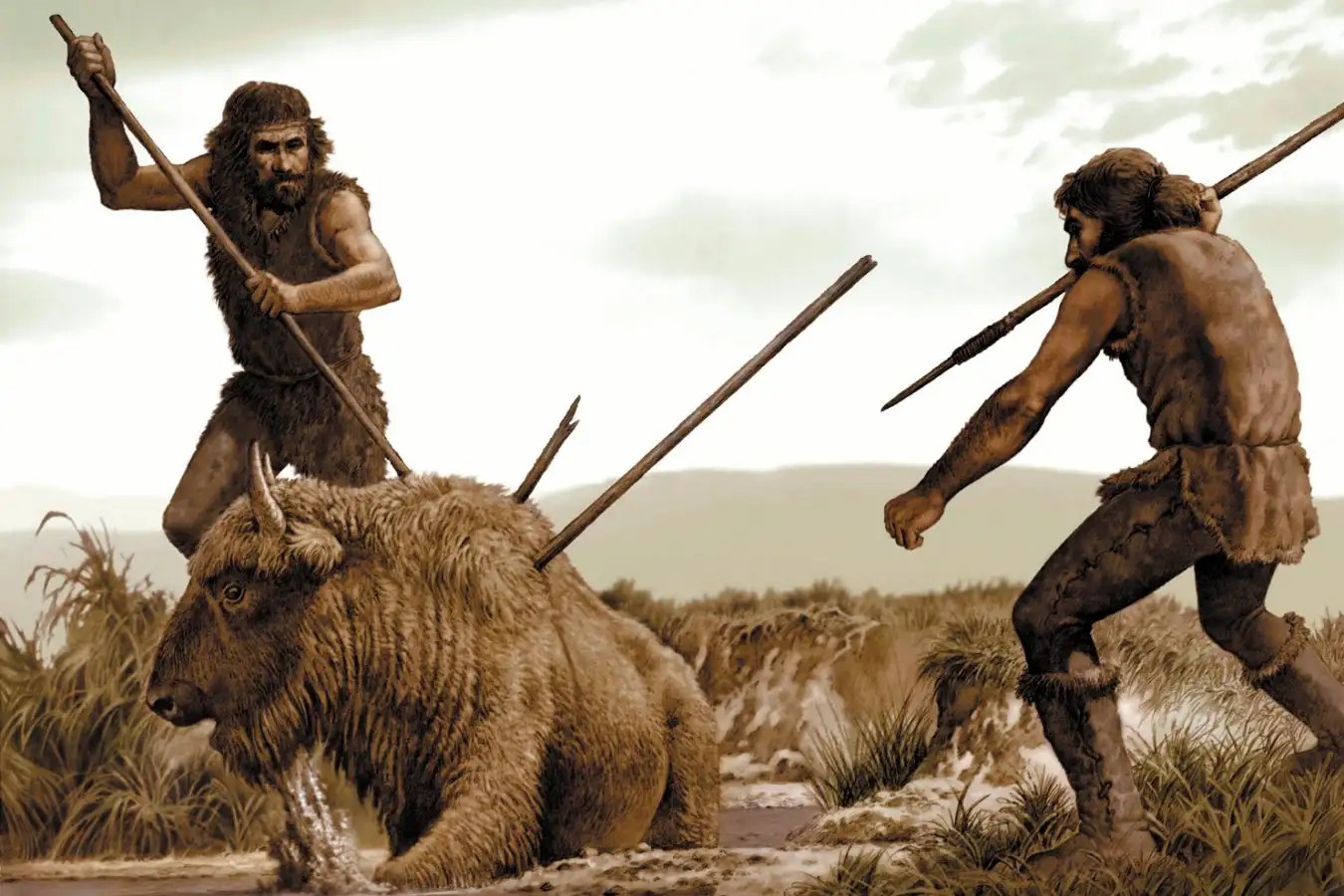
New research suggests that the evolution of the human brain may not have been a random stroke of biological luck, but rather a necessary response to a changing diet. A study led by Vlad Litov of Tel Aviv University indicates that as the massive animals our ancestors once hunted began to disappear, humans were forced to innovate—leading to more sophisticated tools and, ultimately, larger brains.
The Great Tool Transition
For over a million years, early human species relied on a “heavy-duty” toolkit. These included massive stone axes, cleavers, and scrapers designed for a specific purpose: butchering megaherbivores. These giants—extinct relatives of elephants, hippos, and rhinos—provided massive amounts of calories but required heavy, blunt force to process.
However, a significant shift occurred approximately 200,000 years ago. In the Levant region, the archaeological record shows a sudden disappearance of these heavy tools, replaced by:
– Lightweight blades
– Precision scrapers
– More diverse and sophisticated stone kits
This technological pivot coincided perfectly with a dramatic decline in large mammals weighing over 1,000 kilograms.
Why the Shift Matters: The Energetic Challenge
To understand why this matters, one must look at the “energy math” of prehistoric survival. A single carcass from a megaherbivore, such as an ancient elephant, could sustain a group of 35 hunter-gatherers for months.
As these large animals declined—possibly due to overhunting—humans faced a massive caloric deficit. To compensate for the loss of one elephant, a group would need to hunt and process dozens of smaller animals, such as fallow deer. This shift created a new set of survival pressures:
- Complexity in Hunting: Smaller animals are often more elusive and faster than megaherbivores, requiring more coordinated group efforts and better planning.
- Technological Precision: You cannot use a heavy stone cleaver to efficiently butcher a deer; you need sharp, precise blades.
- Social Cooperation: Managing multiple smaller kills requires higher levels of social organization and information sharing.
Intelligence as an Adaptive Response
The traditional view of human evolution often suggests that humans became smarter, and therefore developed better tools. Litov’s research proposes the inverse: the environment forced a change in diet, which in turn selected for higher intelligence.
“As megaherbivores declined, humans increasingly relied on smaller prey, which required different hunting strategies, more flexible planning, [and] the use of lighter and more complex toolkits,” says Litov.
In this view, cognitive evolution was an adaptive response to a new, more demanding way of life. The need to navigate a world of smaller, faster, and more numerous prey acted as a selective pressure, favoring individuals with the brainpower to plan, cooperate, and innovate.
A Debated Perspective
While the link between prey size and tool evolution is compelling, the scientific community remains cautious. Some experts argue that this was simply an act of adaptation rather than a pure leap in intelligence.
- Ceri Shipton (University College London) suggests the process was likely “iterative”—a feedback loop where declining prey drove cognitive changes, which then enabled even better hunting of smaller prey.
- Nicolas Teyssandier (CNRS) notes that it was just as “intelligent” to master the heavy tools used for large animals as it was to develop the light tools for small ones.
Conclusion
The disappearance of the giants may have been the catalyst for the rise of the modern mind. By forcing our ancestors to trade brute force for precision and coordination, the loss of megaherbivores may have paved the way for the cognitive complexity that defines Homo sapiens.