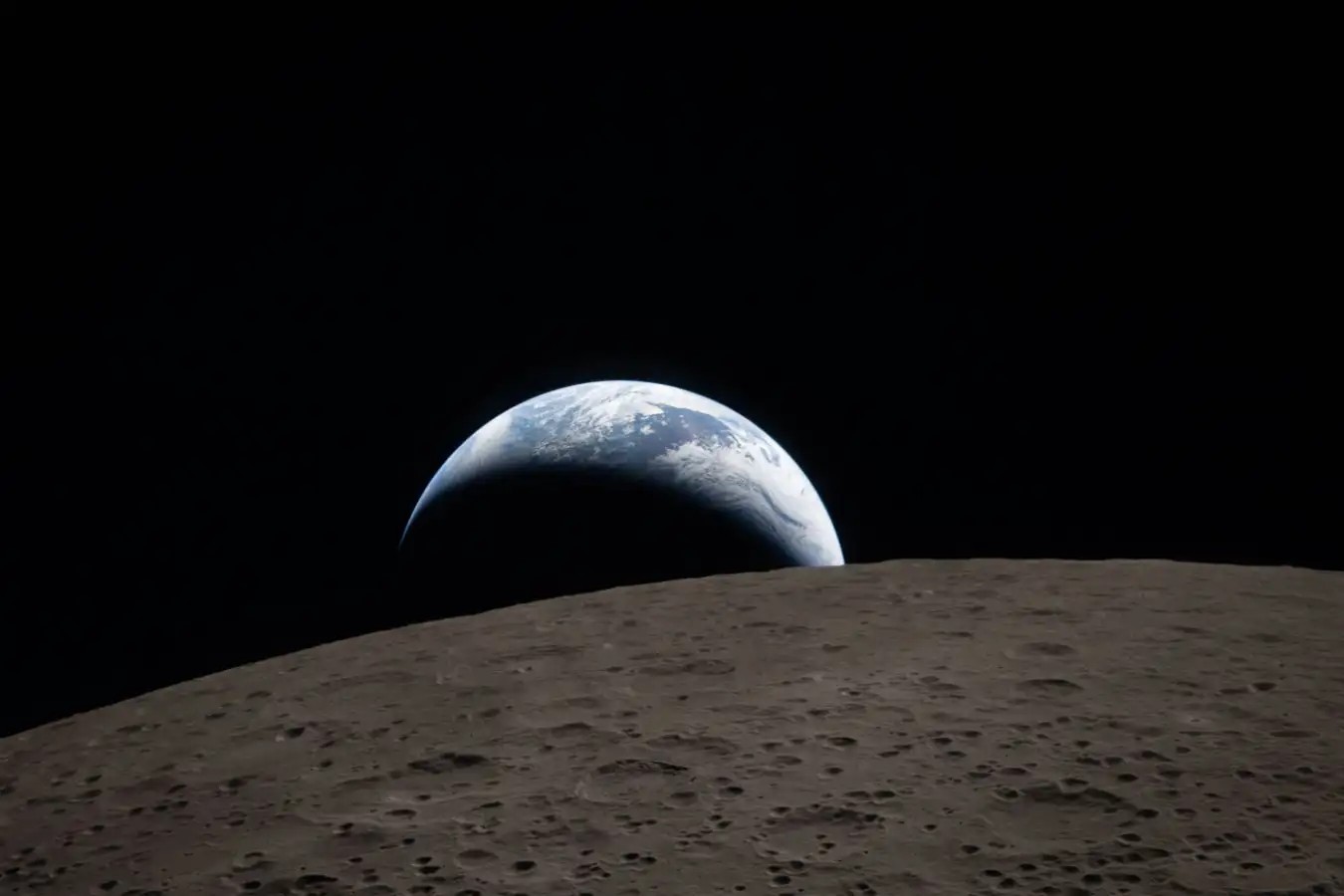
On April 6, the crew of NASA’s Artemis II mission achieved a historic milestone in human spaceflight. Flying in a wide loop around the far side of the moon, the four astronauts traveled more than 406,700 kilometers from Earth—marking the furthest distance any human being has ever ventured into space.
A View from the Orion Capsule
The crew—Reid Wiseman, Christina Koch, Victor Glover, and Jeremy Hansen —operated in shifts, alternating between monitoring instruments and observing the celestial landscape through the Orion capsule’s windows. The visual experience was so intense that the crew had to use a spare shirt to cover one of the windows to block out “earthshine,” the intense reflection of sunlight off the Earth’s surface.
As the spacecraft transitioned behind the moon, the crew was granted a view of lunar geography that has remained hidden from human eyes for millennia. One of the most striking features captured was the Orientale basin, a massive impact crater. At its center lies a dark patch of dried lava, remnants of volcanic eruptions that occurred billions of years ago.
During this period of exploration, the crew even began the process of lunar nomenclature, proposing new names for two smaller craters near the Orientale basin: Integrity, in honor of their spacecraft, and Carroll, named after Wiseman’s late wife.
The Magic of the Terminator
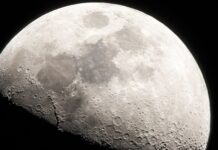
One of the most significant scientific and visual phenomena observed was the lunar terminator —the dividing line between the moon’s day and night sides.
Victor Glover highlighted the unique beauty of this boundary, where sunlight hits the lunar surface at an acute angle. This lighting creates long, dramatic shadows that accentuate the moon’s rugged terrain, revealing topographical details that are often washed out under full illumination.
“There is just so much magic in the terminator… the islands of light, the valleys that look like black holes,” Glover remarked, describing the visually captivating landscape.
Silence and Solar Eclipses
The mission faced a unique technical challenge during the far-side flyby: total communication blackout. Because the moon acts as a physical barrier between the spacecraft and Earth, the crew was unable to contact mission control. To maintain continuity, the astronauts relied on voice recorders to dictate observations and continued capturing high-resolution imagery.
During this period of isolation, the crew witnessed a rare astronomical event: a solar eclipse that lasted nearly an hour. As the moon blocked the sun entirely, the crew observed the lunar surface illuminated only by the soft glow of earthshine, creating a surreal, darkened environment.
The Journey Home
With the successful completion of the lunar flyby, the Orion capsule is now on its return trajectory. The mission is scheduled to conclude on April 10, with a planned splashdown off the coast of California.
Conclusion
The Artemis II flyby has not only pushed the boundaries of human distance from Earth but has also provided a fresh, intimate perspective on the moon’s hidden geography. This mission serves as a critical stepping stone for future long-term lunar habitation and deeper space exploration.