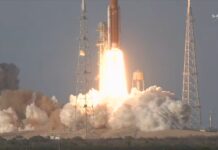
For millennia, the Moon has been a silent constant in the human experience—a celestial clock, a divine presence, and a source of light in the dark. However, as NASA prepares for the Artemis II mission, we are approaching a pivotal shift. For the first time in over half a century, humanity is moving beyond mere observation and returning to the lunar system, signaling a transition from seeing the Moon as a distant object to treating it as a destination.
In her upcoming book, Our Moon: How Earth’s Celestial Companion Transformed the Planet, Guided Evolution, and Made Us Who We Are, science writer Rebecca Boyle explores this profound relationship. Through her insights, we can see how the upcoming Artemis missions represent more than just a technical feat; they represent a fundamental reframing of our place in the universe.
From Timekeepers to Deities: A Historical Perspective
The relationship between humans and the Moon has evolved through distinct stages of necessity and wonder. According to Boyle, our earliest connections were deeply practical:
- The Lunar Clock: Before modern technology, the Moon was the world’s primary timekeeping device. It allowed humans to track passing time and, more importantly, to plan for the future. This ability to predict cycles remains embedded in our culture today through the Hebrew, Islamic, and various Asian lunar calendars.
- The Divine Companion: Beyond utility, the Moon became a personification of the divine. It has served as one of the oldest religious symbols across nearly every tracked human culture.
- The Scientific Frontier: The Apollo era transformed the Moon from a mythic entity into a physical reality. By bringing lunar samples back to Earth, scientists discovered that the Moon is not just a rock in the sky, but a key to understanding the geological history of our own planet.
The “Companion World” vs. “Space Potatoes”
One of the most significant scientific distinctions Boyle makes is the unique nature of our Moon compared to those of other planets. While the moons of Mars are described as mere “potatoes” orbiting their host, Earth’s Moon is a companion world.
Its massive size and distance have a profound impact on Earth, influencing our climate, our geological stability, and the very evolution of life. This connection suggests a startling possibility: humanity might not exist without the Moon. The Artemis missions aim to highlight this interdependence, moving the public perception away from seeing the Moon as a lonely satellite and toward seeing it as an integral part of Earth’s life-support system.
The Hidden Magnitude of Space Exploration
As the world turns its eyes toward the Artemis missions, Boyle offers a cautionary note regarding how we perceive these achievements. Space exploration is often viewed through the lens of sudden, spectacular launches, but the reality is much more complex.
“These missions that all of a sudden crop up in the national consciousness have actually been building for years and decades.”
The success of Artemis relies on:
1. Long-term dedication: Decades of incremental scientific and engineering progress.
2. Massive investment: The heavy reliance on taxpayer support and sustained institutional willpower.
3. Human ingenuity: The tireless work of scientists and engineers working on timescales that far exceed a single news cycle.
Conclusion
The Artemis program is more than a mission to return humans to the lunar surface; it is an opportunity to rediscover the Moon as a vital partner in Earth’s history. As we prepare to establish a more permanent presence there, we are not just exploring a new territory, but redefining our fundamental relationship with the celestial neighbor that made our existence possible.