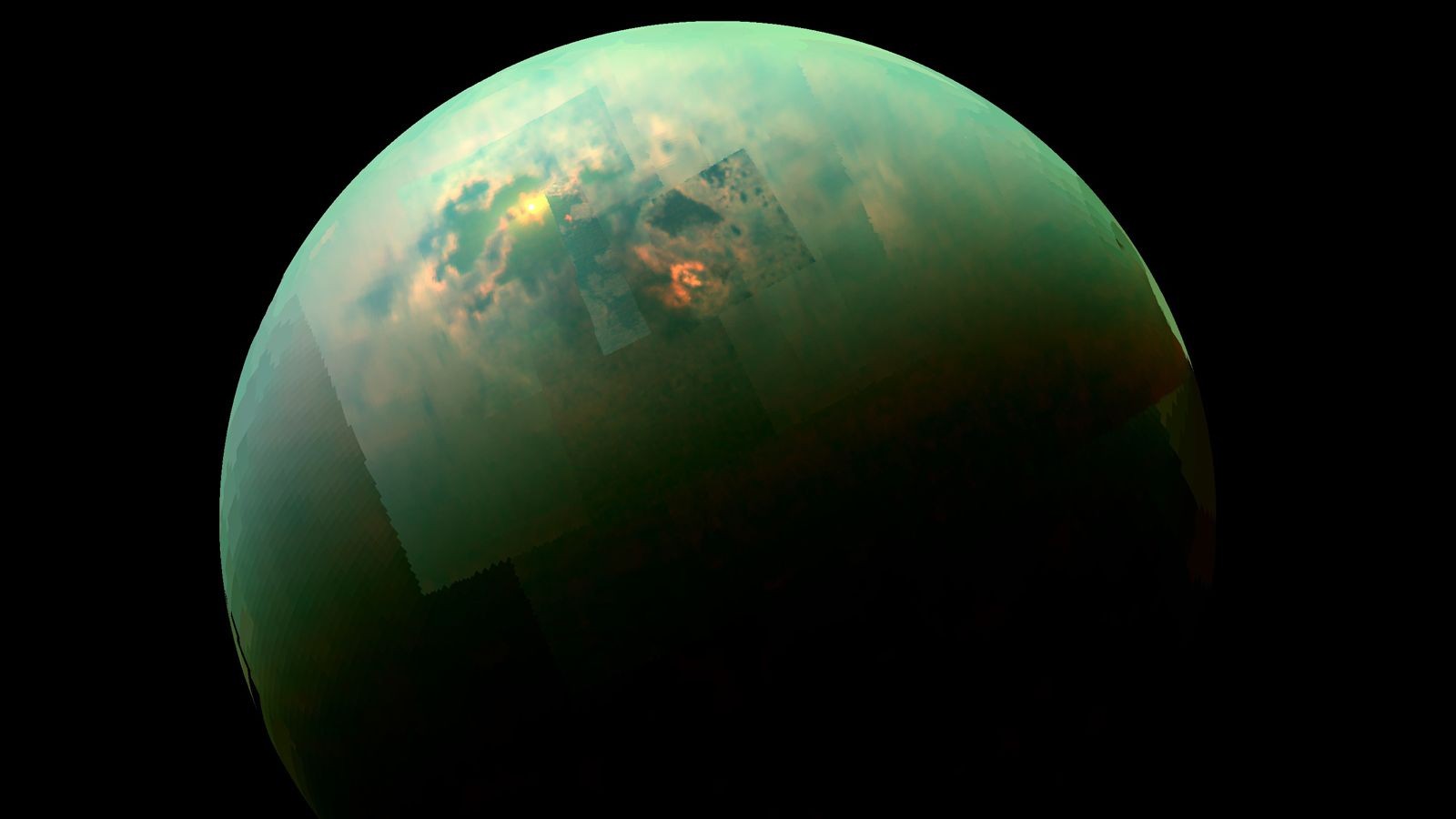
The search for life beyond Earth often focuses on distant worlds, but a surprising truth is emerging: the key to understanding Saturn’s moon Titan may lie right here on our own planet. Despite drastically different temperatures and compositions, Titan shares fundamental geophysical processes with Earth, offering an unprecedented opportunity for analog research.
The Puzzle of Planetary Parallels
Titan, with its frigid temperatures and hydrocarbon-rich environment, appears alien at first glance. It rains methane, not water, and its landscapes are sculpted by liquid hydrocarbons rather than rock. For years, the scientific community questioned whether meaningful Earth-based parallels could even exist. How could a frozen world possibly inform our understanding of another?
However, recent research, published in arXiv, suggests that Earth holds more “Titan-like” environments than previously imagined. The core idea is simple: by studying extreme environments on Earth, we can test instruments, refine theories, and gather data applicable to Titan before launching expensive missions.
From Rainfall to Rivers: Unexpected Earth Analogues
Titan’s thick nitrogen atmosphere and abundant methane drive an active weather cycle, creating rainfall and carving out rivers, lakes, and seas. This dynamic process mirrors Earth’s hydrological cycle – a direct insight into how planetary surfaces evolve.
Imagine landscapes shaped by liquid hydrocarbons instead of water, where shorelines shift, and karst-like terrain forms not from water erosion, but from hydrocarbon flow. These parallels aren’t coincidental; they provide a natural laboratory for planetary science.
Dragonfly and the Future of Titan Exploration
This newfound appreciation for Earth’s Titan analogs is critical for upcoming missions like NASA’s Dragonfly. Scheduled to land on Titan in 2036, this rotorcraft lander will hop across the moon’s surface, investigating prebiotic chemistry and searching for potential biosignatures. Dragonfly will specifically target the Selk Crater, where evidence of liquid water mixing with organic compounds may exist.
By studying Earth analogs, scientists can “ground-truth” astrobiological theories and refine instruments before deployment. This terrestrial detective work will greatly enhance our ability to interpret the data Dragonfly sends back, maximizing the scientific return of the mission.
A Cosmic Perspective, Rooted on Earth
The universe consistently reveals unexpected connections. The answers to our biggest questions about distant worlds often wait for us right here on Earth. The journey to understand Titan – and its potential for life – is a continuous process, driven by curiosity and ingenuity. Every discovery, whether made in a field site on Earth or by a rotorcraft soaring over an alien landscape, contributes to the grand tapestry of cosmic exploration.
The key to unlocking Titan’s secrets may already be under our feet, reminding us that the most extraordinary discoveries often begin with a fresh look at the familiar.