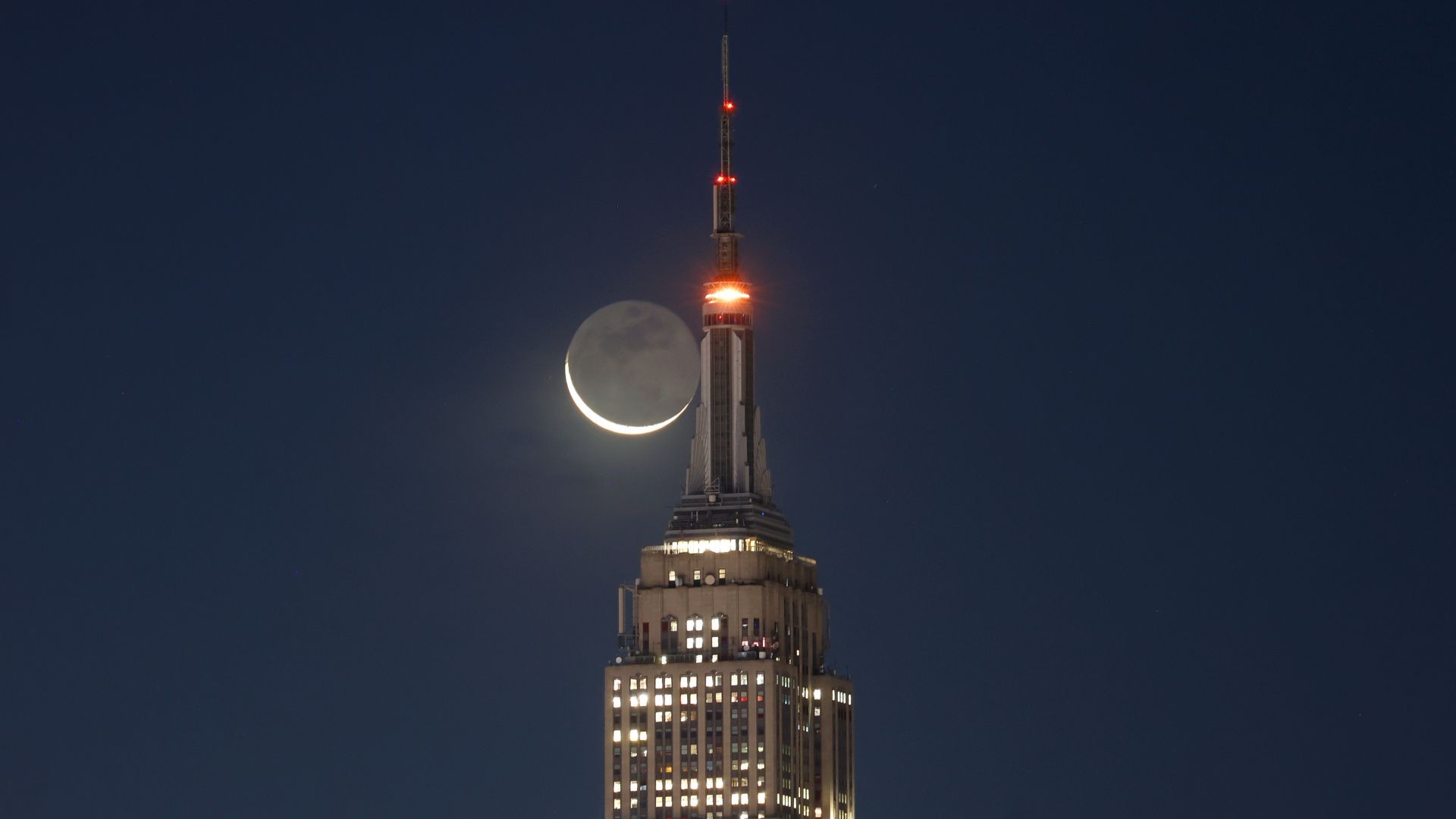
This week, observers can witness a subtle but beautiful astronomical phenomenon: earthshine, the faint illumination of the unlit portion of a crescent moon. The effect occurs in the days immediately following a new moon, when sunlight reflected from Earth gently brightens the lunar surface.
Understanding Earthshine
The new moon phase occurred on March 18th, positioning the moon between the Earth and the sun in the daytime sky. Earthshine – also known as the Da Vinci glow or, poetically, the “old moon in the new moon’s arms” – is a result of sunlight bouncing off our planet and onto the shadowed side of the moon. This makes the dark portion of the crescent faintly visible, creating an ethereal glow.
How to See It
The best time to spot earthshine is shortly after sunset. On March 19th, look toward the western horizon for a razor-thin crescent moon. It will appear near Venus, about 10 degrees above the horizon (roughly the width of a clenched fist held at arm’s length).
Your viewing chances improve on March 20th, as the moon will climb higher in the southern sky, appearing above Venus. At just 2% illumination, the moon’s upturned crescent will reveal subtle details of its surface – ancient lava plains (mare) shaped by past impacts – faintly lit by the reflected glow of Earth’s clouds.
Earthshine is a reminder of the interconnectedness of our celestial neighbors. Sunlight reaches the moon not only directly, but also indirectly, via our own planet. This phenomenon offers a unique perspective on how light travels and interacts in our solar system.
For those seeking a closer look, consider using binoculars or a telescope to enhance the viewing experience. The subtle glow of earthshine is a beautiful reminder that even in darkness, reflected light can reveal hidden wonders.