The extinction of the dinosaurs is often viewed as a definitive end—a catastrophic closing of a chapter in Earth’s history. However, recent scientific insights into the Paleocene Epoch suggest that the aftermath of the Chicxulub impact was not just a period of death, but a remarkable era of biological resurgence.
While the asteroid strike 66 million years ago triggered a mass extinction, it also set the stage for a rapid evolutionary “bounce back” that fundamentally reshaped the planet’s ecosystems.
The Catalyst: The Chicxulub Impact
The event began with a massive cosmic collision. An asteroid struck what is now the Yucatan Peninsula in Mexico, creating the Chicxulub crater, a massive depression over 180 kilometers wide. The energy released was equivalent to billions of atomic bombs, causing immediate and devastating consequences:
- Atmospheric Chaos: The impact released immense amounts of energy, sending soot and debris into the atmosphere.
- Climate Shift: This debris likely triggered significant climate changes, blocking sunlight and altering global temperatures.
- Mass Extinction: The disruption of the environment led to the loss of many species, most notably the non-avian dinosaurs.
The Marine Record: Clues in the Sediment
To understand how life recovered, scientists look to the deep past through paleobiology. By studying sediment cores—layers of rock and organic material extracted from the Earth—researchers can reconstruct ancient environments.
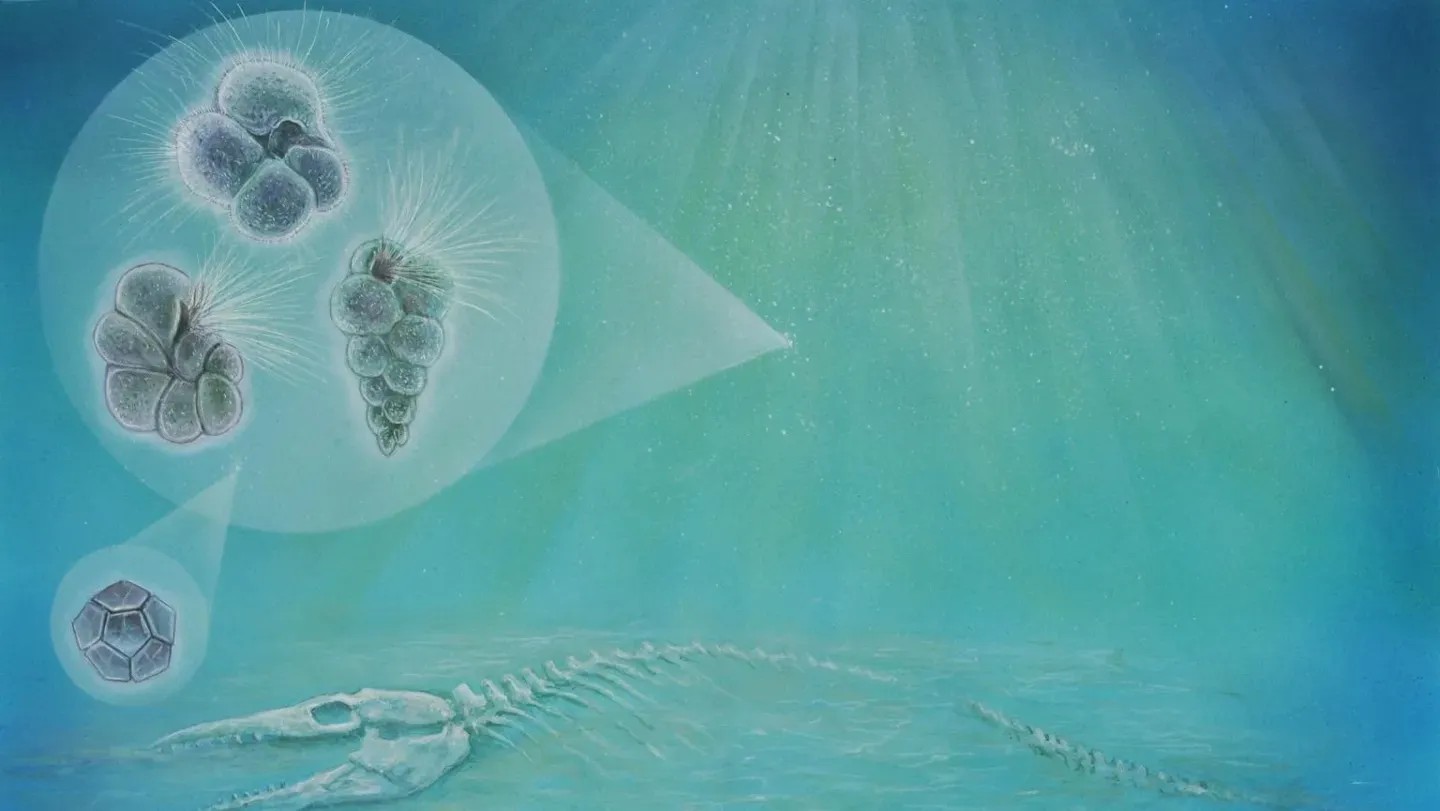
A key indicator of this recovery is found in the fossilized remains of foraminifera. These single-celled marine organisms are essential to the ocean’s food web. By analyzing their shells and the chemical composition of the minerals within them, scientists can track how marine life responded to the post-impact world.
A Rapid Biological Resurgence
The most striking finding is the speed at which life reorganized itself. Rather than a slow, agonizing crawl back to stability, many biological systems showed signs of rapid evolution.
1. The Role of Plankton
As the foundation of the marine ecosystem, plankton (both plant-like and tiny animals) played a crucial role. Their ability to adapt and repopulate allowed the marine food web to stabilize, eventually supporting larger life forms like the blue whale.
2. Ecosystem Rebuilding
The extinction of dominant species, such as the dinosaurs, vacated vast ecological niches. This “empty space” allowed for:
– Increased Diversity: New species could evolve to fill roles previously held by extinct organisms.
– Rapid Adaptation: Species that survived the initial impact underwent intense natural selection, leading to new forms better suited to the post-impact climate.
Why This Matters
Understanding the transition from the Cretaceous period to the Paleocene Epoch provides more than just historical trivia; it offers a blueprint for how life responds to extreme stress. The rapid evolution observed after the Chicxulub event demonstrates the resilience of Earth’s biological systems. It shows that while mass extinctions are devastating, they also act as powerful evolutionary engines, driving the emergence of new life and higher levels of biodiversity.
The Chicxulub impact was a reset button for Earth, clearing the way for a new era of biological complexity through rapid, driven evolution.
Conclusion
The legacy of the Chicxulub asteroid is a dual story of destruction and creation. While it ended the reign of the dinosaurs, the subsequent rapid evolution of marine and terrestrial life highlights the incredible capacity of ecosystems to recover and diversify following a global catastrophe.