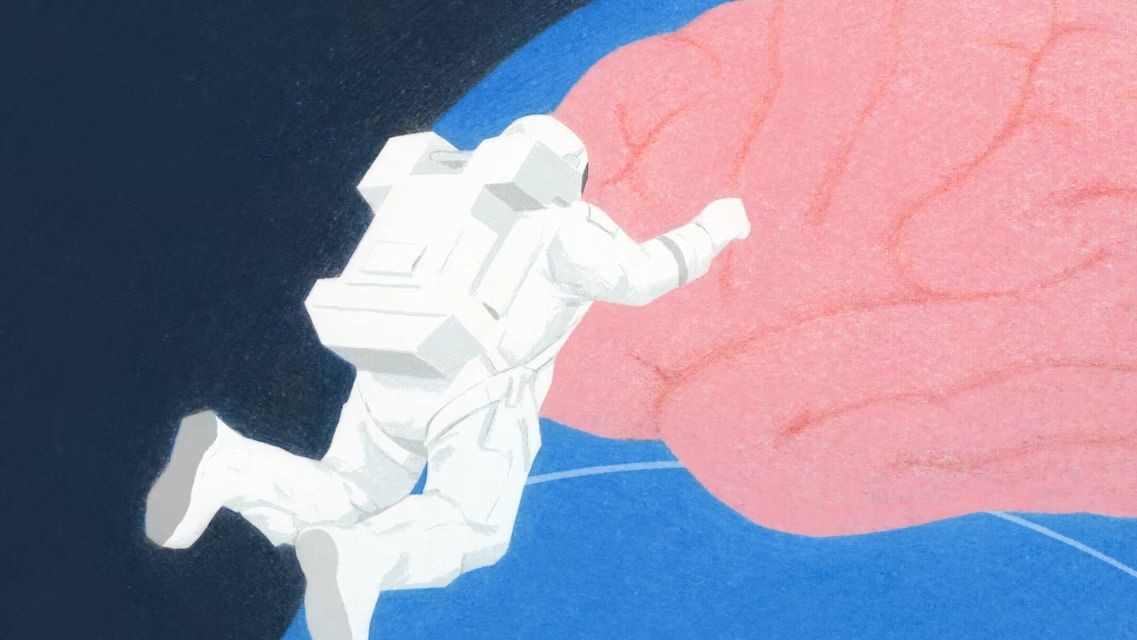
Going to space isn’t just about weightlessness and cosmic views; it fundamentally alters the human brain’s position within the skull. New research confirms that prolonged exposure to microgravity causes the brain to shift upward and backward, deforming its natural structure—and the longer the mission, the more pronounced the effect.
Why This Matters
For decades, we’ve known that space travel impacts the body, with astronauts experiencing puffy faces due to fluid redistribution. But this study goes deeper, revealing that the brain itself moves within the skull. This isn’t merely a cosmetic change. As NASA prepares for longer missions, including lunar and Martian voyages, understanding how the brain adapts is critical. The implications extend beyond professional astronauts, too: with commercial space travel gaining traction, these findings become increasingly relevant for a wider range of space travelers.
The Science Behind the Shift
On Earth, gravity anchors fluids and the brain downward. In space, that force vanishes, allowing fluids to migrate toward the head. The brain, normally held in place by gravity and surrounding tissues, essentially “floats,” experiencing new forces from the skull itself. Previous studies hinted at this shift, but often focused on overall brain movement, obscuring subtle yet significant changes within specific regions.
The research team analyzed MRI scans from 26 astronauts, comparing pre- and post-flight images. Instead of treating the brain as a single mass, they divided it into over 100 regions, tracking each one’s movement relative to the skull. This granular approach revealed patterns missed in earlier studies:
- Upward and Backward Movement: The brain consistently shifted upward and backward after spaceflight, with longer missions causing larger displacements.
- Regional Variation: Some areas near the brain’s top moved over 2 millimeters in astronauts who spent a year on the International Space Station—a significant distance within the skull.
- Hemispheric Opposition: Structures on opposite brain sides moved toward the midline, canceling out in average measurements but revealing a clear pattern when analyzed individually.
Recovery and Long-Term Effects
Most shifts and deformations gradually return to normal within six months of returning to Earth. However, the backward shift shows less recovery, likely because gravity pulls downward, not forward. This suggests some effects of spaceflight on brain position may persist long-term.
Interestingly, despite these shifts, astronauts didn’t report major symptoms like headaches or brain fog. However, larger location shifts in sensory-processing regions correlated with postflight balance changes, indicating subtle yet detectable functional impacts.
What’s Next?
NASA’s Artemis program will push space exploration further than ever before. These findings highlight the need for continued research into how the brain responds to microgravity. Understanding these changes isn’t about stopping space travel; it’s about assessing long-term risks and developing countermeasures to ensure astronauts—and future space travelers—can thrive in the cosmos.
“The brain’s position shift inside the skull is not just a curiosity; it’s a fundamental physiological response to microgravity that demands further investigation as space missions become longer and more frequent.”