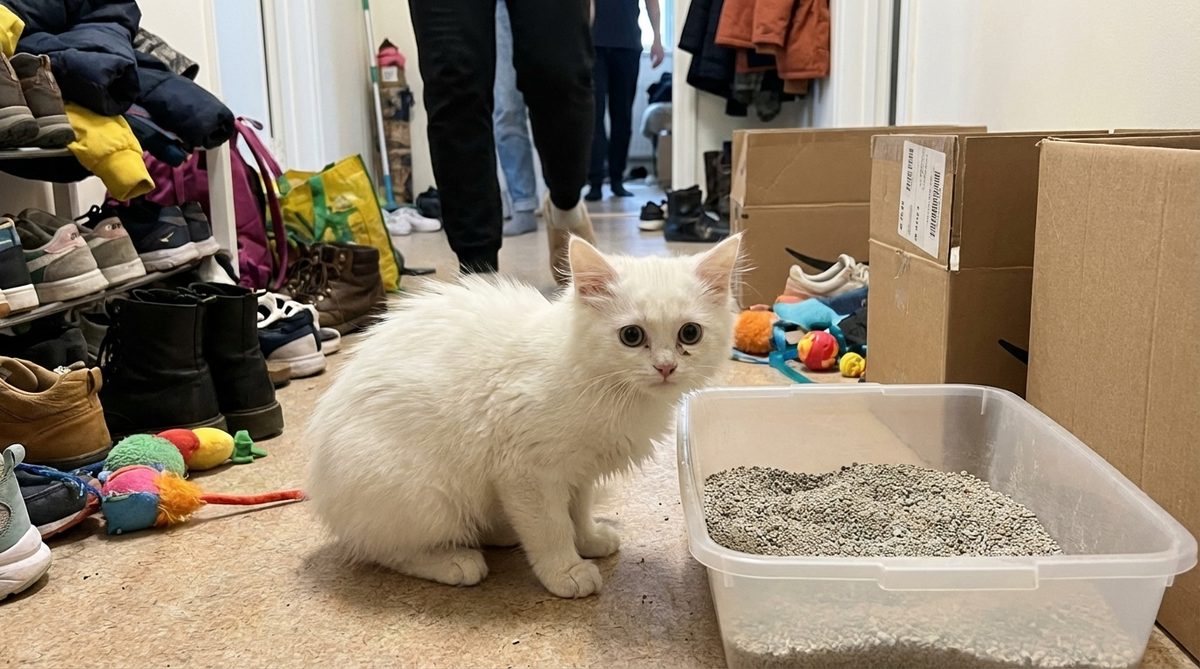
Your cat growls. The litter box is left untouched and instead you scrub the urine off the carpet. Again. It’s a classic battle in 2026: you’re buying a premium clumping sand. You’re investing in a sleek, minimalist tray that looks great on Instagram. However, Minou prefers the living room floor.
Do not look for the culprit in the texture of the sand or the shape of the litter box. The problem is not the bathroom accessories. It’s real estate.
Certain places are stress traps. In particular, they trigger the primary escape response. Moving the litter box isn’t just an suggestion for tidiness. It is an absolute emergency that is needed to restore peace to your home. This is especially true now, during the dead of winter, when people and pets are indoors together for days on end.
Loud Traffic Zones bombard the cat’s nervous system
When it comes to pet privacy, people are surprisingly illogical. No one wants to relieve themselves in the middle of a train station or on the shoulder of a highway. But that’s exactly what we do when we place the litter box in a busy hallway or next to the washing machine.
A cat’s hearing is much more sensitive than ours. To a cat, the spinning of the washing machine sounds like a fighter jet taking off.
Placing the litter box in a noisy or busy place significantly increases stress and behavior problems in cats. It’s a direct sensory assault.
If the box is in the laundry room – a cold, damp room in January – or in the entrance area, where the whole family rushes in with muddy winter boots, the animal quickly associates the elimination with something unpleasant. Or worse, something terrible.
The result is mathematical. The cat is a pragmatist. It’s looking for a quieter place. Usually this space is your bed or couch.
Survival Instinct Dictates the Boycott of Enclosed Spaces
Noise is only half the battle. Spatial configuration plays a big role. Don’t forget that the domestic cat is a small predator that is also a potential prey in the wild. When a cat eliminates, it is in an extremely vulnerable state.
Its instinct require constant monitoring of the environment.
As a result, the animal inevitably boycotts any place where it feels trapped without a clear line of sight. The most common mistakes are:
- The dark base of the cabinet
- A narrow corner between the wall and a large piece of furniture
- Covered litter boxes with a folding door facing the wall
If a cat feels trapped and has no escape route from a threat (real or imagined, such as the family dog or a messy child), it will refuse to come inside. It must recognize the impending danger and have a clear escape route. This is basic survival programming buried deeper in his genes than its desire for cleanliness.
Cleanliness returns when you provide shelter
The solution to soiling the home is rarely medical or disciplinary. It’s geographical.
Cleanliness will return permanently if you create a haven of peace and safety recommended for animal welfare. In 2026, the vet’s advice is clear: the geography of litter boxes must be rethought.
To fix the problem, often all you need to do is move the box to a location that meets these simple criteria:
- Quiet: A space with little traffic, away from loud equipment
- Visibility: A place where the cat can observe the room and feel protected
- Accessibility: No closed doors or obstacles to cross
When these basic needs are taken into account, the animal’s stress level drops dramatically. You will notice almost immediately that unwanted behaviors disappear. This is not magic. It is applied ethology.
When the litter box is not seen as a human convenience to be hidden, but as an animal’s necessary refuge, the dynamics of the household change radically. Once you have found the ideal location, you can also reconsider where to place the food bowls. These also adhere to certain codes that most owners are unaware of.