A comprehensive new study published in Royal Society Open Science has analyzed the entire history of the Eurovision Song Contest, examining 1,763 songs performed between 1956 and 2024. As the 2026 contest approaches, researchers used a combination of traditional analysis and AI tools to classify entries by language, lyrical themes, and musical attributes. The findings reveal a distinct evolution in the contest’s aesthetic, driven by geopolitical strategy, economic shifts, and a collective effort by participants to “game” the system for victory.
The Emotional Landscape: From Nostalgia to Anguish
The study highlights a significant shift in the emotional tone of Eurovision entries over the decades. While earlier research identified 12 common themes in popular music—including aspiration, desire, breakup, and pain—this analysis found that Eurovision songs predominantly utilize only 11 of these. The theme of being “jaded” was excluded, appearing in fewer than 5% of entries, a finding the authors suggest reflects the contest’s inherent lack of complexity or cynicism.
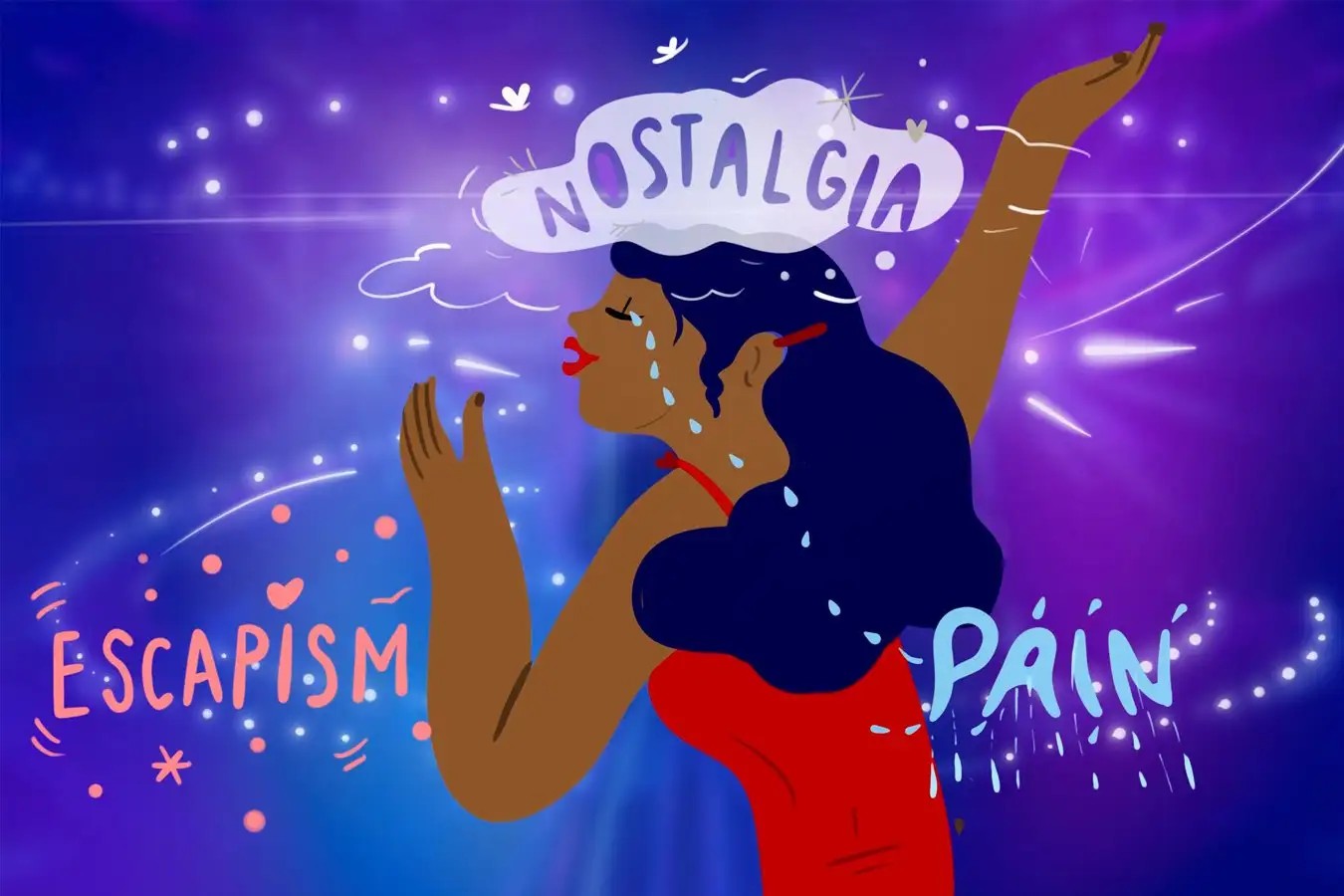
More notably, the data shows a sharp decline in nostalgia. Conversely, themes of pain, rebellion, desperation, confusion, and escapism have become increasingly prevalent.
- The 1970s Turn: A significant rise in “confusion” and “escapism” during the 1970s correlates with the global crises of that era.
- The 2000s Pain Spike: The prevalence of “pain” began to rise notably in the 2000s, which the researchers link to the aftermath of the Great Recession.
- The Desperation Paradox: Despite the rise in negative emotions, “desperation” remains rare. The authors speculate that this emotional weight might alienate voters, though they admit the exact mechanism is unclear.
Musical Evolution: Electronic, English, and Pop
Beyond lyrics, the musical structure of Eurovision has standardized. Over time, entries have moved away from acoustic arrangements toward electronic production. The genre has solidified as pop, characterized by high “danceability,” while the language of choice has shifted overwhelmingly to English, even for countries with other national languages.
This trend suggests a form of “organizational learning,” where participants actively adjust their entries to mimic the standards set by recent winners. Essentially, the contest has become a feedback loop where artists optimize their songs for voting success rather than cultural authenticity.
“Participants actively adjust their entries to match the standards set by recent winners.”
The Geopolitics of Language
Despite the dominance of English, there are notable exceptions. France, Italy, Portugal, and Spain have consistently resisted the trend, choosing to perform in their native languages. The study interprets this not as a musical preference, but as a rational geopolitical choice. For these nations, promoting their own language holds symbolic value that extends beyond winning the contest, reflecting a broader strategic interest in cultural preservation.
Beyond Eurovision: Niche Science and Mathematical Missteps
The New Scientist “Feedback” column also addressed two other intriguing topics:
1. The Quest for Niche Nature Attractions
Following a query about scientifically specific tourist sites, readers highlighted the Serenity Moss Garden in North Carolina. Covering 900 square meters of a mountainside, it offers a trail through a landscape dominated by mosses. While not a traditional museum with climate-controlled exhibits, it serves as a dedicated space for enthusiasts of bryology (the study of mosses). The column continues to seek even more niche attractions, such as museums dedicated to stoneflies (Plecoptera) or curated collections of beach pebbles.
2. RFK Jr.’s “Anti-Syllogism”
US Health Secretary Robert F. Kennedy Jr. faced criticism for claiming that a drug’s price had fallen by 600 percent. Critics correctly pointed out that a price cannot drop by more than 100% (which would result in a zero price) without entering negative territory, where the seller pays the buyer.
In response, RFK Jr. offered a flawed logical explanation: “If the drug was $100 and it raises to $600, that would be a 600 per cent rise… If it drops from $600 to $100, that’s a 600 per cent savings.”
This reasoning is mathematically incorrect. A drop from $600 to $100 is an 83.3% decrease, not 600%. The column humorously labels this an “anti-syllogism,” where a clearly stated premise leads to a conclusion that is entirely wrong, highlighting a dangerous disconnect between political rhetoric and basic arithmetic.
Conclusion
The Eurovision study reveals that the contest has evolved from a diverse cultural showcase into a highly optimized, electronically driven pop competition where pain and English lyrics dominate. Meanwhile, in other spheres, the intersection of niche scientific appreciation and public misunderstanding of mathematics continues to provide both wonder and confusion.