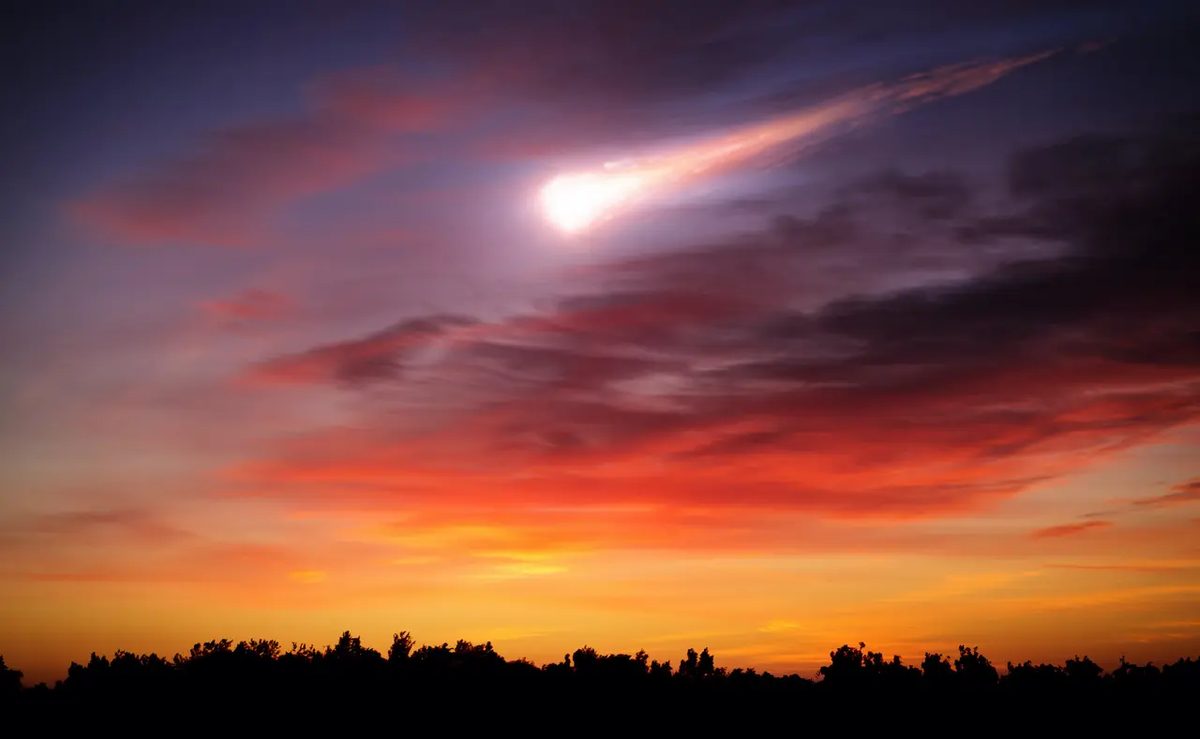
Unusual green and blue fireballs in the Australian sky: natural meteors or space debris?
An unusually powerful fireball passed through the sky over Australia this week. The event stretched from the north coast to the south coast. It turns the night blue and green. Many eyewitnesses recorded the event on video.
This is not the first time such an exhibition has illuminated the country. In May, a similar fireball appeared over Australia. The incident was caused by debris from a Russian rocket reentering the atmosphere. Current events look different.
Astronomers note the trajectory. This is a straight line. The glow was distinct and clean. These features suggest natural objects. Space junk tends to burn differently. It crackles. It sparks. We don’t usually paint the sky with solid colors.
Why this matters: Natural meteorites and space debris
This distinction is important for understanding our environment. This helps scientists track materials entering the atmosphere.
Space debris is man-made. It comes from satellites and rockets. When it re-enters, it breaks apart unpredictably. Heat distribution is uneven. This causes the sputtering effect.
Natural meteorites are different. They are rocks or ice from space. They burn up more evenly. As a result, the path is smoother and brighter. The colors come from the chemical composition of the rock.
“The fireball’s straight trajectory and distinct glow strongly suggest that it is a natural object rather than space debris.”
How often do meteorites hit the earth?
We often forget how much space debris reaches us.
About 500 meteorites hit the earth’s surface every year. Most are small. They don’t cause damage. They land in remote areas and oceans.
Many others burned completely. They never touch the ground. We only see their light show in the upper atmosphere.
Which objects emit green or blue light?
The color of the fireball is determined by its composition.
Iron and magnesium often produce a green or yellow color. Calcium produces a purple or red tint. The particular combination of elements in a meteoroid determines the colors we see.
This special event is famous for its blue and green hues. It refers to certain chemical properties. The researchers plan to analyze the footage to confirm its composition.
Where did you see the fireball?
Reports are coming in from all over Australia. This event can be seen from north to south. This wide visibility indicates a high-altitude entry. It burns so brightly that it can be seen over a wide area.
According to eyewitnesses, the light was very strong. It lights up the landscape. It lasted longer than a typical shooting star.
What happens next?
Astronomers study data. They will look at the trajectory. They try to predict where the debris will fall.
This is not just a light show. This is a data point. It helps us understand the frequency of natural impacts. It also helps to distinguish between natural and man-made waste.
The line between the two can be thin. However, the details of the combustion pattern are clear. Natural objects have a rhythm. Human debris has chaos.
This event strengthened this rhythm. For those who watched, it was a reminder of the constant rain from space. Most of it is gone. Some of it doesn’t.


Quiet changes in the way trends are tracked
You may have noticed that Futura ‘s regular channel is silent. There is no ping on WhatsApp. No headline popping up in your Google News feed.
This was no accident.
This is not just for convenience. It’s about attention. We are drowning in feeds. Before you turn on your phone, an algorithm determines what’s important. When you follow sources in messaging apps, you bypass the gatekeepers. You get a signal, no noise.
Think about it.
When a major breakthrough in quantum computing happens or a new climate report comes out, do you want to wait for an algorithm to prioritize it, or do you want it in your pocket as soon as it happens?
This is the difference between being passive and being proactive.
Why the move matters for science readers
Science and technology are developing rapidly. We no longer have the luxury of a slow news cycle.
If you choose to update directly via WhatsApp or Google News, you’re basically buying time. It’s reading time. It’s time to find out. It’s time to think.
Most people scroll. They don’t read. They skim.
Following Futura in this way will filter out the clickbait. We want to make sure we’re telling complex and nuanced stories—stories that really matter.
How to stay on top
It is not hard to set up.
- WhatsApp: Add the number to your contacts. It’s a broadcast list. No spam. It’s just science.
- Google News: Enable Futura notifications. Choose carefully what interests you.
This is a small change in behavior. But the rewards are huge. You no longer react to the news. You start anticipating it.
The future of science is happening now.
Don’t let it pass you by because you were waiting for the right notification.