


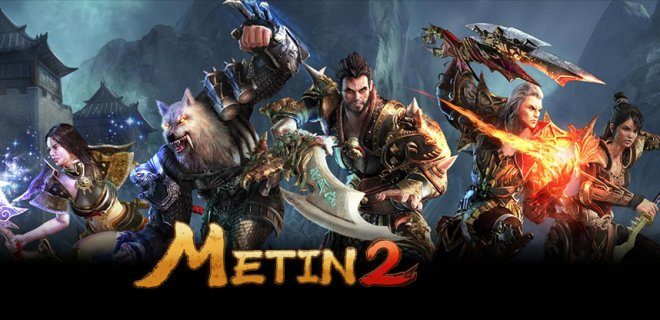
Origins of #Metin2: From a Korean server to a global MMORPG
Metin2 is more than just a newcomer to the MMORPG (Massively Multiplayer Online Role-Playing Game) genre. This is a client-based title that has managed to create its own identity since its inception. The game first arrived on servers in 2003 and was released simultaneously in South Korea and China. It was Webzen’s original and ambitious project at the time, aiming to bring intense PvP and cultivation mechanics to the forefront of MMOs.
Since the game was first released, its development trajectory has changed rapidly. In March 2005, development studio Ymir Entertainment acquired the rights to Metin2. The purpose of the move is to stabilize the operation of the game and expand its influence outside of Asia. However, the chain of ownership does not end there. Just a year later, in 2006, Gameforge came along.
The acquisition of Gameforge was an important turning point. They did not just maintain the game; They localized and expanded it. Under them, Metin2 has been translated and published in 17 languages. This strategic expansion allowed the game to penetrate Europe, North America and other global markets, transforming it from a regional hit in South Korea to a global phenomenon.
Why is this history important to today’s players? Because ownership and localization determine the current state of the game. The move from Ymir to Gameforge brought a more structured but complex economy and progression system. The game also increased its reliance on downloadable clients instead of browser-based formats, affecting graphical resolution and system requirements for years to come.
The foundation we laid in those early years, particularly the transition to the Gameforge infrastructure, created the stable, albeit monetized, environment that exists today. For the newbies asking “What is Metin2?” The answer is partly technological (client-based MMOs) and partly historical (a game that survived several corporate changes to become the global staple).
Metin2’s story is about survival and adaptation. The Korean curiosity eventually became a global institution. The next chapter in its history covers how it adapted to the mobile era, the competitive PvP scene, and the community that keeps it alive decades later. But for now, understanding its origins is the key to understanding why it works the way it does today.
Why #Metin2 Survives: Account Security and Empire War
In 2009, the security environment of online gaming changed dramatically. Complaints about compromised accounts skyrocketed and developers forcing developers to take notice of them. Gameforge responded with a clear warning that the hackers would face legal consequences. This is more than just a press release. This is a declaration that account theft is no longer a victimless crime. The move could help curb the worst of the plundering, at least for a while.
The longevity of Eastern Fantasy
Decades after its release, Metin2 remains a rare anomaly. Most games die young. After the release, the hype died down and the servers emptied. Not this one. It still attracts players who have logging in for more than 10 years. Why?
The setting is full of East Asian mythology. Three great empires clash in a perpetual war. You don’t just play the game. You inhabit a character in this volatile world. The goal is simple. Fight. grow. Survive.
There are no complicated tutorials forcing you to learn obscure mechanics. The core loop is primal. You engage in combat, your stats will improve and you will become stronger. It’s a cycle that has hooked gamers since the late 2000s. Simplicity is its strength. Competition is the engine.
As theft rates skyrocket, account security becomes a priority, with publishers like Gameforge issuing stricter legal warnings.
How it works
To understand Metin2, we need to study its structure. This is a massively multiplayer online role-playing game (MMORPG). But it feels different from the Western counterparts. The art style borrows heavily from Korean and Chinese aesthetics. The combat is real-time. Skills activate on cooldown. Defeated monsters drop items.
Players start as one of three main factions. Each group controls a different area. Conquering these areas requires coordinated group efforts. This is not a solo endeavor. You need allies. You need a guild. Social aspects are just as important as combat stats.
The economy is player-driven. Resources are collected from the environment. Items are crafted by other players. The central bank does not controlling prices. The value of materials such as Metin Stones and Imperial Coins is determined by supply and demand. This creates a dynamic market that reflects the activity of the player base.
Why it matters now
In the era of live service games with constant updates and microtransactions, Metin2 stands out for its consistency. It hasn’t reinvented itself every year. It has refined what worked. The core loop of the game remains the same. The graphics are aged, but the mechanics are hold up.
For new players, the learning curve can be steep. The user interface is cluttered. The terminology is dense. But those who push through have a sense of progression. Every time you level up, you feel like you’ve accomplished something. Every rare drop feels significant. This game rewards persistence.
The community is still active. Forums are full of strategies. Guilds organize raids. The social ties formed in 2009 are still present. Some players have been playing for more than 15 years. They know each other’s characters. They remember old server wipes. They remember when Matingstone was easy to find.
Participation fee
Metin2 is now not free to play. The model has moved from order
You can’t jump into Metin2 without a plan. The first step is easy. Visit the official website and register for an account. Once the paperwork is complete, you can log in. Right after that, the game forces you to make a choice that will define your entire experience. You have to choose an empire.
There are only three options. Everyone has their own agenda. Everyone has their reasons.
–Chunjo
–Jinno
–Shinsoo
Your choices matter. It’s not just flavor text. It defines your alliance. It defines your enemy. It shapes the social dynamics of all participating servers. Choose the wrong playstyle and you could find yourself alone in a world that actively wants you to fail.
Leveling up isn’t random either. The game progresses to certain areas depending on your progress. Don’t wander around aimlessly. you are hunting. You crush. As your character gets stronger, you move from one area to another along a path determined by the game mechanics.
This is a rigid structure. Some players want clarity. Others chafe against the rails. But what about the new players? It’s the only way to know what happens next.
You can’t just walk into a hostile area and start attacking with launch gear. First you need to update your item. The process is simple. Bring your current equipment to the blacksmith.
Items can be upgraded to level +9. But there’s a problem. Low-end devices can be easily upgraded. You can increase it to +6 using only in-game currency. It’s very simple. Quickly. However, the situation changes after +6. The blacksmith stopped receiving gold. Instead, special materials are needed. A scarce resource. Monster specific drops.
Premium products have lower limits. Initially, it can only be strengthened up to +4. This creates a hierarchy of power. Not everyone can carry the heaviest and most reinforced gear.
The core loop of progress
Why do you polish? Why kill the same slime 10 times?
The basic goal is progress. Your character will level up. The statistics will be improved. Unlock new skills. But that’s just the math behind the fun. The real reward comes from the heart. This is what happens when you forge your own sword. This happens when you equip the +6 dagger that you spent weeks gathering materials for.
Next, find the right one for you.
The game moves from the numbers on the screen to the actual battle. You can test your upgraded equipment by comparing it with other players. It’s competitive. This is personal. The satisfaction comes from knowing that the victory was earned by hard work, not given to you by the system.
The real fun is defeating other players with the weapons you worked so hard to create.
This feedback loop (grinding, polishing, fighting) drives the genre. You can keep playing forever. You have a reason to check in the next day. The gearbox will be even better. Improve your skills. The next battle will be even tougher.

Hardware bottleneck
The software is impressive. It’s smart, responsive and often feels like magic. But without the right hardware, this magic is just a ghost inside your machine. We have reached a point where the physical limits of silicon collide directly with the insatiable appetite of modern algorithms. This is no small problem. This is the fundamental wall.
Traditional processors, the workhorse processors we’ve relied on for decades, struggle to meet the parallel processing demands of AI and machine learning. They are built for sequential tasks. linear thinking. Terrible for spreadsheets and word processors. Terrible for training neural networks that require thousands of calculations simultaneously.
That’s why the GPUs (Graphics Processing Units) plays a central role. They were originally designed to render pixels on a screen, but have proven well-suited to the powerful mathematics required by artificial intelligence. NVIDIA isn’t just lucky in this regard. They pivoted early. They built the infrastructure. Datacenters are now filled with racks of these cards that buzz and burn electricity like it’s going out of style.
Energy and carbon footprint
Here’s the harsh truth. Training a large language model produces the same amount of carbon dioxide as five cars over their lifetime. Energy costs are more than just financial costs. It’s environmental. This is geopolitical.
Where do these data centers go? They usually go somewhere where the electricity is cheaper and the climate is cooler. Iceland. Northern Europe. Part of the southeastern United States. They need water to cool down. Lots of it. This is a controversial trade-off in a world already experiencing water shortages. Want smarter AI? You have to decide whether it is better to drain the local water supply or strain the local power grid.
The efficiency benefits are real. Newer chips consume less power per operation. However, usage increases faster than efficiency. This is an arithmetic trap. You can solve one problem by creating another.
The rise of Specialized Chips
General purpose processors are losing their throne. You can see hardware fragmentation. Companies like Google, Amazon, and even Tesla are building custom chips (ASICs) specifically for AI workloads. Why? Buying ready-made products has become too expensive and inefficient.
For example, Google’s TPU (Tensor Processing Unit) is optimized for matrix multiplication, which is the core function of neural networks. They don’t do Lots of it else. But for artificial intelligence, this is the most important thing. This specialization improves performance and lowers costs, but also creates a walled garden. Once you commit to a vendor and their chip architecture, you’re locked in.
This raises questions about openness. Who controls the silicon that powers the minds of the future? There are a few companies in the US, with manufacturing concentrated in Taiwan and South Korea. This is a fragile supply chain. All it takes is one geopolitical shock, one trade embargo, and the whole house of cards can change.
The Future: Beyond Silicon
Silicon has served us well. But we are reaching its physical limits. At the atomic scale, electrons leak. Heat becomes a nightmare. Quantum computing brings a completely different paradigm. Qubits don’t just sit at 0 or 1. They exist in a superposition of both. This allows you to processing for specific types of problems exponentially faster.
It is still in the experimental stage. Still very fragile. Still requires temperatures colder than


