Paul Scofield is more than just an actor. In his tweed jacket, he represents the power of nature. He was born on 21 January 1922 in Hurstpierpoint, Sussex, England. He carried the weight of the British stage on his broad shoulders until his death on March 19, 2008. Anyone familiar with theater history knows his name. He defined Shakespeare for a generation.
There was no red carpet on his way to glory. It starts with mud. In 1939, Scofield trained at the Croydon Repertory Drama School. The following year he transferred to the London Mask Theater School. Then war broke out. During World War II, he toured with a company entertaining the troops. That experience removed all pretense. All that’s left is raw showmanship.
Even when the fire died down, he did not rest. He joined the Birmingham Repertory Theatre. But the real miracle happened in 1946. He moved to Stratford-upon-Avon.
Breakthrough in Stratford
Stratford was his proving ground. Here he achieved his first major success. Critics noticed. The audience rose to their feet. He played the title role in “Henry V”. He was not intimidated by strong opponents like Cloten from Cymbeline. He brought sharp wit to Don Adriano de Armado’s “Love’s Labour’s Lost” He played the unforgettable Lucio in Measure for Measure. Then there’s Hamlet.
These are not small characters. They become fodder for a full-fledged stage career.
Business phase
The transition from classical theater to a commercial hit is not always smooth. His first leading role in a commercial drama was in 1949. play? “Adventure Story” by Terence Rattigan. He plays Alexander the Great.
It didn’t work. The production was unsuccessful. But Scofield’s presence cannot be denied. Even if the script doesn’t work, the audience is in his hands. This tenacity will determine the rest of his career.
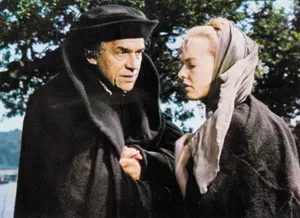
Scofield’s career was defined by his appearance as Sir Thomas More in Robert Bolt’s A Man for All Seasons. He first played the role on the London stage in 1960. By the time the play crossed the Atlantic to New York in the 1961-62 season, he had established the role as a career highlight. This earned him important honors, including the 1962 Antoinette Perry Award (also known as the Tony Award).
The following year, he moved to Ontario for the Stratford Shakespeare Festival. There he tackled the complex role of the main character in Coriolanus and the comic demands of Love’s Labour’s Lost. His theater career continued to grow with subsequent notable successes, including roles as Uncle Vanya in 1970 and the wily Volpone in 1977.
From Stage to Silver Screen
He moved into film in 1955. But his place in film history was cemented when he returned to play More in the 1966 film adaptation of A Man for All Seasons. This performance won him the Academy Award for Best Actor, and he brought his stage dominance to the screen just as strongly.
He has remained a huge presence in films for decades. In Peter Brook’s 1971 film version, Scofield played the tragic King Lear. He played Tobias in the 1973 film A Delicate Balance, directed by Tony Richardson and based on the play by Edward Albee. Later films included playing the King of France in Kenneth Branagh’s 1989 film Henry V. Perhaps most notably, he played Judge Thomas Danforth in the 1996 Arthur Miller film The Crucible.
“Scofield’s ability to portray historical figures with such seriousness makes him a unique presence in both theater and film.”
His work in A Man for All Seasons remains the benchmark. Whether on stage in London or New York or on screen since the 1960s, Scofield brought a unique gravitas to the roles he chose. He didn’t just act; he occupied the space with an undeniable authority, and audiences and critics alike have responded to it for half a century.
The legacy of his More is still debated. What about his other roles? His performance in 1971’s King Lear is often considered a masterpiece of aging and decay. In The Crucible, Danforth shows that he can handle the harshness and ruthlessness of the law and the spiritual weight of faith.
This is a long process. One wonders if one role overshadows the other. For many, the answer is still More. But the depth he brings to Branagh’s Henry V and Miller’s The Crucible shows that his versatility goes far beyond a single iconic role. The films remain. The stage productions live on in recordings and memory.