The barrier to entry for astrophotography has long been high, requiring expensive mounts, complex manual alignments, and specialized knowledge. The DwarfLab Dwarf Mini seeks to dismantle these barriers, offering a pocket-sized, smart telescope designed to turn anyone into a deep-sky photographer.
While it competes directly with established players like the ZWO Seestar S30, the Dwarf Mini distinguishes itself through extreme portability and an emphasis on ease of use, even in challenging environments.
Design and Portability: A Tiny Powerhouse
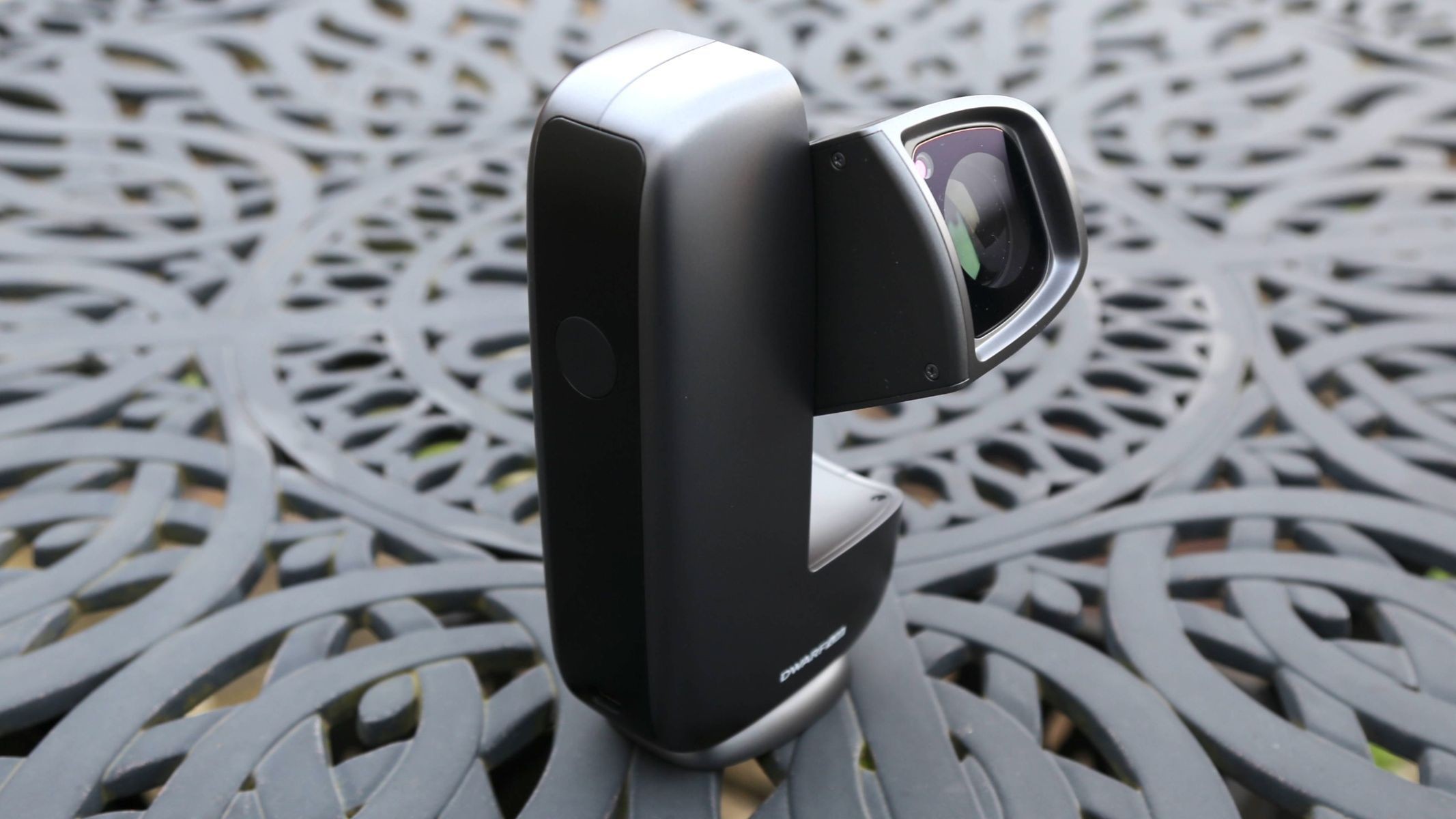
The most striking feature of the Dwarf Mini is its scale. Weighing just 1.8 lbs (840 g) and measuring only 8 inches (204 mm) in length, it is remarkably easy to transport. Despite its small footprint, the build quality feels solid.
The device is entirely automated, eschewing manual knobs for a fully digital interface. The lens arm can pivot through 225 degrees, and the base rotates a full 360 degrees, allowing for versatile sky coverage even when placed on a simple tabletop.
Key Hardware Specifications:
– Optics: 150mm focal length (f/5) refractor lens.
– Sensor: Sony IMX662 CMOS (optimized for low-light performance).
– Filter Wheel: Motorized, featuring dark-frame, astro (anti-light pollution), and dual-band (nebulae) filters.
– Modes: A wide-angle mode for orientation/constellations and a zoom mode for deep-sky objects, the moon, and the sun.
Note on EQ Tracking: One of the most sophisticated features is its ability to simulate Equatorial (EQ) tracking. By aligning with Polaris, the device can follow Earth’s rotation to prevent star trails during long exposures. While this requires an equatorial wedge (sold separately) to be fully effective, it represents a level of sophistication rarely seen in devices this small.
Performance: Beating Light Pollution
The true test for any urban astronomer is light pollution. Traditional optical telescopes often struggle to show anything beyond bright stars when used from a city center. The Dwarf Mini bypasses this through real-time image stacking.
Instead of taking one long exposure, the telescope captures many short exposures (typically 10–15 seconds) and “stacks” them digitally. This process builds a single, increasingly detailed image while filtering out much of the ambient city glow.
What to Expect from the Results:
- Deep-Sky Objects: Bright targets like the Orion Nebula (M42) appear within minutes. Fainter nebulae and galaxies require patience, often needing an hour or more of continuous imaging to reveal their true detail.
- The Moon and Sun: The Moon is easily captured via the app. For solar viewing, the included magnetic solar filter allows users to safely observe sunspots.
- Resolution vs. Utility: The sensor produces 2 MP images. While this is low by modern photography standards, the images are sharp, vibrant, and perfectly optimized for viewing on a smartphone or sharing on social media.
Software and Functionality: The Digital Brain
The Dwarf Mini is essentially a “smartphone-controlled” instrument. The DwarfLab app manages everything from target selection via a built-in star atlas to the actual imaging process.
Essential Software Features:
- Stellar Studio: A dedicated app for processing images. While it can feel somewhat repetitive and requires a dedicated account, its Star Correction tool is highly effective at sharpening final images.
- Mega Stack: This allows users to combine data from multiple different sessions. You could capture a faint object over several nights, gradually “building” a much more profound image over time.
- Automated Scheduling: You can pre-program the telescope to observe specific targets, allowing for “set it and forget it” astronomy.
A word of caution: The star atlas requires data downloads. It is highly recommended to update the app while on Wi-Fi before heading to a remote, dark-sky location where mobile signal may be unavailable. Additionally, the four-hour battery life means long sessions will require a portable power bank.
Verdict: Who is this for?
The Dwarf Mini is not intended to replace professional, high-resolution rigs used by serious researchers. However, it excels in a specific, growing niche of “casual but capable” astronomy.
The Dwarf Mini is ideal for:
– Urban Astronomers: Those living in light-polluted areas who want to see nebulae and galaxies without traveling to a desert.
– Beginners: Anyone looking for a “plug-and-play” entry point into astrophotography.
– Travelers: Photographers who want a lightweight, secondary rig for dark-sky trips.
Final Thought: The Dwarf Mini successfully trades high resolution for extreme accessibility, making the wonders of the deep sky available to anyone with a smartphone and a little bit of patience.