Recent research has revealed a surprising and potentially dangerous side effect of space travel: the brain’s inability to accurately calibrate physical force. Scientists have discovered that transitioning between Earth’s gravity and the microgravity of space creates a sensory disconnect that persists long after astronauts return home.
The Sensory Mismatch
A study conducted by researchers from the Université catholique de Louvain and Ikerbasque (the Basque Foundation for Science) has uncovered a significant neurological adjustment period for astronauts. By analyzing the movements and grip strength of 11 European Space Agency (ESA) astronauts, the team identified a pattern of “misinterpreted sensory feedback.”
The findings reveal a two-stage struggle for the human brain:
- In Microgravity: Astronauts tend to exert more force than necessary to hold objects. Because their brains are still accustomed to the constant pull of Earth’s gravity, they overcompensate to ensure an object remains stable.
- Upon Returning to Earth: Months after landing, astronauts continue to struggle with force regulation. Their brains, having adapted to weightlessness, often fail to exert the correct amount of force required to handle objects under Earth’s gravity.
“What we observed was totally unexpected,” noted lead author Philippe Lefèvre, Professor of Biomedical Engineering at the Université catholique de Louvain.
Why This Happens: Physics vs. Perception
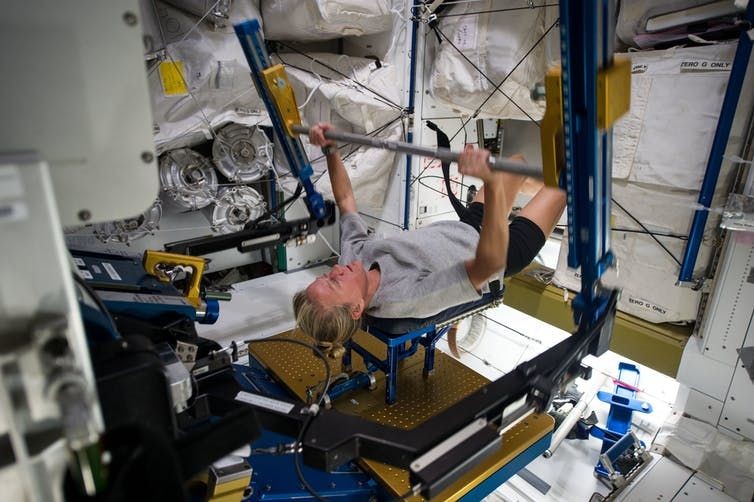
The core of the issue lies in how our brains process the relationship between mass and weight. On Earth, we intuitively understand that gravity will pull an object down if we let go. In the microgravity of the International Space Station (ISS), only inertia dictates movement; objects do not “fall,” they simply drift based on the force applied to them.
While an astronaut might intellectually understand these physics, the neurological connection between touch, sight, and muscle movement takes much longer to recalibrate. The brain essentially learns a “new normal” in space, and switching back to Earth’s gravitational constant is not an instant process.
Critical Safety Implications
This isn’t just a matter of clumsiness; it is a significant operational risk for long-term space exploration. As NASA prepares for missions like Artemis 2, which will take humans closer to the Moon, the ability to perform precise tasks is vital.
The study highlights several high-stakes areas where “grip failure” could be catastrophic:
* Scientific Integrity: A slip could cause fragile experiments to drift away or break.
* Technical Operations: Incorrect force could lead to errors when maneuvering robotic arms or performing delicate medical procedures.
* Station Safety: On the ISS, a dropped object doesn’t just fall to the floor—it becomes a projectile. As Lefèvre warns, if a large object is moving at high speed and an astronaut loses their grip, it could strike something critical, leading to “dramatic” consequences for the crew and the spacecraft.
Conclusion
The study underscores that space travel affects more than just bone density and muscle mass; it fundamentally alters how the brain perceives physical reality. As we move toward deeper space exploration, understanding and compensating for this sensory lag will be essential for mission safety.