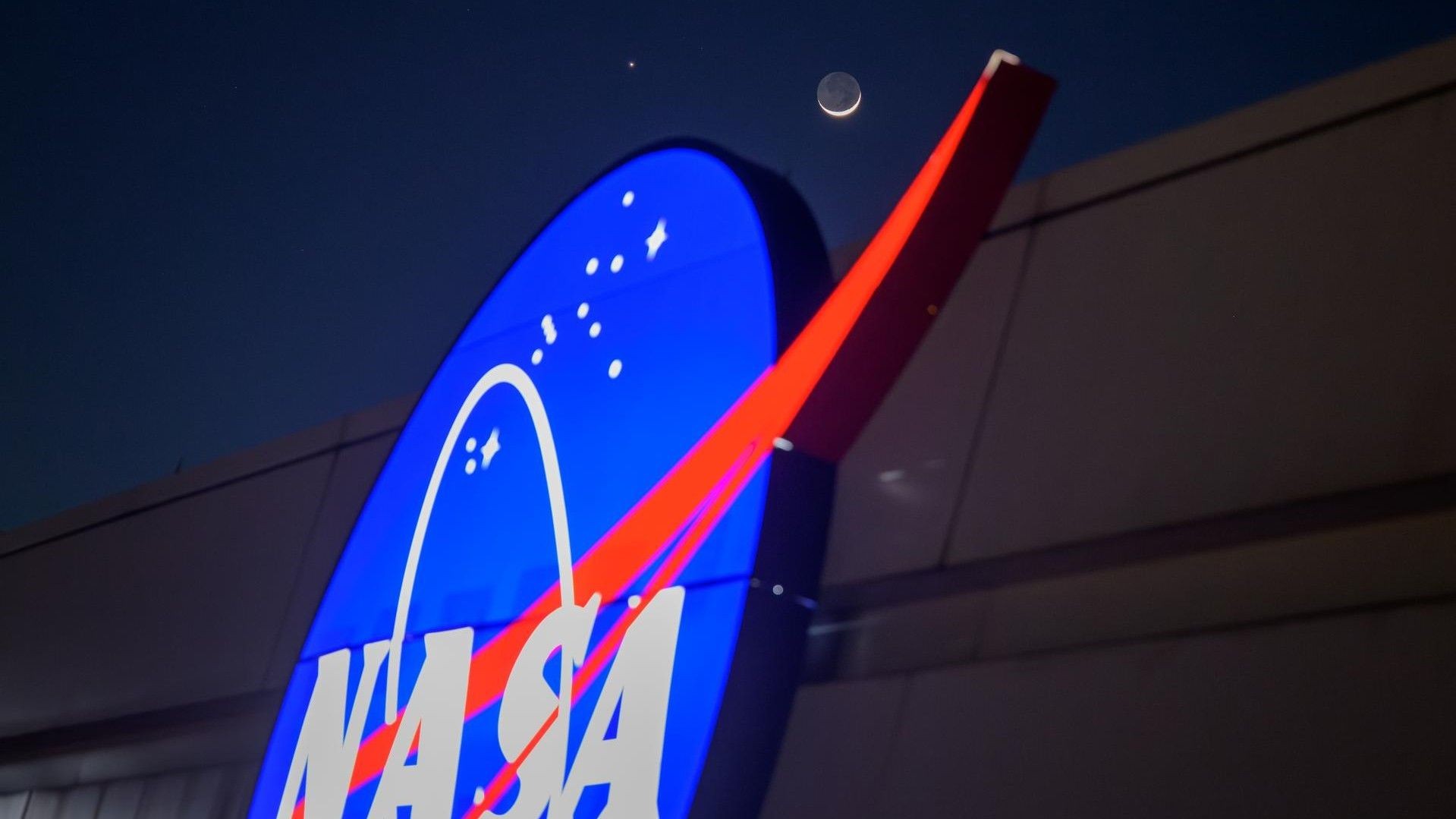
Venus and a razor-thin moon hung together in the twilight last week. A spectacular pairing for skywatchers everywhere.
Photographers didn’t miss it.
Earthshine
The moon was young. Just days past its new phase on May 16. Thin. Faint.
Sunlight hits Earth first. Our planet reflects that light back onto the lunar shadow. A soft ghostly glow covers the dark disk. Astronomers call it earthshine. It turns the void into silver.
Venus added punch to the frame. It shone like a star, but brighter. Much brighter.
Together, they lit up the late spring night. Cities. Landmarks. Ordinary roofs. The sky became the main event.
From Shanghai to NYC
Meng Zhongde looked up over Hainan, China. May 19.
He saw them in the purple dusk. The crescent burned with reflected earthlight while the planet stood guard. Simple. Effective.
Across the Atlantic, Gary Hershorn was in New York.
He framed the pair against One World Trade Center. Dusk bled into night on May 18. Venus sat left of the moon. Dazzling.
He caught an airplane, too. Just one. It cut across Manhattan while the celestial duo held their positions. That moon—only 7% lit—slipped away below the horizon before dawn broke. Gone.
Giuseppe Pappa preferred angles. He’s precise like that.
He shot the scene in Catania, Italy. Included Jupiter, too. He calculated the geometry after the fact.
“The three celestial bodies aligned perfectly… forming a geometric isosceles,” he noted. “Jupiter and Venus sit at the base… with an identical angle of 10°.”
The Moon sits at the vertex. A wide 160-degree opening. Math in the sky.
Details in the Dark
Pradeep Dambarage found quiet in Sweden.
Linköping. Trees silhouetted against the light. He captured Venus—the “Earth twin,” often cited for similar size and rocky makeup—hanging above the forest edge.
His lens picked up texture. The arc isn’t perfect. It’s jagged. Broken terrain catches the sun while craters remain in shadow. The line between night and day on the moon is rough.
Bill Ingalls found the same scene in Washington, D.C.
He photographed above the Mary W. Jackson Spaceflight Operations Center. NASA’s logo dominated the foreground. Blue. Red. White. The cosmic pair hovered over the agency’s history.
Tahir Turan Eroglu looked closer still.
Earthshine revealed the dark scars of the moon’s past. Lunar seas. Basaltic plains where lava flowed billions of years ago and froze in place. They looked like shadows on shadows.
Want more?
If Venus intrigues you, there is plenty to read. Our explainer covers the rocky planet inside out. Along with ten facts about our own moon that probably slipped your mind.
Need gear? We reviewed the top telescopes for 2026. Good for planets. Maybe not so great for rain.
Or if you just want the camera, we listed the best lenses for astrophotography. Get out there. Look up.