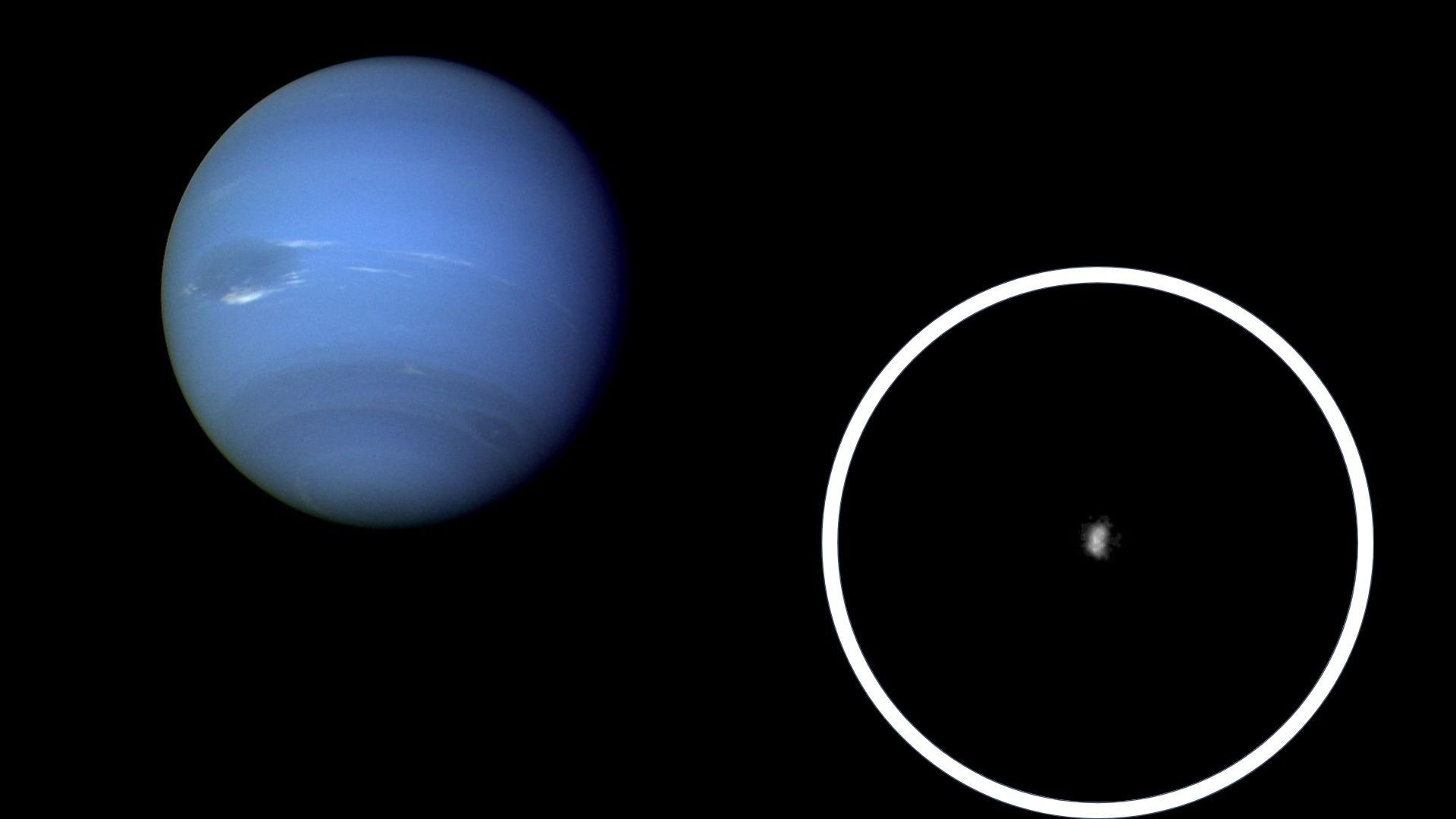
The old story was simple. Neptune grabbed Nereid from the Kuiper Belt back in the day. That’s what textbooks said for decades since the moon’s discovery in 1949. It was supposed to be a standard capture. A stray body snatched from the icy well outside.
Then James Webb showed up.
On May 20, researchers dropped new results in Science Advances and the whole narrative cracked open. The data doesn’t fit.
Matthew Belyakov, the lead author at Caltech, was blunt on a recent call. “What JWST did for Nereis is it confirmed that it had a of water ice.”
The spectrum didn’t match the local neighborhood.
Nereid is 350 kilometers across. A solid chunk. But its makeup? Totally different from known Kuiper Belt objects. This wasn’t just a guess based on theory. Webb had been up in space long enough to watch the belt directly. “We’re able to compare apples to apples,” Belyakov noted. No proxies. No assumptions.
Just the truth.
The moon stealer
For a while, everyone thought Triton was the villain in Neptune’s story. Triton is huge. It has a backward orbit. It’s clearly a captured guest, looking more like Pluto than a Neptunian native.
The logic held up. Triton crashed in. It got captured. Then it wrecked everything.
Most of Neptune’s 16 moons are tiny. Chaotic. They exist in irregular orbits that scream “instability.” Belyakov put it plainly. “The trouble at Neptune is that we don’t have any regular satellites really, whatever.”
Simulations told the grim tale. When Triton arrived from the Belt, it delivered a massive kick to the system. The original moons got flung out or broken apart. Triton reorganized the entire solar system around Neptune. It created the mess we see now. It even created Nereid -like objects. Or so we thought.
But the composition said otherwise.
A lone survivor
We need better resolution to be sure. JWST is busy. Very busy.
Belyakov’s team, including Professor Konstantin Batygin, managed to squeeze in a few minutes using NIRSpec’s lowest resolution mode. It was enough to see the water ice. It was enough to spot the discrepancy. But it wasn’t enough to finish the job. They are already drafting an application for higher-resolution time. They need to see Nereid clearly.
Why does it matter?
Think about it. Planets the size of Neptune and Uranus are the most common types of worlds out there in the galaxy. If we don’t understand how moons form around them here in our own backyard, how can we guess what’s happening lightyears away? It’s a blind spot.
And Neptune’s history is a crime scene.
Uranus is tilted on its side from a colossal impact. Its original moons are gone. Neptune lost its first generation too, broken apart in Triton’s wake. The inner moons we see today? Reforged from debris. Recycled junk.
“Nereid” might be the exception.
Perhaps it is the only one that made it through the chaos. An intact remnant of the first satellites. A ghost from the early solar system that wasn’t ground down. If so, it is our only window into how these systems originally looked.
A single key for a locked door.